








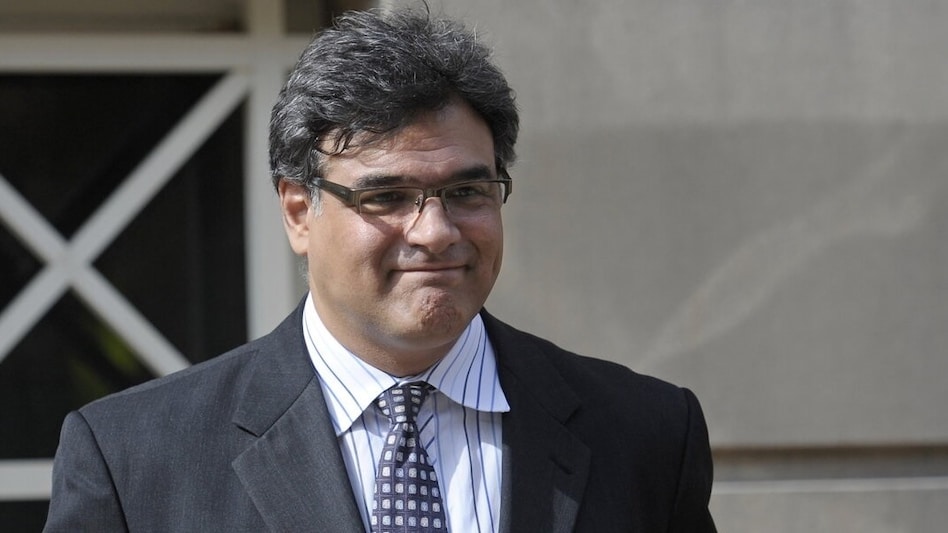
 Former CIA officer John Kiriakou
 Former CIA officer John Kiriakou
Former CIA officer John Kiriakou has claimed that the United States could have eliminated Pakistan's top nuclear scientist AQ Khan, but refrained from doing so at the insistence of Saudi Arabia. In an interview with ANI, he said Khan had been under close watch but was spared because "the Saudis came to us and said, 'Please leave him alone.'"
"It (his file) never crossed my desk. I was specifically counterterrorism, but a colleague of mine, this was his entire life - dealing with AQ Khan. Well, if we had taken the Israeli approach, we would have just killed him," Kiriakou said when asked why the US did not act against Pakistan's nuclear scientist Khan, even after intelligence confirmed he was selling nuclear secrets to North Korea, Libya, and other countries.
"He was easy enough to find. We knew where he lived. We knew how he spent his day. But he also had the support of the Saudi government. And the Saudis came to us and said, 'Please leave him alone. We like AQ Khan. We're working with AQ Khan. We're close to the Pakistanis. They even named Faisalabad after King Faisal. Just leave him alone.'"
Calling it a mistake by Washington, Kiriakou added, "This was a mistake that the US government made... not confronting AQ Khan head on. Later on, when I went to the Senate Foreign Relations Committee staff as the chief investigator, I worked for a man who was a journalist before going to the Senate Foreign Relations Committee staff. And he and his wife wrote a book that was first titled 'The Man from Pakistan' and later changed to 'The Nuclear Jihadist'. It was the most detailed book ever written about AQ Khan. They asked more than two dozen CIA officers and United Nations IAEA officials exactly the same question (why the US did not eliminate AQ Khan when he was smuggling nuclear secrets to other countries). They all said the same thing - there were instructions from the White House not to attack AQ Khan. And it had to be because the Saudis were demanding it, insisting on it."
Kiriakou suggested that Riyadh's role might have gone deeper than mere diplomatic protection. "We often wondered, and I have no proof, this is just my own speculation. We often wondered if it was because the Saudis were also building a nuclear capability. I think that's something we should probably be thinking about."
On the recent Saudi-Pakistan Mutual Defense Pact, Kiriakou described it as ironic, saying, "I have to laugh about this mutual defense pact. I don't know if you've ever spent any time in Saudi Arabia, but almost the entire Saudi military is Pakistanis. No Saudi is going to join the military unless they're going to make him a general. There are no privates or corporals who are Saudi. They're all Pakistani. All of them. It's the Pakistanis that protect Saudi Arabia on the ground."
Commenting on the long-standing U.S.–Saudi ties, the former officer said America's foreign policy had always been transactional. "We like to try to convince the world that we are a shining beacon of hope for democracy and human rights and equality, and it's just simply not true. Our foreign relations are based on our national needs at any given moment. We don't do things because they're the right thing to do. We do them because they happen to be good for us that day. Which is why we get into bed with so many dictators around the world," he said.
He recalled a candid exchange from his early diplomatic years: "I worked for an ambassador in Bahrain who said one day - our foreign policy in Saudi Arabia really is as simple as we buy their oil and they buy our weapons. That's it. That's the basis."
 India engages Iran to secure energy flows as Hormuz tensions escalate
 Indian Navy warships escort Indian LPG tankers through Gulf of Oman amid regional conflict
 Donald Trump vows Hormuz will be ‘OPEN, SAFE, and FREE’, warns of action against Iran
 West Asia conflict: How Air India, IndiGo, Akasa fuel surcharge hikes are making flights costlier
 IPO listing: India tweaks IPO rules to help big tech, digital firms list with smaller stake dilution
 Will Gold Prices Hit ₹1 Lakh Again? Sachin Jain Explains The Future Of Gold
 Ashank Desai: Accountability Is Squarely On You' In Golf Just Like In Business
 Maye Musk On Motherhood, Career & Happiness | India Today Conclave 2026
 Is IMEC Still Possible? Karan Adani Responds Amid Global Tensions
 Malaika Arora Explains Her 3 F’s Approach To Lifestyle, Brands & Entrepreneurship
 IPO listing: India tweaks IPO rules to help big tech, digital firms list with smaller stake dilution
 Stay patient during volatility, markets remain resilient despite global shocks: SEBI chief Tuhin Kanta Pandey
 Helium shortage: Dixon Tech, Lal PathLabs, Vedanta, HAL, MTAR shares take a hit; here's why
  RIL stock falls 14% from January high; what lies ahead for the index heavyweight?
 Rs 2,000 crore daily loss! OMCs take Rs 20 per litre hit on petrol, Rs 45 on diesel