


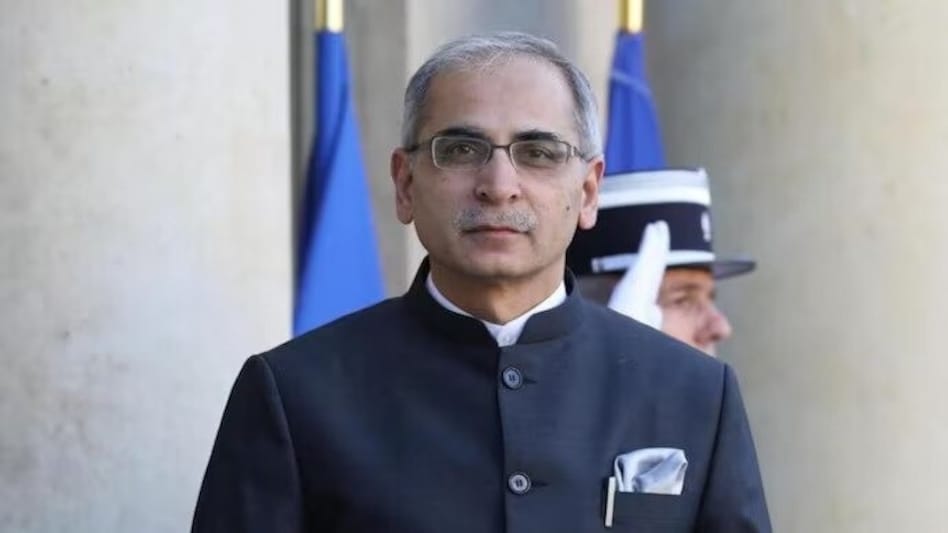
 FCRA framework will provide "more transparency, better governance, clearer rules", says Amb Kwatra
Indian Ambassador to the US Vinay Mohan Kwatra took to social media to rebut criticism of the proposed Foreign Contribution (Regulation) Amendment Bill, 2026, arguing that the measure is aimed at greater transparency, clearer rules and national security, rather than targeting churches, charities or any particular community.
Kwatra’s intervention came days after a US lawmaker raised concerns that the proposed changes could allow the Indian government to take control of churches and charities. Addressing the criticism, Kwatra cited comparable laws in other democracies, including the US Foreign Agents Registration Act (FARA) and Foreign Account Tax Compliance Act (FATCA), as well as laws in Australia, Canada, the UK and the EU.

 India’s energy lifeline runs through the Indian Ocean: Why this maritime corridor matters
 20 Asia-Pacific stocks with up to 145% upside: Full ‘Going For Glory’ list, no Indian stock included
 Govt won't step into Singapore Airlines' Air India call, says Singapore minister
  Tax filing 2026: Missed crypto income in ITR? Why investors could receive an Income Tax notice
 $1 trillion, 500+ investors: India to host landmark BRICS sovereign capital summit in New Delhi
 LIC CEO On Sustaining Blockbuster Q1 Growth Amid Market Uncertainty
 Travel Insurance Mistakes: Sub-Limits, Pre-Existing Conditions & Medical Evacuation Explained
 Home Loans & Insurance: How Couples Can Structure Them For Tax Efficiency
 Money & Marriage: How Couples Can Divide Household Expenses, Track Spending And Stay On Budget
 Parag Parikh Flexi Cap Fund Underperformance: Is Fund Size Becoming A Major Challenge For Investors?
 FCNR(B) windfall lifts NBFCs, small private banks: Why these stocks may be the bigger winners20 Asia-Pacific stocks with up to 145% upside: Full ‘Going For Glory’ list, no Indian stock included
 Tata Technologies: Former CEO Patrick McGoldrick sells shares worth nearly Rs 165 crore
 Tata Power stock: Choice Broking expects recovery, assigns two price targets
  IPO rush next week: 11 issues eye to raise Rs 7,055 crore; 6 IPOs to open on same day, check details
 Gold, silver prices on September 6: Check latest rates in Delhi, Mumbai, Kolkata, other cities
 Not Smriti Mandhana or Harmanpreet Kaur: This former skipper reigns as India's wealthiest female cricketer
  'Toxic' Box Office collection Day 11: Yash starrer crosses ₹333-cr mark, but Hanuman Ansh steals the long gameLIC CEO On Sustaining Blockbuster Q1 Growth Amid Market Uncertainty
 'Which medicine did he take?' Purnia MP Pappu Yadav's striking look fuels Ozempic rumours. Watch












