


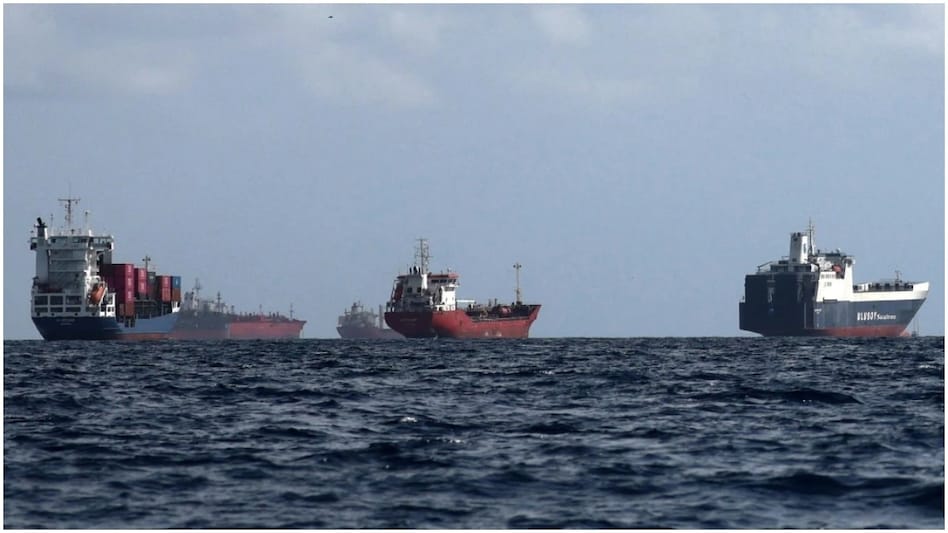
 Officials estimate that around 23,000 Indian seafarers are currently engaged across vessels, ports and transit locations in the Gulf region. Of these, 1,074 sailors are onboard Indian-flagged vessels.
India is keeping a close watch on the situation in the Persian Gulf region as tensions involving Iran escalate, with government agencies tracking the movement of Indian ships and the safety of nearly 23,000 Indian seafarers working across vessels and ports in the region.
According to official data reviewed by Business Today, 36 Indian-flagged vessels were present in the Persian Gulf region as of 5 pm IST on March 3.
Of these, 24 vessels were located west of the Strait of Hormuz, while 12 vessels were positioned east of the strait and in the Gulf of Oman.
In addition, two Indian-flagged vessels were operating in the Gulf of Aden, while no Indian ships were present in the Red Sea at the time of the assessment.
State-run Shipping Corporation of India (SCI) had seven vessels deployed in the Persian Gulf region.
Government agencies have also intensified monitoring of vessels operating in high-risk areas, reducing communication polling frequency from six hours to one hour to maintain closer tracking of ships.
Officials estimate that around 23,000 Indian seafarers are currently engaged across vessels, ports and transit locations in the Gulf region. Of these, 1,074 sailors are onboard Indian-flagged vessels, while the majority are employed on foreign-flagged merchant ships that regularly operate through the region.
The situation is being monitored by maritime authorities, with agencies coordinating to maintain real-time information on vessel movements and the status of Indian crew members.
The Strait of Hormuz, located between Iran and Oman, is one of the world’s most critical shipping chokepoints, handling a significant share of global oil trade.

 US-Iran pause attacks for second day; Trump 'giving talks some space' as Hormuz deal discussed
 New paper leak bill in Lok Sabha today, proposes harsher punishment; MPs given draft
 Which ITR form should NRIs use? Why filing ITR-1 could be a costly mistake
 Top stocks in news: NTPC, Jindal Steel, Bank of Baroda, NBCC, IDFC First, TCPL, SBI Cards, REC
 SIFs, mutual funds, PMS or AIFs: Which investment route deserves a place in your portfolio?
 AI Data Centers, Aerospace & Gas Turbines: What's Powering Indo-MIM's Future Growth?
 Best Healthcare Stocks: Gaurang Shah's Outlook On Apollo Hospitals, Fortis & The Manipal Health IPO
 Is Indo-MIM's IPO Valuation Justified? Here's Why The Company Sees Strong Growth Ahead
 Treasury Bills Explained: Why T-Bills Are One Of The Safest Short-Term Investment Options
 FDs vs Markets: Where Should You Keep Your Short-Term Money?
 Hindustan Zinc share price: HZL targets by Jefferies, HSBC, Citi & other stock brokerages
 Nifty, Sensex, Nifty Bank outlook for today: GIFT Nifty up 140 points; key levels to watchTop stocks in news: NTPC, Jindal Steel, Bank of Baroda, NBCC, IDFC First, TCPL, SBI Cards, REC
 Gland Pharma stock: Price target of Rs 3,250 likely in medium term, says analyst
  Metal recycling stocks to buy: Gravita, Pondy Oxides, Jain Resource among top picksNew paper leak bill in Lok Sabha today, proposes harsher punishment; MPs given draft
 Think a marriage certificate makes you husband and wife? Gujarat HC explains why registration alone cannot prove a valid Hindu marriageHindustan Zinc share price: HZL targets by Jefferies, HSBC, Citi & other stock brokerages
 A scooter in Coimbatore was slapped with 249 traffic challans worth ₹3.69 lakh — but there's a twistUS-Iran pause attacks for second day; Trump 'giving talks some space' as Hormuz deal discussed









