









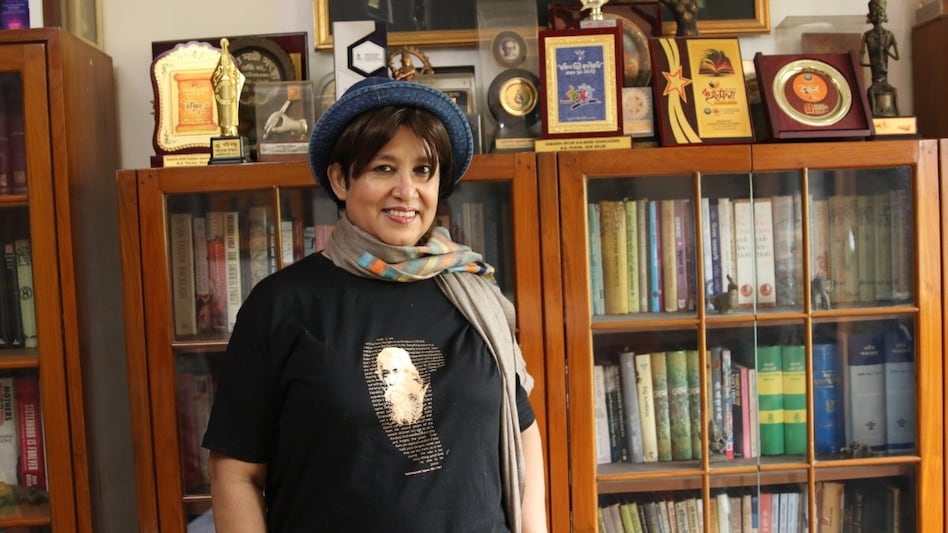
 Nasreen, a vocal critic of religious extremism and an advocate for women's rights, has lived in exile since 1994, following threats from Islamist fundamentalists in Bangladesh

 Nasreen, a vocal critic of religious extremism and an advocate for women's rights, has lived in exile since 1994, following threats from Islamist fundamentalists in Bangladesh
Exiled Bangladeshi author Taslima Nasreen has made a public appeal to India's Union Home Minister, Amit Shah, urging him to allow her to continue residing in India. In a heartfelt message posted on X, Nasreen tagged Amit Shah and wrote, "Dear Amit Shah ji, Namaskar. I live in India because I love this great country. It has been my second home for the last 20 years. But the Ministry of Home Affairs has not extended my residence permit since July 2022. I am deeply worried. I would be so grateful if you allowed me to stay. Warm regards."
Nasreen, a vocal critic of religious extremism and an advocate for women's rights, has lived in exile since 1994, following threats from Islamist fundamentalists in Bangladesh due to her controversial writings. Her works, such as the novel Lajja (1993) and her autobiography Amar Meyebela (1998), which critique communalism and highlight gender inequality, have been banned in her home country.
Lajja particularly sparked outrage for its depiction of violence against Bengali Hindus in the aftermath of the Babri Masjid demolition in India. The novel detailed incidents of rape, looting, and killings, leading to fierce backlash from Islamic hardliners.
After fleeing Bangladesh, Nasreen spent years in exile across several countries, including Sweden, Germany, France, and the U.S. In 2004, she moved to Kolkata, India, but was forced to relocate to Delhi in 2007 following an attack on her life. Under house arrest for three months, Nasreen eventually left India in 2008, returning only after spending some years abroad.
In a recent interview, Nasreen expressed concerns over the political situation in Bangladesh, particularly after the departure of Prime Minister Sheikh Hasina. She warned that the country could follow the path of Afghanistan, citing the influence of Islamic radicals who, according to her, are indoctrinating youth to become "anti-India, anti-Hindu, and pro-Pakistan." Nasreen further highlighted that the violence against Hindus, harassment of journalists, and the release of individuals labeled as terrorists were orchestrated by Islamic extremists, not student movements as portrayed.
Taslima Nasreen’s appeal to Amit Shah underscores the precarious nature of her residency in India, as she seeks to remain in the country she has called home for two decades.
 Break silos, focus on results: PM Modi's message at key meeting with secretaries
 Indian economy resilient despite global shocks; NPAs to remain low: RBI report
 Why a weak monsoon may not hurt India's economy as much as before, Finance Ministry report explains
 Visa-on-arrival for select countries, simpler hotel rules: NITI Aayog proposes tourism overhaul
 First-time ITR filer? Why experts say you should enable the Income Tax Department's e-Filing Vault
 Rajnath Singh’s Big Vision: Why Gujarat Is Set To Become India’s Next Defence Manufacturing Hub!
 WhatsApp's Biggest Transformation Begins! No Phone Number, Ads & Premium Plans
 PM Modi Meets Top Secretaries | Watch To Know The Full Agenda
 100% Road Tax Waiver For Clean Vehicles! Centre's Big Push For EVs & Green Transport
 IPhone 18 Pro Secrets Leaked? Tata Electronics Cyberattack Raises Major Security Concerns
 Calcutta Stock Exchange shares rally in unlisted market; details here
 YES Bank gets rating upgrade for infrastructure, tier II bonds; key details
 Tata Communications shares: Two factors that may move the Tata Group stock in short term
  Sensex, Nifty extend slide: IT stocks drag markets lower; what to expect next
 Bharti Airtel deserves to trade at a valuation premium against global peers, says Nomura