


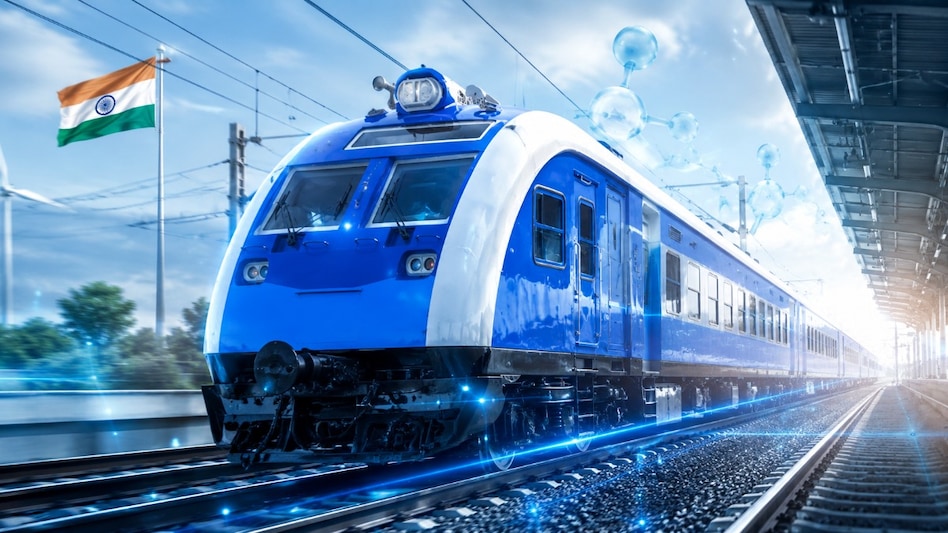
 The Jind-Sonipat section in Haryana has been identified as the pilot route for these operations. (AI generated)
India is set to begin operations of its first indigenous hydrogen-powered train, marking a major step in Indian Railways' push towards cleaner and more energy-efficient transport systems.
The Ministry of Railways on Wednesday said Indian Railways had approved a 10-car Hydrogen Fuel Cell-based trainset for operations on the Jind-Sonipat section of Northern Railway in Haryana.

 'Whoever wins AI, wins': Trump rejects tech bosses' slowdown call, warns of China
 Iran, Oman agree on new Hormuz routes: What it means for oil, ships and global trade
 'Stop knocking out diesel facility, it's causing shortage': Trump tells Zelensky to halt strikes on Russia
 The next time govt takes a financial risk, ISB professor says it should be on start-ups
 India is the second-best BRICS performer, but that is not enough: Economist Surjit Bhalla
 Amit Shah Hails India’s Rise From Fragile Five To Top Five, Politics Of Performance Since 2014
 MEA Details BRICS Summit Outcomes as India Pushes Practical and People-Centric Cooperation
 Modi@25: Amit Shah Highlights 25 Years Of Leadership, Governance And 2047 Vision
 “Development And Environment Are Complementary”: PM Modi On Sustainability At BRICS
 Modi@25: Amit Shah Announces Seva Sankalp Campaign From Sept 17 To Mark Modi’s 25 Years Of Service
 Stock market holiday: Why NSE, BSE will remain closed on September 14
 Avoid jewellery; stick to ETFs, bars and coins for investment this festive season: Navneet Damani
 SEBI’s CAS proposals: Expert weighs in on new expiry-day settlement price methodology
 Large caps stocks under pressure as rising US bond yields, crude prices weigh on foreign flows
  SEBI proposes bringing unexecuted Iceberg orders into closing auctionStock market holiday: Why NSE, BSE will remain closed on September 14
 ₹19,416 cr bought, ₹10,963 cr sold: Where top flexicap funds put money in August
 PSU bank FD rates remain below 7%: SBI, PNB, BoB, Bank of India compared; what's the best you can get
 BRICS needs a Traditional Knowledge Alliance, not just de-dollarisation: Why it matters
 From Italy to India: Here are the countries with the most UNESCO World Heritage Sites in 2026












