


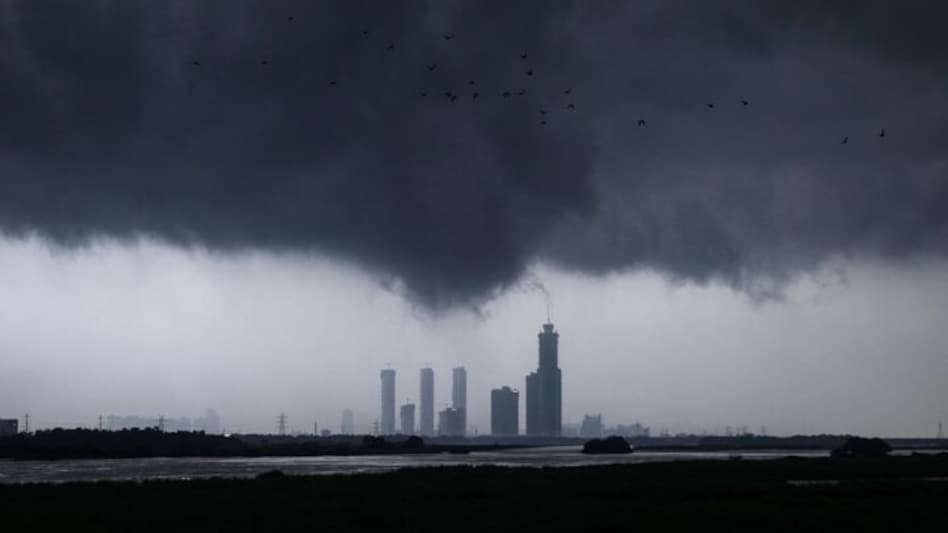
 Will weak monsoons impact India's economic prospects?
Monsoon in India: Does a weak monsoon pose a further threat to economic prospects this fiscal? Policymakers and experts believe that India’s farm sector has become more resilient to poor monsoons although there remain concerns that below average rains could fuel some inflation further.
Amid this volatile external environment, the uncertainty over the monsoons has created more worries. With a super El Niño seen to be developing this year, the India Meteorological Department (IMD) has forecast the monsoon for 2026 at 92% of the long period average.
While it is still early days to ascertain the impact of the rains on the economy, the government remains hopeful considering the higher reservoir levels and expectation that much of the sowing will be completed before El Niño conditions develop later in the summer. Sources point out that farm sector has been growing at 3-4% in the last few years and even in the rural economy, the direct dependence on agriculture has reduced.
MUST READ | Relief from heatwave soon? Monsoon nears Northwest India as dust storms, hail and dust trigger weather alert
Agricultural Economist PK Joshi, who is Vice President of the National Academy of Agricultural Sciences, agreed with this assessment and says that in the last 10-12 years, several studies have shown that Indian agriculture has become resilient to climate change.
“Even in the last three to four years, despite droughts in several regions, our agriculture has remained resilient and poor rains have not impacted productivity. Use of irrigation has ensured that poor rains do not impact production. As a result, the forecast of a below average monsoon should not have a significant impact on agriculture production this fiscal,” he said, adding that a NITI Aayog study had shown that earlier, the normal growth rate in agriculture was 3%, but the new normal is 4%.

 Sugar price surge: Govt allows 1 million tonne duty free imports ahead of festive season
 PM Modi pushes bureaucracy to break data silos, use AI and take long-term policy view
 Merck, Moderna cancer vaccine clears Phase 3 milestone in melanoma
 SEBI allows FPIs to use digitally signed power of attorney for faster onboarding; check details
 'AI Jobocalypse': Raghuram Rajan proposes AI token tax to curb job losses, boost govt coffers
 Sugar Prices Surge Ahead Of Diwali: Is India’s Ethanol Push Creating A Food-Versus-Fuel Crisis?
 Sugar, Internet, Pharma Shares Rise In Strong Trade
 ₹30,000 Monthly SIP? 5 Funds Suggested For A 20-Year Wealth Creation Strategy
 Is ₹20,000 SIP Enough To Build Wealth? The 15–20 Year Investment Math Explained
 Starlink Renews India Push With 30,000-Satellite Plan Amid Regulatory Clearance Hurdles
 SEBI allows FPIs to use digitally signed power of attorney for faster onboarding; check details
 Rays of Belief, parent of Mom's Belief, to launch IPO on September 1
 Large cap stocks may lead market recovery; Anand Rathi analyst cites key factors
  Sensex, Nifty rebound sharply; can the recovery sustain?
 Hold ITC, avoid averaging despite underperformance, says Ruchit Jain of MOFSL
 Why RBI closed FCNR(B) window early despite ruling it out two weeks earlier
 Most popular AI tools in 2026: ChatGPT takes the top spot
 India holds 880 tonnes of gold: How does it compare with other major economies?
 9 years of saving, 7 tonnes of plastic: The remarkable story behind this Costa Rican home
 1916 lab accident: How a pen dipped in molten metal helped create modern computer chips












