


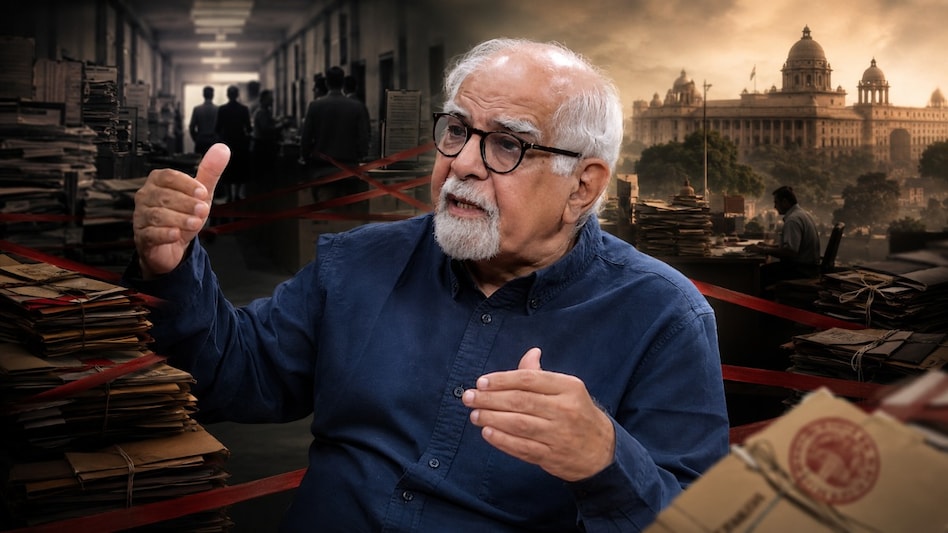
 Bureaucrats are rewarded for not taking risks, says Surjit Bhalla
Economist and former International Monetary Fund (IMF) Executive Director for India Surjit Bhalla has blamed the lack of accountability in the country's bureaucracy for holding back economic reforms. He argues that senior bureaucrats make key policy decisions without being answerable to either the public or the market.
In a podcast conversation with ANI's Smita Prakash, Bhalla said the "deep state" in India should not be viewed as a conspiracy but as a system where powerful decision-makers operate without transparent accountability.

 Air India Phuket-Delhi flight that plunged 300 ft midair suffered glitches, multiple hydraulic failures
 ‘We’re going to ask for money…’: Trump says it is Iran who should pay reparations, not the US
 Adani Green, Adani Power, Adani Enterprises shares in focus as US court drops charges against Gautam Adani
 Nifty weekly expiry today: Kotak suggests top pick & trading strategy; key levels to watch
 7.4-magnitude earthquake kills 111 in Colombia, 61 buildings down as president declares emergency
 IT Stocks, Smallcaps, Banks: Asit Bhandarkar On The Market's Next Move
 Air Taxis To Fly In India By 2028? Aviation Minister Backs Sarla Aviation
 Earnings Boom Or Market Trap? | IKIGAI's Pankaj Tibrewal Decodes D-Street
 Garware Technical Fibres CEO On Q1 Results, Margins, Costs & Growth Outlook
 Dhoot Transmission IPO Opens Today: All You Need To Know
 Gland Pharma shares rally 10% post Q1 results: Highest and lowest target prices
 Copper stock with 787% returns and stellar Q1 earnings is down 31% from record high
 Vodafone Idea shares: Q1 loss narrows; should you buy? Targets by CLSA, UBS, Nomura
 Godfrey Phillips, Gland Pharma, Castrol, Symphony, Sudarshan, Chambal Fert shares to turn ex-dividend today
 HAL, Mazagon Dock, BDL: Top defence stocks to trade— key levels, target prices & stop lossGland Pharma shares rally 10% post Q1 results: Highest and lowest target prices
 NPS XIRR vs CAGR: Which return measure better reflects your actual pension investment?Copper stock with 787% returns and stellar Q1 earnings is down 31% from record high
 US Judge dismisses bribery case against Gautam Adani, but flags concern; Here's what the case was aboutVodafone Idea shares: Q1 loss narrows; should you buy? Targets by CLSA, UBS, Nomura










