

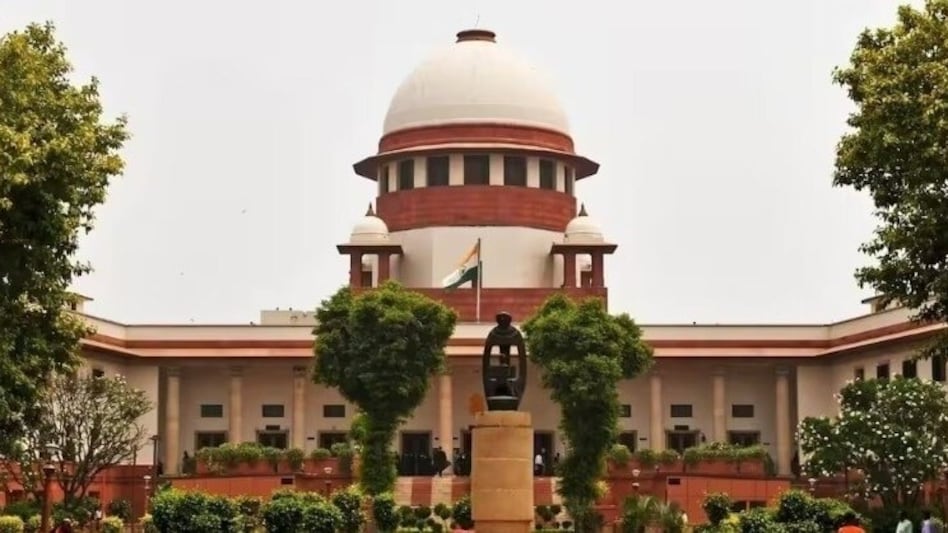
 Over 10-year-old Volvo denied fuel access after PUC refusal, Supreme Court hears plea
The Supreme Court on Wednesday heard a plea from a luxury car owner who alleged that authorities were refusing to issue a Pollution Under Control (PUC) certificate for his over 10-year-old diesel vehicle, despite the court’s earlier order preventing coercive action against certain old vehicles based only on their age.
The petitioner argued that high-end vehicles, including the Volvo XC60 owned by him, are well-maintained and not necessarily polluting, and that the court had allowed such vehicles to continue operating subject to compliance with emission norms.
 Russian oil & gas purchase: US House passes bill clearing path for 100% tariffs on India, China
 US Fed delivers first rate hike in over 3 years as inflation lingers, Trump calls for 1% benchmark
  Trump praises PM Modi's anti-drug drive while designating India in major drug transit list
 US Fed rate hike: Why India could face pressure from higher US yields and a stronger dollar
 NSE IPO: 26 crore investor accounts and 3,000+ listed companies — 10 numbers to know
 FCNR Deposits Bring $136 Billion: Will Bank Credit Growth Rise Beyond 18%?
 “Onion Prices Down 9% In 9 Days”: Nidhi Khare On Availability And ₹35/Kg Retail Sales
 Indian Markets At A Crucial Juncture: Nifty, Crude, Fed & Smallcaps | Jaipuria
 Nifty At 23,200: Crude Oil, U.S. Fed Rate Hike Fears & Market Outlook Explained
 “7.8% Growth Is Not Random”: FM Sitharaman Credits India’s People, Industry And MSMEs
 Top stocks in news: Infosys, Rentomojo, Karamtara, ARCIL, Manipal Cards, Mazagon, Fortis, Steamhouse
 Stock market today: Gift Nifty signals tepid start; impact of Fed rate hike on IndiaNSE IPO: 26 crore investor accounts and 3,000+ listed companies — 10 numbers to knowUS Fed rate hike: Why India could face pressure from higher US yields and a stronger dollar
 NSE IPO: Exchange raises Rs 6,746 crore from 189 anchor investors; LIC, GIC, Fidelity among buyersTop stocks in news: Infosys, Rentomojo, Karamtara, ARCIL, Manipal Cards, Mazagon, Fortis, Steamhouse
 Russia Sanctions Bill: US plans to target Moscow’s energy economy. What it means for India?
  Petrol, diesel prices today, September 17: Check latest rates in Delhi, Mumbai, Chennai, Kolkata & moreStock market today: Gift Nifty signals tepid start; impact of Fed rate hike on India
 Tata Sons board meeting today: RBI listing ruling, Chandrasekaran's future on agenda












