


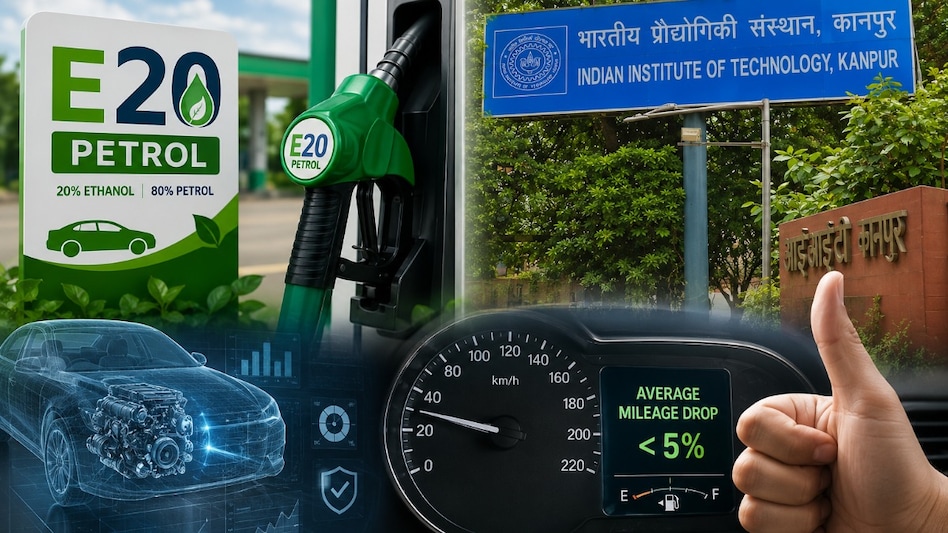
 IIT Kanpur Research Finds No Evidence Of Engine Harm by E20 (Image: AI generated)
An IIT Kanpur study has found no evidence that E20 petrol damages vehicle engines, challenging concerns around the nationwide rollout of 20% ethanol-blended fuel, news agency PTI reported on Tuesday.
The researchers also said the impact on fuel efficiency is marginal and does not exceed 5%.

 India now stands at a pivotal moment in its developmental journey, says Shaktikanta Das
 China is both a model and a warning for India's chip ambitions: US professor on what New Delhi should do
 FPI outflows have nothing to do with their belief in India growth story: Neelkanth Mishra
 DLF sells out Gurugram luxury retirement project The Aureva for ₹1,985 crore
 'Had 1 last fight left': Captain Smit Machchhar recalls cockpit attack on Flydubai flight
 Gold Vs Silver: Which Should Investors Buy? Ajay Kedia Shares His 70:30 split Strategy
 Can You Sell Bonds Before Maturity? Liquidity, Exit & Penalties Explained
 Bonds Vs FDs: Are Bonds A Better Alternative For Higher Returns? Risks Explained
 Should You Buy Gold Now? Festive and Wedding Season Strategy Explained
 Direct Vs Regular Mutual Funds: Why the Right Advisor May Matter More Than 1% Cost
 Nvidia shares approach record high as AI optimism revives investor demand
 Sebi receives 20,000 comments on proposed CAS changes; framework to follow soon
 Stock market sell-off: Nifty, Sensex log 8th straight weekly loss; key levels & top triggers now
 IPO boom: 69 Indian companies raise Rs 90,500 crore in Q3 despite stock market sell-off; what's next
 TCS, Infosys, HCL Tech, TechM, Wipro, LTM, Coforge, HEXT: Fresh target, Q2 previews for IT stocksIndia now stands at a pivotal moment in its developmental journey, says Shaktikanta DasGold Vs Silver: Which Should Investors Buy? Ajay Kedia Shares His 70:30 split StrategyDLF sells out Gurugram luxury retirement project The Aureva for ₹1,985 crore
 Could the International Space Station win the 2026 Nobel Peace Prize? Experts think so
 BYD's Denza is coming to India with premium EVs: What buyers need to know












