












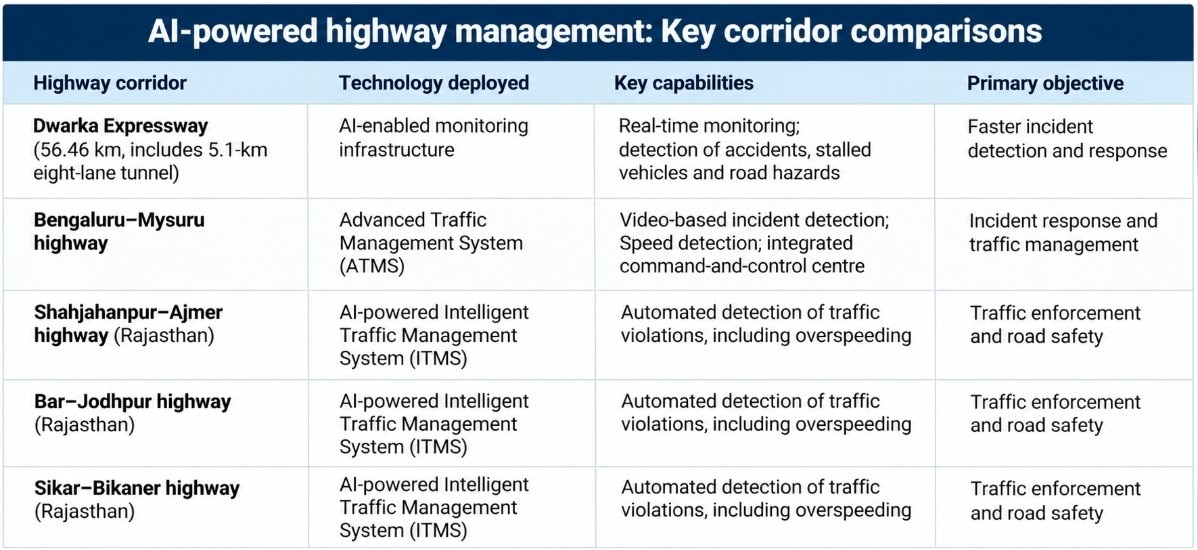



 The Dwarka Expressway emerged last year as India’s first AI-enabled corridor.
 India’s highways are increasingly moving beyond conventional surveillance towards technology-enabled traffic management, where cameras can detect incidents, monitor vehicle speeds and help authorities respond to road hazards in real time. From the Dwarka Expressway to the Bengaluru–Mysuru highway, deployments of artificial intelligence (AI) and intelligent traffic management systems illustrate how digital technology is being integrated into highway operations.
India’s national highway network expanded to 1,46,572 km in March 2026, from 91,287 km in FY14, according to a Press Information Bureau backgrounder released in August 2026. As the network grows, technology-assisted monitoring is becoming an important part of managing traffic and road safety.

 Crude oil may hit $110, India's import basket could touch $130 in 10 days: SBI Research
 Retail inflation hits 21-month high, set to squeeze your household budget further
 Nifty may fall another 5%? Market expert flags key risks for Dalal Street
 India's retail inflation rises to 5.54% in September; food inflation hits 7.74%
 BT EXCLUSIVE | India not unique in satellite licensing process; compliance rules apply globally, says Eutelsat OneWeb's Neha Idnani
  India's Next Connectivity Leap? Tata Communications Bets On Satcom & Smart Villages
 Motorola's Shivam Ranjan Speaks To Business Today About Motorola's Upcoming Flagship @ IMC26
 Is The AI Boom Sustainable? The Debate Over Investment Returns, India's AI Future And Job Disruption
 India-UK Trade Ties Set for Fresh Push? Goyal Calls for Faster Business Cooperation
 Rahul Gandhi Vs Gyanesh Kumar: 200 Officers Claim Escalates Election Commission Row
 Emerging markets lag US stocks in 2026: What India's equity market and FPI flows revealNifty may fall another 5%? Market expert flags key risks for Dalal Street
 HCLTech Q2 results: Profit up 21% at Rs 5,132 crore; announces Rs 12 per share dividend
 L&T Technology Services launches AI lab with NVIDIA for digital manufacturing, stock gains
  CG Power shares: Analyst says book profit on rallies and buy on dips
 Maruti Grand Vitara gets ₹2.65 lakh discount in October 2026: Check specs, features, mileage
 Food inflation hits 7.74%: Why the next inflation spike could hurt household budgets
 Ahead of 100th birthday, Kerala HC designates veteran lawyer P B Menon as senior advocate
 Can adding gold and debt to equities boost long-term returns while reducing portfolio drawdowns?
 Financial Horoscope Today, October 13, 2026: Gemini Signs Will Get New Earning Opportunities, Know Your Zodiac Status


