












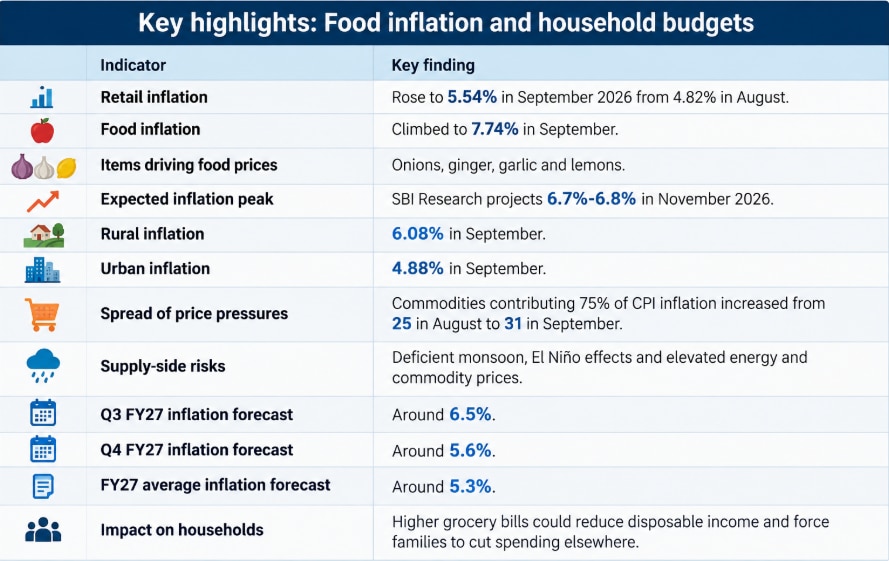



 SBI Research identifies deficient monsoon conditions, ongoing El Niño effects and elevated energy and other commodity prices as risks to the inflation outlook.
Food prices are rising faster than overall inflation, putting pressure on household budgets just as the cost of several everyday essentials continues to climb. India’s food inflation reached 7.74% in September 2026, according to SBI Research, as higher prices of items such as onions, ginger, garlic and lemons pushed up the cost of food.
The increase comes as retail inflation rose to 5.54% in September from 4.82% in August, crossing the 5% mark for the first time under the revised consumer price index (CPI) series. SBI Research expects overall inflation to peak at 6.7%-6.8% in November, although this remains a forecast rather than a confirmed outcome.

 Crude oil may hit $110, India's import basket could touch $130 in 10 days: SBI Research
 Retail inflation hits 21-month high, set to squeeze your household budget further
 Nifty may fall another 5%? Market expert flags key risks for Dalal Street
 India's retail inflation rises to 5.54% in September; food inflation hits 7.74%
 BT EXCLUSIVE | India not unique in satellite licensing process; compliance rules apply globally, says Eutelsat OneWeb's Neha Idnani
  India's Next Connectivity Leap? Tata Communications Bets On Satcom & Smart Villages
 Motorola's Shivam Ranjan Speaks To Business Today About Motorola's Upcoming Flagship @ IMC26
 Is The AI Boom Sustainable? The Debate Over Investment Returns, India's AI Future And Job Disruption
 India-UK Trade Ties Set for Fresh Push? Goyal Calls for Faster Business Cooperation
 Rahul Gandhi Vs Gyanesh Kumar: 200 Officers Claim Escalates Election Commission Row
 Emerging markets lag US stocks in 2026: What India's equity market and FPI flows revealNifty may fall another 5%? Market expert flags key risks for Dalal Street
 HCLTech Q2 results: Profit up 21% at Rs 5,132 crore; announces Rs 12 per share dividend
 L&T Technology Services launches AI lab with NVIDIA for digital manufacturing, stock gains
  CG Power shares: Analyst says book profit on rallies and buy on dips
 Can adding gold and debt to equities boost long-term returns while reducing portfolio drawdowns?
 Financial Horoscope Today, October 13, 2026: Gemini Signs Will Get New Earning Opportunities, Know Your Zodiac Status
 Planning to bring your family to Dubai? How much salary do Indians need to sponsor dependants
 Summit SIF launches long-short fund with multi-arbitrage strategy; NFO closes October 26
 This Mumbai barber earns ₹1 lakh monthly, files tax returns. Here's his story


