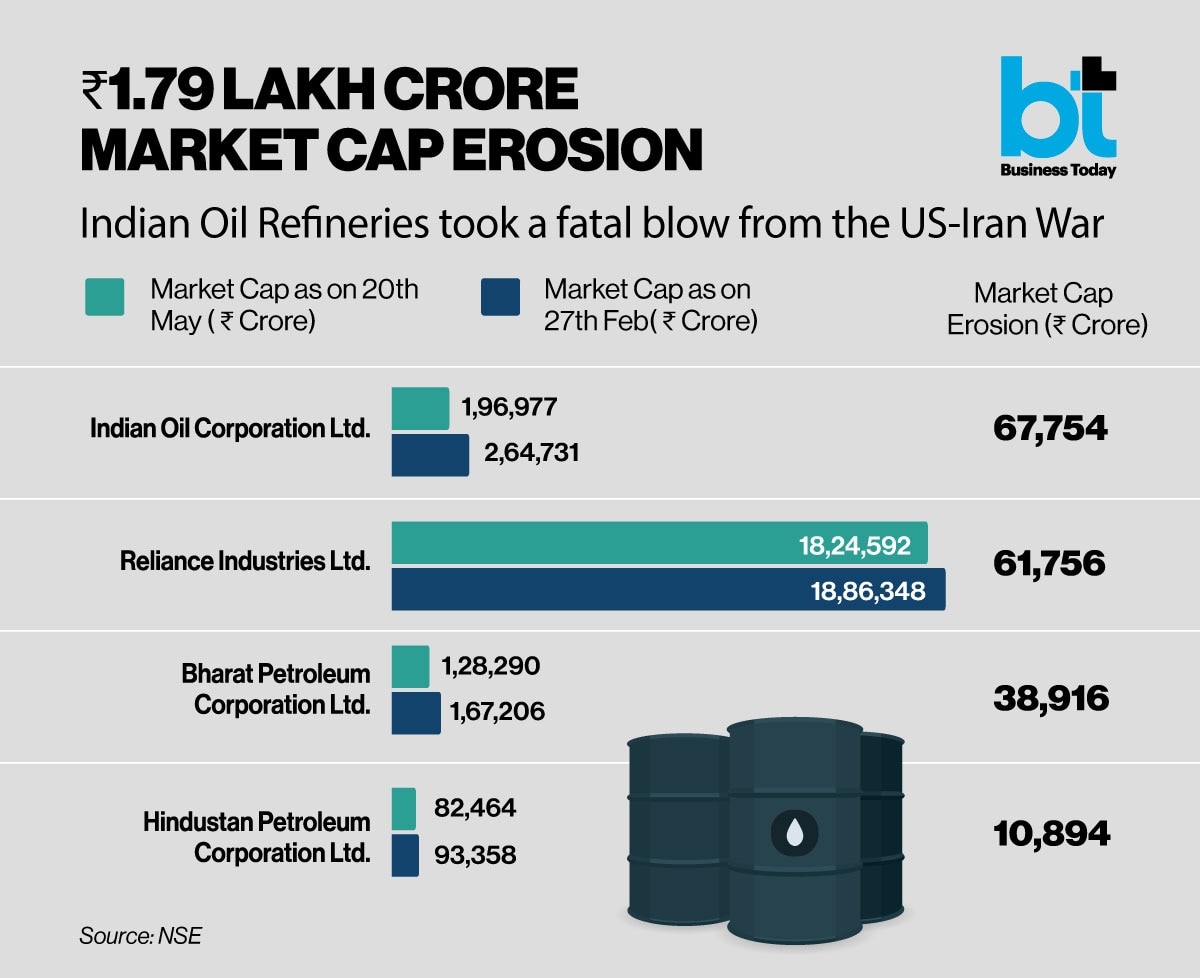



 NSE data showed IOCL recorded the biggest market-cap loss at over ₹67,753 crore, followed by Reliance (₹61,755 crore), BPCL (₹38,916 crore) and HPCL (₹10,894 crore).
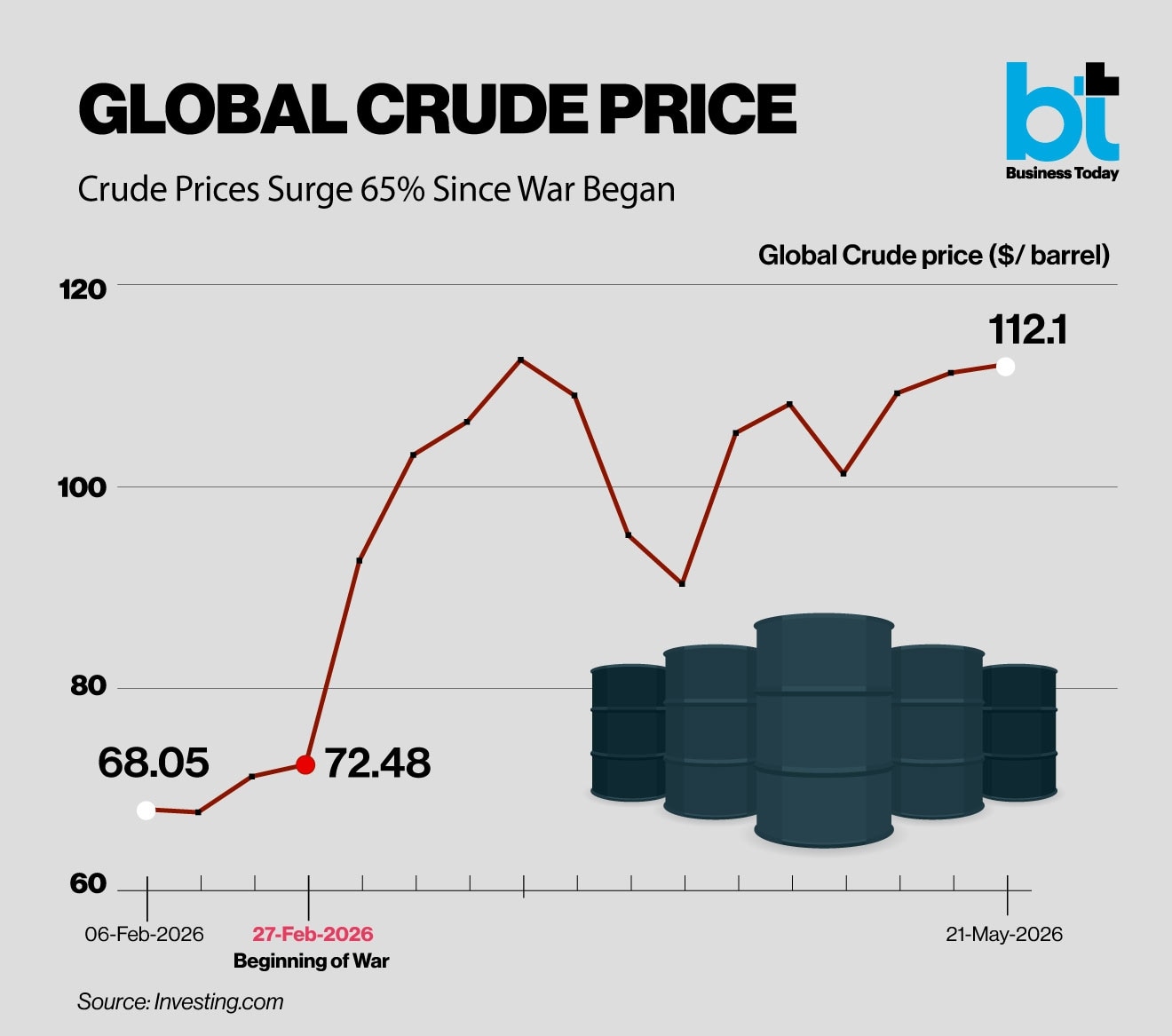
Indian refineries and oil marketing companies (OMCs) have collectively lost nearly Rs. 1.8 lakh crore in market capitalisation since the beginning of the US-Iran conflict on February 27, as soaring crude oil prices and a weakening rupee triggered a sharp sell-off in energy stocks.
National Stock Exchange (NSE) data shows Indian Oil Corporation (IOCL) alone lost over Rs. 67,753 crore in market capitalisation, the highest in absolute terms. IOCL was followed by Reliance Industries (RIL) at Rs. 61,755 crore, Bharat Petroleum Corporation Ltd. (BPCL) at Rs. 38,916 crore, and Hindustan Petroleum Corporation Ltd. (HPCL) at Rs. 10,894 crore.
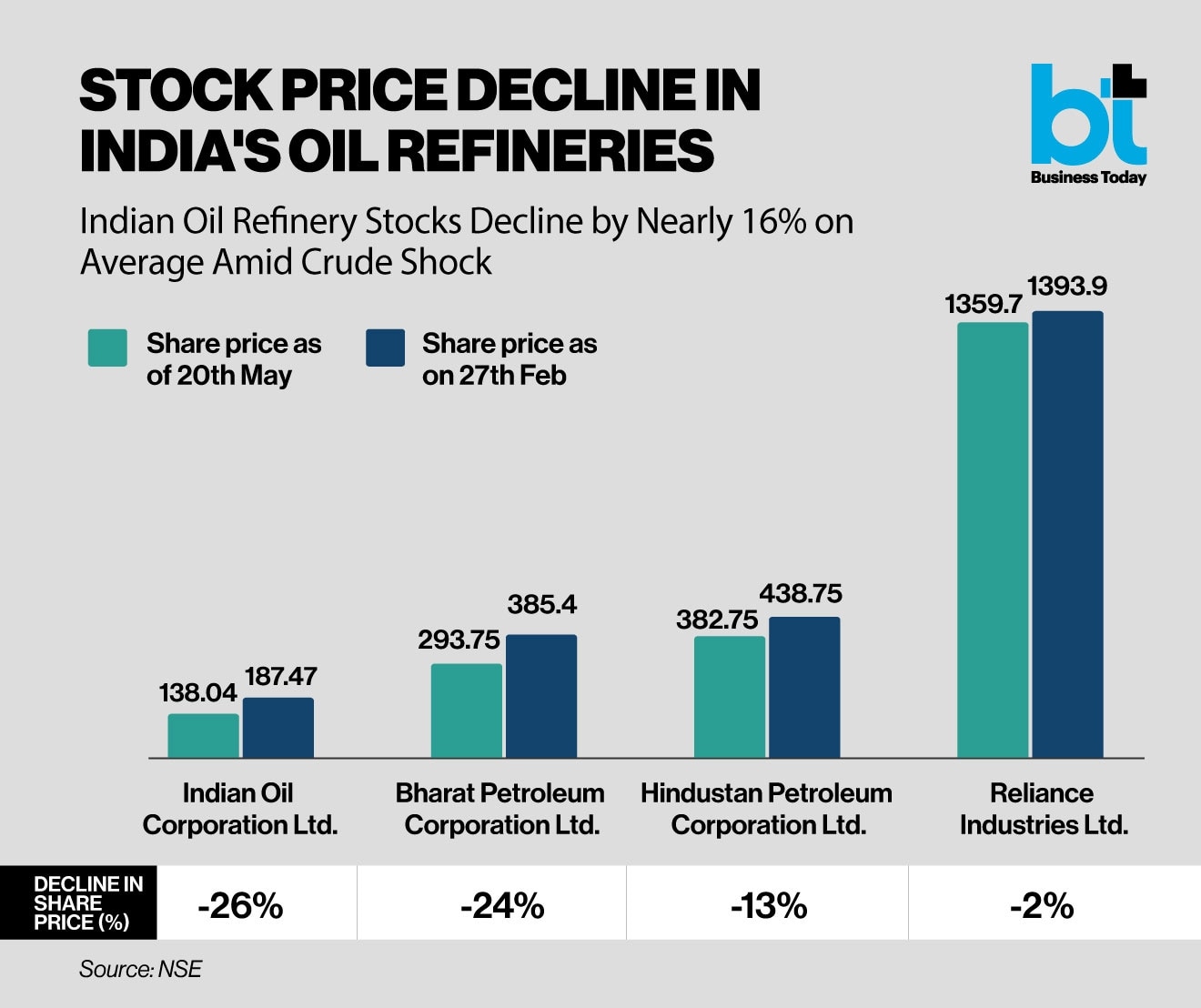
Share prices of these companies also fell steeply during the period, with IOCL declining over 26%, BPCL nearly 24%, HPCL around 13%, and Reliance about 2.4%.

 BT BIG STORY: Why India's affluent seniors are the next big real estate bet
 Rs 20,000 crore FPI outflows in 2 days! Stock market headed for more pain?
 Chandrasekaran, Venu Srinivasan did not disclose family firm deal to Tata Sons board: Report
 No relook at bourses' self-listing rule for now, says Sebi chief
 Strait of Hormuz disruption puts India’s energy security in focus: What former diplomat said
 Mid-Small Cap Allocation: How Much Should Investors Hold In Their Portfolio?
 MSP: ‘Cost Plus 50%’ Principle Fully Maintained, Says Ashwini Vaishnaw
 Economy In Right Hands, Business Environment Very Positive: Nirmal Minda
 Nara Lokesh Exclusive: Why Andhra Pradesh Is In A Hurry To Build Its Data Centre Ecosystem
 KLM Steps Up SAF Push On India-Europe Route
 Bajaj Auto shares slump over 7% after September sales data
 Fortis, Max, Apollo, Medanta, Manipal: Buy hospital stocks for 22-46% upside, says Jefferies
 Kotak Mahindra Bank share price: Why this stock rose 4% today after CEO announcement
 A-One Steels India shares make a decent stock market debut; shares list at 14% premium
 Moneyview shares deliver bumper listing gains; stock debuts at 64% premiumBajaj Auto shares slump over 7% after September sales dataFortis, Max, Apollo, Medanta, Manipal: Buy hospital stocks for 22-46% upside, says JefferiesKotak Mahindra Bank share price: Why this stock rose 4% today after CEO announcementA-One Steels India shares make a decent stock market debut; shares list at 14% premiumMoneyview shares deliver bumper listing gains; stock debuts at 64% premium