












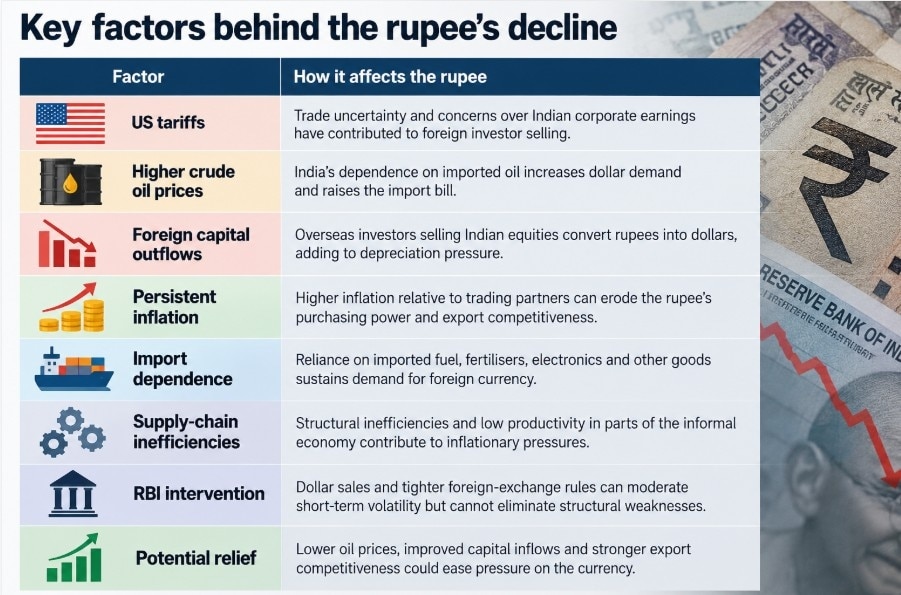



 The RBI has intervened in currency markets by selling dollars from its foreign-exchange reserves.
 India’s economy is growing faster than those of many major economies, yet the Rupee has weakened every year since 2018. The divergence highlights a key vulnerability: strong domestic growth does not automatically translate into a stronger currency, particularly when a country depends heavily on imports and foreign capital to finance its external needs.
The Rupee’s latest decline reflects a combination of global shocks and structural weaknesses. US President Donald Trump’s steep tariffs on Indian imports intensified pressure last year, prompting foreign investors to pull money out of Indian equities amid concerns about trade, high valuations and weak corporate earnings. This year, the Iran war and the resulting surge in energy prices have added to the strain.

 Hyundai, Kia parent Hyundai Motor Group to invest $15.5 billion in India till 2032
 Tata dispute has created anxiety in family businesses, firms reviewing independent directors: Harsh Goenka
 Apple unveils 'HomeView' Smart Home Hub with a 7-inch display, Siri AI and competitive price: All details
 GST’s next big push: More taxpayers, better compliance and higher revenue
 Sanjeev Sanyal warns: Chasing GDP growth above 7% could push inflation past 6%
 TCS, HCLTech Rally Amid Global AI Jitters: What's The Next Market Move?
 How Aditya Birla Group Navigates Tariff Uncertainty & Builds Global Competitiveness
 Kumar Mangalam Birla on Why Businesses Must Think Twice Before Rushing Into AI
 Delhi’s Jantar Mantar No Longer A Protest Hub: 3 New Sites, Costs And Rules Explained
 Exclusive: Shashi Tharoor On SIR, Voter Deletions And BJP’s Charge Against Opposition
 Persistent, Coforge, Mphasis: Analyst shares midcap picks amid IT rally
  Tata Steel, Vedanta or Lloyds Metals? Analyst shares top stock pick
  BEL discloses additional orders worth Rs 533 crore, check details
  Investors gain Rs 5 lakh crore as Sensex, Nifty gain over 1% each; key factors behind the rally
  Tonbo Imaging IPO: Akash Bhansali, SBI Funds among investors buying shares worth Rs 413 crore
 Forget petrol scooters: This electric scooter promises 160 km range and a massive boot
 One WhatsApp ‘NO’ could cost you your savings: Hyderabad Police warn of new cyber scam
 ₹3,500 hotel stay, ₹30,000 compensation: Kerala family’s bed bug ordeal ends in consumer court
 BT BIG STORY: Your next colleague could be an AI agent. What does that mean for Indian IT, and for your job?
 Google's new Fitbit Edge can track your heart and sleep, but there's a catch buyers should know


