


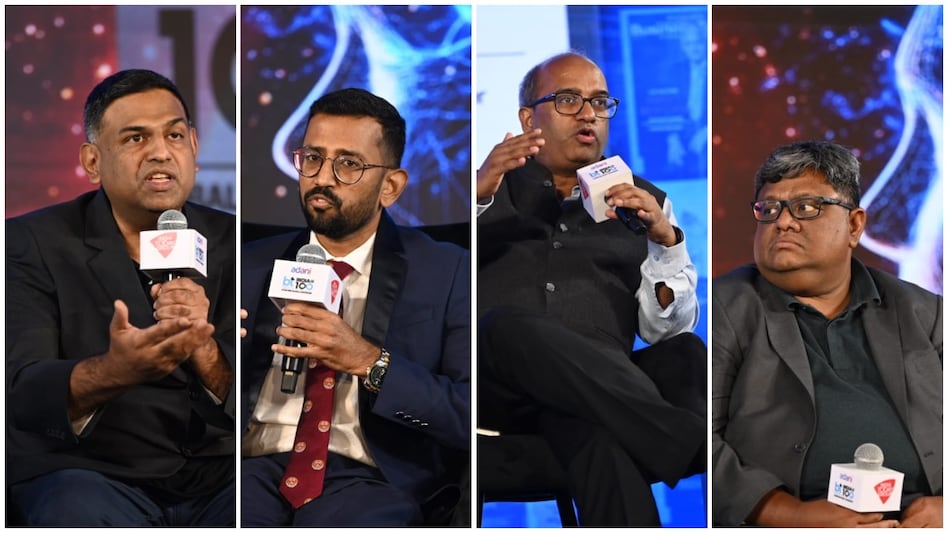
 (From left) CEO of Gnani.AI Ganesh Gopalan, Director – Advanced Tech Solutions, Fortinet Subramanian Udaiyappan, Addl Secy at MeitY & CEO of IndiaAI Mission Abhishek Singh, and MD & Lead - India Business, Accenture India Saurabh Sahu.
 Once known as the world’s IT back office, India is now positioning itself as a global AI powerhouse—armed with deep tech talent, a vibrant startup ecosystem, and robust policy backing. But as ambitions soar, so must accountability — with security, ethics, and inclusion forming the backbone of India’s AI moment.
“India has always been well placed in the software world, and AI will be no different,” said Ganesh Gopalan, CEO and co-founder of Gnani.AI, a conversational AI platform and a key participant in the IndiaAI Mission. “But the real opportunity lies beyond large language models (LLMs). It’s about solving real-world problems across industries and governance — for India and for the world.”

 'RBI letter does not mention listing': Noel Tata seeks full briefing on Tata Sons-RBI talks
 El Nino impact? India headed for driest monsoon since 2009, food inflation fears rise: Report
 Tata Trusts asks Tata Sons to explore options other than listing, says ‘Tata Model has to be saved’
 Tata Trusts proposes ₹25,000 crore plan for SP Group, says Tata Sons listing is not an option
 FD rates before RBI MPC meet: These small finance banks offer 8%+ interest on fixed deposits
 Corporate Health Insurance Vs Retail Policy: Why You Need Personal Health Cover Too
 How India Changed In 12 Years: PM Modi’s Journey From Economic Reforms To Viksit Bharat
 Modi @76: From Twitter To Instagram, How His Digital Outreach Has Evolved
 Stock Picks To Watch: Shibani Kurian Reveals Kotak AMC’s Market Bets
 Gold ETF vs Physical Gold: Know the Tax Rules, Charges and Key Differences
 Top stocks in news: Tata stocks, BEL, Wipro, Veegaland, IndiGo, Skyways Air, PB Fintech, PTC India
 Tata stock to buy: Nuvama bets on unique tech-telecom play, sees 28% upside
  IndiGo shares in focus as baggage, infant fee, priority boarding charges likely raised
 Hero Motors IPO subscribed 3.37 times on Day 2; retail portion subscribed over 5 times
 NSE IPO: India's largest exchange gets 43% subscription on Day 1; NIIs, retail see strong demand
 ‘An Indian consumes 1/10th of an average American’: Amb Kwatra says energy security comes firstTop stocks in news: Tata stocks, BEL, Wipro, Veegaland, IndiGo, Skyways Air, PB Fintech, PTC IndiaTata stock to buy: Nuvama bets on unique tech-telecom play, sees 28% upside
  LPG, CNG, PNG prices today (September 18): Check latest rates in Delhi, Mumbai, Kolkata, other citiesIndiGo shares in focus as baggage, infant fee, priority boarding charges likely raised












