


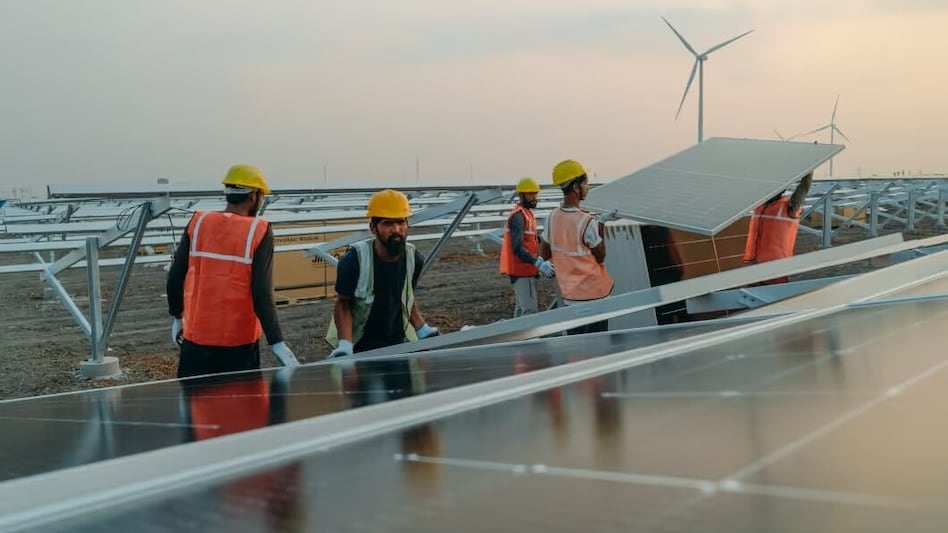
 Rooftop solar creates more jobs because it must be installed home by home, shop by shop, and building by building, unlike large solar or wind projects that are built at a single site.
 India’s 500 GW non-fossil fuel capacity target and goals under the National Green Hydrogen Mission could generate over 44,00,000 full-time equivalent (FTE) jobs, according to a new study.

 Bangladesh turns to India for wheat as Black Sea disruption pushes up prices
 India boosts LPG production as festive demand rises and Gulf supplies remain uncertain
 No petrol, diesel price hike proposal yet; govt may support OMCs if crude stays high
 BT Big Story: Why India Inc is warming up to non-English-speaking executives
  Why can’t India just stop buying Russian crude oil? FM Nirmala Sitharaman explains
 India Growth Outlook Gets Major Boost: S&P, Fitch, ADB Raise FY27 Forecasts; OECD Upgrades 2026 View
 A-One Steels IPO Explained: Key Details, Growth Strategy & Future Outlook | Management Live
 Market Commentary: Nifty Outlook, Stocks & Market Strategy | Deven Choksey
 Ignore Large Caps? Why Investors Are Chasing High P/E Mid Cap Stocks Now
 30 IPOs In A Month: Deven Choksey On IPO Flipping And Secondary Market Liquidity
 RBI to conduct OMO sale of Rs 25,000 crore in government bonds on September 28
 NSE shares: Deven Choksey lists reasons for long-term investment; calls stock 'shock absorber' in volatile markets
 Crude oil prices fall for sixth session; PL Capital explains what could happen next
 Mazagon Dock, GRSE shares: Does short-term bounce signal trend reversal? Analyst decodes
 35% up from 52-week low! Motilal Oswal sees more steam left in this renewable energy playerBangladesh turns to India for wheat as Black Sea disruption pushes up pricesIndia boosts LPG production as festive demand rises and Gulf supplies remain uncertain
 Fair case for the rupee to not just stabilise, but even appreciate: RBI Deputy Governor
 Banking Health At Multi-Decade High: SBI Chief CS Setty Outlines India's Global Pivot
 Yogi Adityanath Highlights ₹5 Lakh Social Security For Bharat Taxi Drivers












