


 Air India and Air India Express on Thursday revised fuel surcharges on domestic and select international routes, citing rising ATF prices and volatility in global energy markets.
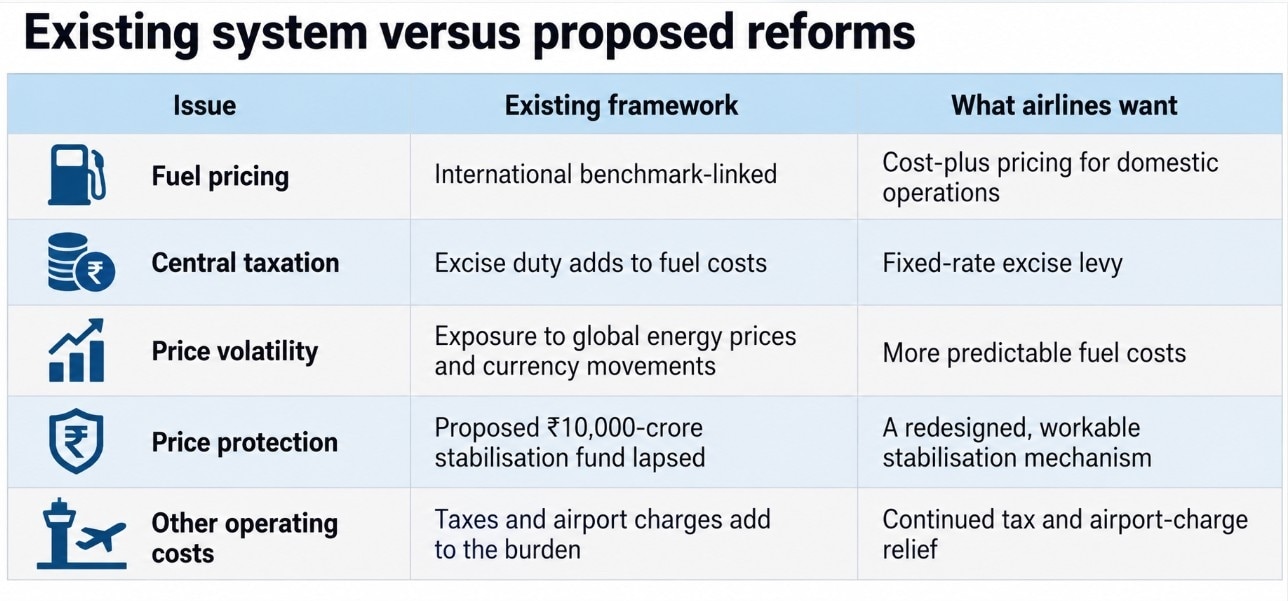
India's aviation turbine fuel (ATF) pricing mechanism is coming under scrutiny as rising fuel costs squeeze airline finances, with Markets by Zerodha highlighting the disconnect between the country's domestic refining capacity and the prices paid by airlines. The debate has gained urgency after ATF prices in Delhi rose 13% in a month to ₹137 per litre, prompting carriers to increase fuel surcharges.
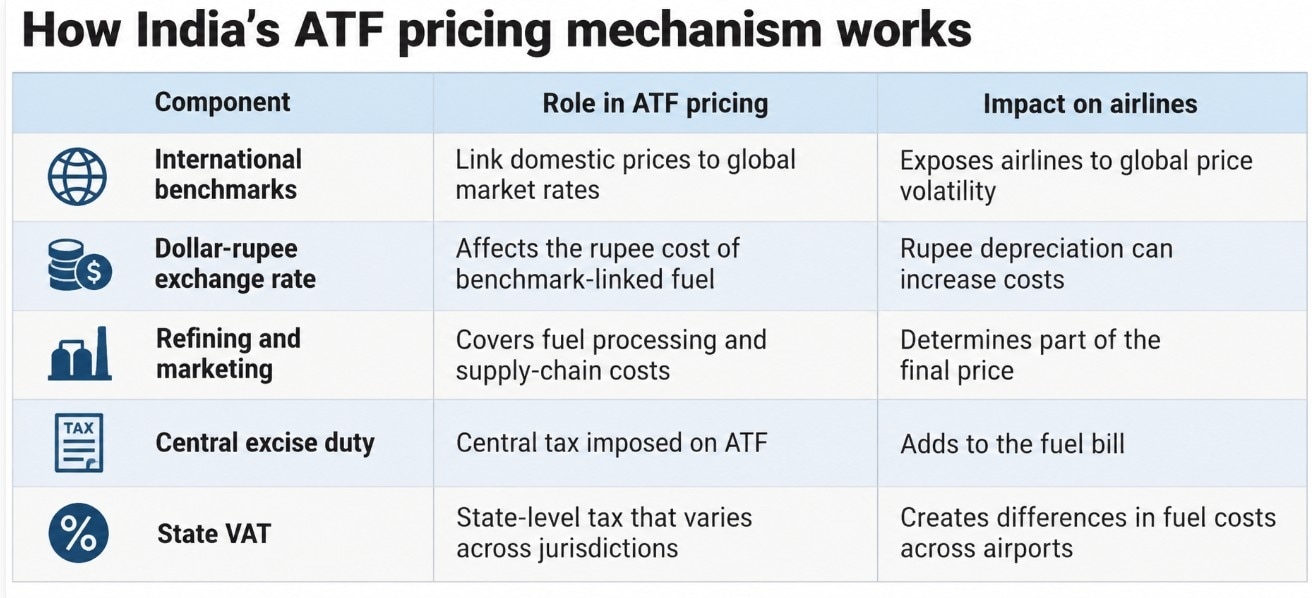
The central issue is that airlines do not necessarily pay prices based on the actual cost of producing fuel at Indian refineries. Instead, ATF prices are linked to international benchmarks, exposing domestic carriers to global energy market volatility and currency fluctuations, even when the fuel is refined locally.

 TCS shares rally 5%; top 5 IT stocks add Rs 56,000 cr in m-cap, shrug off H-1B visa suspension
 ‘Applications were in single digits’: TCS says US’ green card suspension won’t impact workforce strategy
 H-1B vs PERM explained: What the US suspension means for Indian IT workers
  Anthropic tightens Claude AI rules on model abuse, elections, weapons and surveillance
 J-1 visa fraud: Trump administration probes Harvard, Yale, Stanford, MIT, Caltech, others
 Cancer Drug Prices May Fall Up To 70% As Government Caps Trade Margins At 30%
 IT Stocks Rally Despite Trump's US Visa Crackdown | Why Markets Aren't Worried About PERM Suspensions
 How To Invest In REITs: Choose The Right REIT For Your Portfolio & Risk Profile
 REITs Explained: How Investors Can Earn From Commercial Real Estate Without Buying Property
 Trump Under Pressure To Crack Down On Russia’s Oil ‘Shadow Fleet’ Before Octtober 18
 TCS, Infosys, Wipro shares jump; Nifty IT rises 2%; what analysts say
 Suzlon shares attempt rebound from 52-week low? Key factors investors should know
  HAL, Mazagon, BEL, Unimech, GRSE, Cochin Shipyard: Top defence stocks to buy; targets & Q previews
 NCC, KEC International shares surge up to 6% on fresh order wins
  Kotak, ICICI, RBL, KVB, Ujjivan SFB: Nuvama shares top banking picks; check target prices
 OpenAI bans Russian and Iranian accounts over AI-powered fake news campaigns targeting global audiences
 No GST Notices Up To ₹10,000: Council Recommends Withdrawal Of Pending Low-Value Notices
 GST Council Focused On Ease Of Doing Business & Input Tax Credit
 CJP protest on October 10: Trains to New Delhi, Nizamuddin stations cancelled at sourceTCS, Infosys, Wipro shares jump; Nifty IT rises 2%; what analysts say