Government sources said that the policy measure aims at safeguarding macroeconomic stability, conserving foreign exchange, and moderating non-essential imports during a period of heightened global uncertainty arising from the ongoing West Asia crisis. Industry players also backed the move and said it is a temporary measure to tide over the current crisis.
Rajesh Rokde, Chairman, Gems and Jewellery Council said trade should remain calm and confident, as India’s jewellery sector has always demonstrated resilience and adaptability during challenging times. “GJC will continue to work closely with the Government and all stakeholders to ensure stability, consumer confidence, and sustained growth of the industry,” he said in a statement.
Elevated international prices:
While the higher duty may potentially lower purchases of gold but might not have a significant impact on the import bill. Consider the fact that in FY26, the volume of gold imports declined by 4.76% to 721.03 tonne from 757.09 tonne. But the unit value per kg of gold rose by 30.3% to $ 99,825.38 crore and led to a rise in the value of gold imports by 24% last year. Consequently, the value of gold imports rose to $71.98 billion in FY26 from $58.01 billion in FY25.
In the case of silver imports, both the quantity and the value increased last fiscal. India’s silver imports jumped up 42.03% in FY26 to 7,334.96 tonne last fiscal, surging by nearly 150% in value terms to $12.05 billion from FY25.
Officials had noted at the time that the increase is driven by both a rise in prices, from $934.72/kg in FY25 to $1,642.93/kg in FY26 and the quantity of silver imports. “If the unit value of silver remained the same in FY26 as in FY25, the value of imports would have increased from $4.83 billion in FY25 to $6.86 billion in FY26,” officials had explained.
A report by Barclays India on Wednesday also raised this issue and said that elevated international gold prices will likely outweigh potential demand-dampening, raising the gold import bill year on year. “We do not think the current gold import duty hike will significantly affect the current account deficit. There is an inverse relationship between international gold prices and India's imports: gold import demand was already weak and trending lower in year-on-year terms as of March 2026,” said Aastha Gudwani, India Chief Economist, Barclays India. She noted that while the duty hike may indeed have a dampening effect on volume demand (based on historical experience) amid elevated international gold prices, we expect the gold import bill to rise further in FY27 (+$15 billion vs FY26), offsetting the volume decline.
UAE trade deal
Meanwhile, there are also concerns that the preferential access through the India-UAE Comprehensive Economic Partnership Agreement (CEPA) to gold and silver and the new duty differential could lead to more imports of the precious metals through the route.
“The widening tariff gap could encourage greater routing of global bullion through Dubai, even though the UAE is not a miner of gold or silver,” said Ajay Srivastava, Founder, Global Trade Research Initiative (GTRI).
In a report, GTRI pointed out that under the CEPA, India had agreed to gradually reduce import duties on silver from 10% to zero over a ten-year period beginning in May 2022. The concessional tariff on silver imports from the UAE currently stands at 7% and with general tariff now at 15%, the duty gap has widened significantly by 8 percentage points. “This creates a major arbitrage opportunity for imports routed through Dubai,” it said, adding that the margin is scheduled to widen further each year until CEPA tariffs fall to zero by 2031.
Similarly, gold imports from the UAE also enjoy preferential access under the agreement. India had allowed imports of gold from Dubai at tariffs one percentage point below the normal Most-Favoured-Nation (MFN) rate through a Tariff Rate Quota (TRQ) system, GTRI said, adding that the quota began at 120 tonne annually in 2022 and is set to rise to 200 tonne by 2027 — nearly one-fourth of India’s yearly gold imports. “With the new MFN tariff structure taking effective duties to 15%, gold imported under the UAE quota would enter at 14%,” it explained.
Apart from this, there are also concerns amongst industry players that the higher gold and silver duty could lead to more instances of smuggling the precious metals into the country.



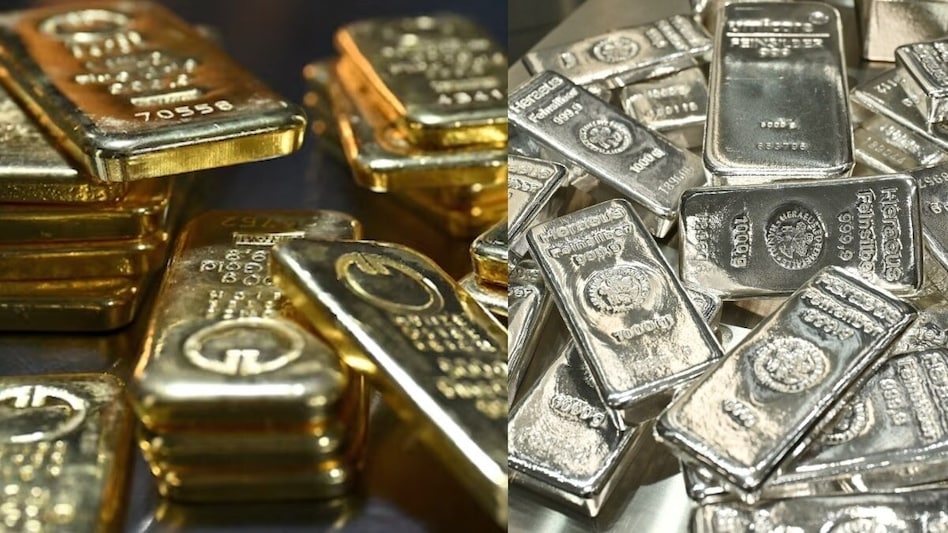 While the higher duty may potentially lower purchases of gold but might not have a significant impact on the import bill.
 'RBI letter does not mention listing': Noel Tata seeks full briefing on Tata Sons-RBI talks
 Tata Trusts asks Tata Sons to explore options other than listing, says ‘Tata Model has to be saved’
 Tata Trusts proposes ₹25,000 crore plan for SP Group, says Tata Sons listing is not an option
 Chandrasekaran had assured all necessary steps were being taken to remain private: Noel Tata
 'We cannot put the cart before...': Noel Tata's argument against N Chandrasekaran's reappointment
 Corporate Health Insurance Vs Retail Policy: Why You Need Personal Health Cover Too
 How India Changed In 12 Years: PM Modi’s Journey From Economic Reforms To Viksit Bharat
 Modi @76: From Twitter To Instagram, How His Digital Outreach Has Evolved
 Stock Picks To Watch: Shibani Kurian Reveals Kotak AMC’s Market Bets
 Gold ETF vs Physical Gold: Know the Tax Rules, Charges and Key Differences
 Hero Motors IPO subscribed 3.37 times on Day 2; retail portion subscribed over 5 times
 NSE IPO: India's largest exchange gets 43% subscription on Day 1; NIIs, retail see strong demand
 Rentomojo shares settle maiden trade nearly 32% above IPO price; what should investors do now?
 Sensex slips, Nifty settles higher; Tata stocks gain after N Chandrasekaran reappointment
 Cochin Shipyard, KRBL, RITES, Ramky Infrastructure among stocks to turn ex-dividend on September 18
 Venezuela introduces new PRO-V-90 visa for foreign professionals; key details for Indians
 iPhone Duo won’t go on sale on Sept 18: Here’s when you can buy Apple’s first foldable
 Moon took a massive hit: Why nobody noticed this giant crater at first
 Not clay, but pani puri: Pune's 13-foot Ganpati is made from 21,000 shells
 Fireballs after dark: 5 autumn sky events you won't want to sleep through












