


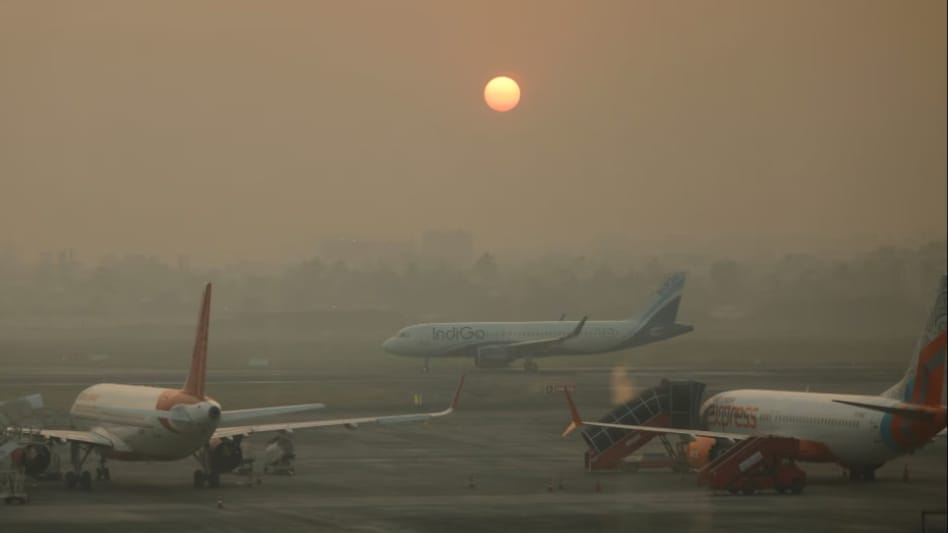
 World Bank has a warning for Indian airports
Indian airports could witness increasing cases of disruption of aviation operations. The reason is one you might not have expected. According to a World Bank report, extreme heat could increasingly disrupt aviation operations in India over the coming years, with New Delhi's Indira Gandhi International Airport projected to experience temperatures approaching or exceeding 50°C for multiple days each year by 2030.
The report, 'A Livable Future: A New Climate Reality for South Asian Cities', says rising temperatures are becoming a growing challenge for transport infrastructure across South Asia, affecting roads, railways and airports alike.

 HDFC Bank share price: Fifth-worst Nifty performer of 2026 offers maximum upside
 'Indian debt resolution justice...': Vijay Mallya takes a swipe after Subhash Chandra's settlement
 Nepal flash floods: Death toll reaches 270; UP districts on high alerts, Valmikinagar Barrage under close watch as Nepali rivers swell
 ‘No one owes Air India a living’: Backlash in Singapore parliament as airline seeks $1.5 billion from Tata, SIA
 Yamaha YZF-R2 debuts in India at around Rs 2.3 lakh; quick-shifter and R2 M variants on offer
 U.S. Spy Chief In Moscow? Secret C-17 Flight Sparks Mystery Over Ukraine Peace Talks
 Mohan Bhagwat In New York: Mamdani’s RSS Attack Sparks Political Showdown
 Gurugram’s Monsoon Crisis: Garbage-Choked Badshahpur Drain Turns Millennium City Into Flood Zone
 India Market Outlook: Why Global Yields, Not Crude, Could Derail The Earnings Recovery
 Defence Stocks Outlook: Why Valuations Could Be The Big Risk For Investors Now
 Wipro ADRs jump 7% on Google Cloud partnership; key details
 Internet stocks look expensive, but Nykaa and Lenskart remain long-term bets: Mayuresh Joshi
 Gujarat Pipavav shares: JM Financial retains target, sees 27% upside
 BEL, Data Patterns, Solar Industries: Mayuresh Joshi's 3 defence stock bets
  Stock to buy under Rs 100: Multibagger gets up to 37% upside targetsU.S. Spy Chief In Moscow? Secret C-17 Flight Sparks Mystery Over Ukraine Peace TalksMohan Bhagwat In New York: Mamdani’s RSS Attack Sparks Political ShowdownGurugram’s Monsoon Crisis: Garbage-Choked Badshahpur Drain Turns Millennium City Into Flood Zone
 Gold worth a smile? Man caught with 82g capsules hidden in his mouth at Bengaluru airport, video goes viral
 From Nepal to Bihar: How 4 Himalayan rivers can turn a flood in Nepal into India’s crisis












