


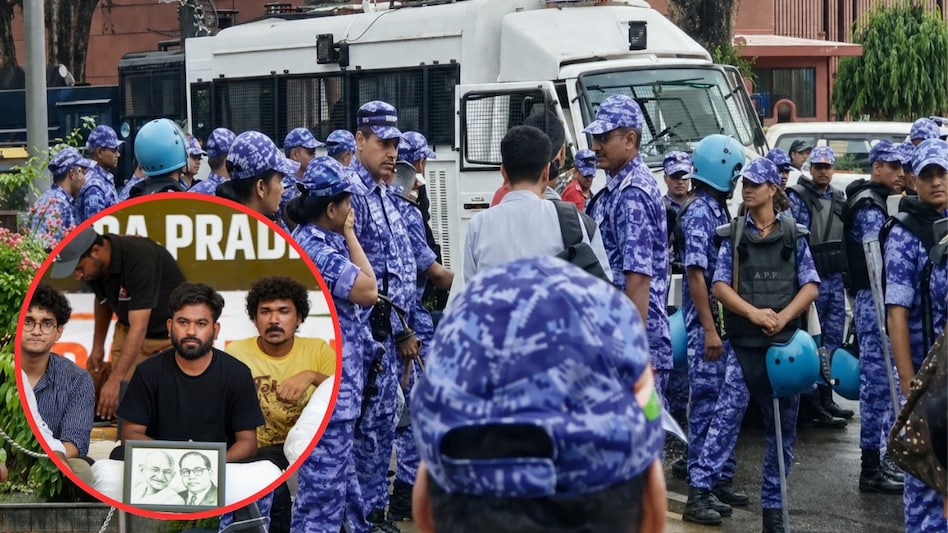
 Delhi Police imposes Section 163 ahead of CJP’s 'Chalo Sansad' parliament march
 Delhi Police has imposed Section 163 of the Bharatiya Nagarik Suraksha Sanhita (BNSS) in parts of New Delhi ahead of the proposed CJP “Chalo Sansad” march, with officers saying no permission has been sought or granted for the protest. The order restricts gatherings and processions around Parliament Street, while security has been tightened across the district.
What is section 163 of the Bharatiya Nagarik Suraksha Sanhita (BNSS)?

 RIL group to become India's largest conglomerate by m-cap after Jio IPO: Uday Kotak
 IDBI Bank sale to Fairfax faces union resistance, black-badge protest on October 16
 Supreme Court overturns Yes Bank’s ₹8,400 crore bond write-off, raising liability risks: Report
 India's trade with West Asia returns to near-normal levels
 India-US trade deal nearing finish line, but tariff clarity remains key
 Weekend OTT Releases: The Diplomat 4, Aasha, Sacrifice And More
 How Jio Transformed India From Data Scarce to Data Abundant! | Akash Ambani | Jio Platforms IPO
 Akash Ambani Decodes Jio's Financial Muscle | Reveals The 5 Key Business Drivers | Jio Platforms IPO
 From Dhirubhai’s 1977 IPO to Jio's Mega Launch | Uday Kotak Calls Jio IPO a ‘Moment in History’
 Where To Invest To Benefit From The RBI’s Rate Hike | Personal Finance | Money Today
 RIL group to become India's largest conglomerate by m-cap after Jio IPO: Uday Kotak
 Gold eyes sharp recovery; can MCX prices hit Rs 1.5 lakh? Vandana Bharti explains
 Tech Mahindra Q2 results: PAT rises 33% YoY to Rs 1,586 crore; recommends 1:1 bonus issue
 Jio Platforms IPO: How HFCL promoter Mahendra Nahata's investment could rise over 110 times
 South Indian Bank shares hit 52-week high on Q2 earnings, close higher Weekend OTT Releases: The Diplomat 4, Aasha, Sacrifice And MoreHow Jio Transformed India From Data Scarce to Data Abundant! | Akash Ambani | Jio Platforms IPOAkash Ambani Decodes Jio's Financial Muscle | Reveals The 5 Key Business Drivers | Jio Platforms IPOIDBI Bank sale to Fairfax faces union resistance, black-badge protest on October 16From Dhirubhai’s 1977 IPO to Jio's Mega Launch | Uday Kotak Calls Jio IPO a ‘Moment in History’












