


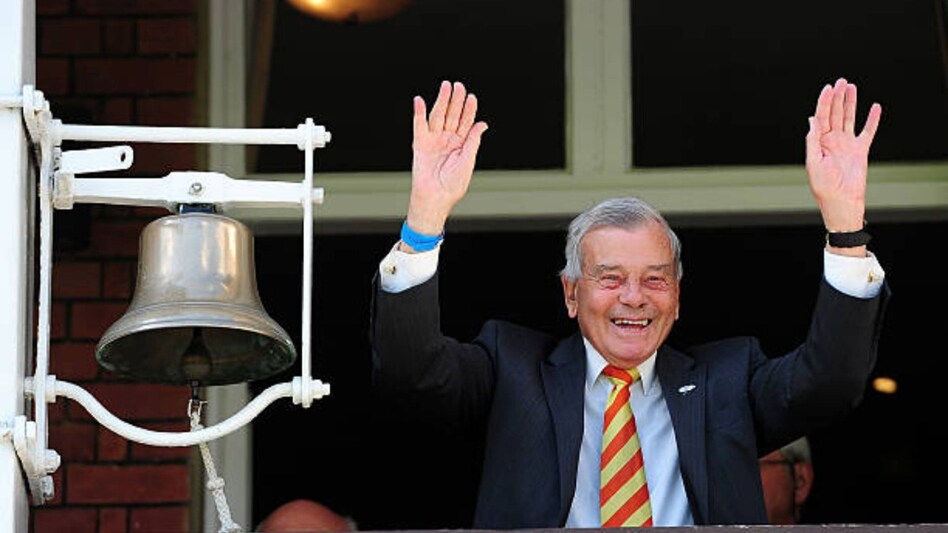
 Bird’s presence, warmth, and eccentricity are irreplaceable. In today’s fractious cricketing landscape, his absence will be felt deeply—especially in moments that need humour, heart, and the firm hand of a legend.
Harold “Dickie” Bird, the most beloved umpire in cricket history and the game’s first global officiating icon, died at age 92, closing a chapter on one of the sport’s most remarkable characters.
The son of a Yorkshire coal miner, Bird defied his roots after his father urged him at 14: “You are going to play sport for a living—you are not going down the coal mine.” He played 93 county matches for Yorkshire before becoming a Test umpire, standing in 66 matches from 1973 to 1996.

 RBI says interest rates on deposits must be uniform, but banks get more flexibility on bulk deposits
 'Focus on renewables to ensure energy independence': PM Modi tells CCS amid Hormuz tensions
 US-Iran war: Trump, team under scrutiny over allegations of playing the stock market; here’s what’s happening
 Launching an AIF just got faster: What SEBI's new GARUDA framework means
 Without ethanol, petrol could have hit ₹125/litre; no widespread engine failures from E20, says Gadkari
 Q1 Earnings Show Slow Growth, But Devarsh Vakil Expects Stronger Recovery Ahead For Markets
 India Market Outlook: FII Flows May Fuel Large Cap Rally As Global Money Returns To Indian Markets
 Kia Syros EV First Drive Review | 526 KM Range, Premium Cabin | Better Than Tata Nexon EV?
 Asian Paints Exclusive: B2B Growth To Outpace Market, Competition Still Brutal
 M.P. Set To Become India's Next Telecom Manufacturing Hub | ₹2,000 Cr Investment Planned | Sources
 Sensex, Nifty extend gains as auto stocks shine; what's next?
 Vedanta Q1 profit rises 72% YoY; announces demerger of real estate business into VPPL
 Tech Mahindra, Coforge, Persistent shares top IT picks: HDFC Securities
  Swiggy Q1 earnings: Net loss narrows to Rs 791 crore, revenue rises 37%
 Can Fin Homes can hit Rs 870-880; buy Home First on dips, says Angel One's Osho Krishan
 Mahindra Last Mile Mobility enters unicorn club with ₹10,822 crore valuation after Lightrock-led funding round; IPO in 2027RBI says interest rates on deposits must be uniform, but banks get more flexibility on bulk deposits
 Kotak Investment Banking announces leadership revamp with co-CEO structure and new vice chairman
 'Zero interest rates aren't normal': Adani Group CFO counters Uday Kotak on US bond yields
 Arboreal Bioinnovations raises ₹230 cr in Series A funding for specialty food ingredient expansion










