Even more remarkably, grateful American traders named a ship after him, commissioned his portrait for a museum in Massachusetts, and sent him a life-sized portrait of George Washington that once adorned his sprawling mansion in North Kolkata.
A remarkable rise from poverty
Born in 1752, Ramdulal Dey — later known as Ramdulal Deb after his family adopted the more aristocratic surname — grew up in modest circumstances in Bengal. Orphaned at an early age, he found an unlikely opportunity when his grandmother worked for Madan Mohan Dutta, a senior official associated with the East India Company's commercial operations.
Allowed to study alongside Dutta's children, Ramdulal displayed an exceptional talent for arithmetic and bookkeeping. He eventually joined Dutta's establishment as a clerk on a modest salary.
One of the most enduring stories associated with his early career involves the purchase of a stranded cargo vessel on the Hooghly River. According to popular acounts, Ramdulal used his employer's money to buy the wreck at auction. Soon afterwards, another merchant — who urgently needed the cargo — purchased it for a much higher price, generating an enormous profit.
When Ramdulal disclosed the entire episode to his employer and offered to hand over the profits, Dutta reportedly rewarded his honesty by allowing him to keep the earnings. Although historians note that parts of this story belong to family tradition rather than verifiable archival evidence, it has long been regarded as the turning point that enabled him to launch his own trading business.
America's gateway to Bengal
The American Revolution had transformed global trade. After independence, merchants from New England lost many of the commercial advantages they had enjoyed under British rule and began searching for new markets across Asia.
The first American trading vessel to reach Calcutta, the Empress of China having opened the China trade earlier, was followed by ships including the Hydra, which arrived in Bengal in the late 1780s. Unlike British merchants, the Americans lacked established commercial networks in India and depended heavily on local intermediaries known as banians.
Ramdulal emerged as perhaps the most influential among them.
He helped American captains source Bengal's prized exports — including fine cotton textiles, silk, sugar, ginger and indigo — while arranging credit, warehousing and market intelligence. In return, American ships brought silver, metals and other commodities to Indian ports.
By the early nineteenth century, trade between the United States and Calcutta had expanded rapidly. Contemporary estimates suggest dozens of American vessels visited the city annually, with bilateral commerce running into several million dollars by the first decade of the 1800s.
Why Americans admired him
Ramdulal's reputation rested not only on commercial success but also on integrity.
American merchants repeatedly entrusted him with valuable consignments despite never having met many of their business partners in person. His reliability helped establish confidence between merchants separated by months of ocean travel.
The relationship became so close that American traders affectionately referred to him as "Ram Dolloll" — an anglicised rendering of his Bengali name. Their admiration extended far beyond business.
A portrait of George Washington in a Kolkata mansion
One of the most fascinating episodes in Indo-American history unfolded in 1801.
A group of prominent American merchants commissioned English painter William Winstanley to produce a life-sized oil portrait of George Washington as a gift for Ramdulal. Since orthodox Hindu customs discouraged overseas travel, Ramdulal declined repeated invitations to visit America. Instead, his American associates decided to send a symbol of their young republic to Bengal.
The portrait was installed in Ramdulal's mansion on Beadon Street in North Kolkata, where it remained for decades.
The painting survives today and is preserved in the collection of the Victoria Memorial Hall in Kolkata after changing hands over the years.
The exchange was mutual. American merchants also commissioned a portrait of Ramdulal himself, which is now housed at the Peabody Essex Museum, one of the oldest continuously operating museums in the United States.
A ship carried his name
Perhaps the greatest tribute came from Salem's merchant community. An American merchant vessel was christened Ram Dolloll, reflecting the esteem in which he was held by traders whose fortunes were increasingly tied to commerce with India.
When Ramdulal died in April 1825, members of the East India Marine Society in Salem formally recorded their condolences — a rare honour for a foreign merchant at the time.
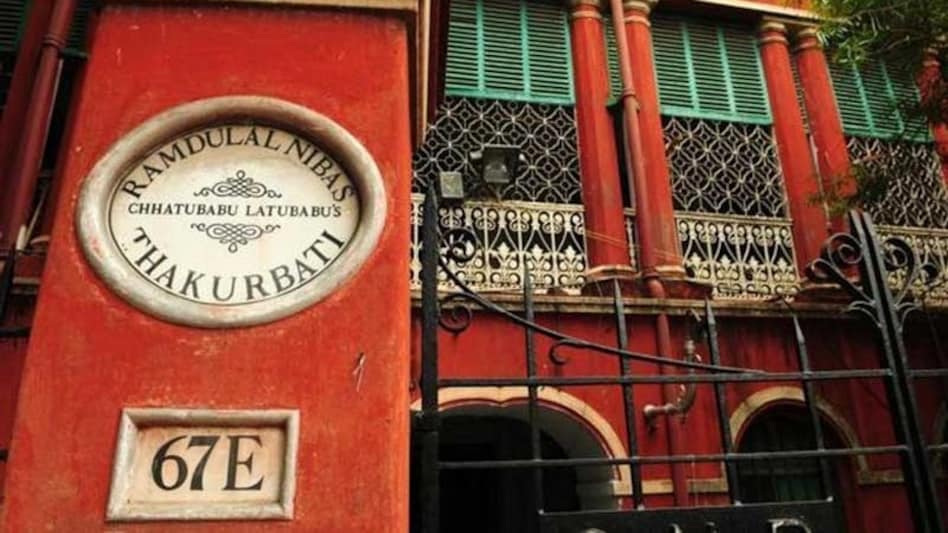
Today, Ramdulal's former residence at 67E Beadon Street stands amid the bustle of North Kolkata, largely unnoticed by passers-by.



 He helped American captains source Bengal's prized exports — including fine cotton textiles, silk, sugar, ginger and indigo — while arranging credit, warehousing and market intelligence.
 20 Asia-Pacific stocks with up to 145% upside: Full ‘Going For Glory’ list, no Indian stock included
 Govt won't step into Singapore Airlines' Air India call, says Singapore minister
  India’s energy lifeline runs through the Indian Ocean: Why this maritime corridor matters
 Tax filing 2026: Missed crypto income in ITR? Why investors could receive an Income Tax notice
 CNG, hybrids and EVs reshape India's car market: What August sales reveal
 Home Loans & Insurance: How Couples Can Structure Them For Tax Efficiency
 Money & Marriage: How Couples Can Divide Household Expenses, Track Spending And Stay On Budget
 Parag Parikh Flexi Cap Fund Underperformance: Is Fund Size Becoming A Major Challenge For Investors?
 Midcap, Smallcap Funds: Strong Profit Growth Could Keep Investor Flows Robust, But Valuations Matter
 Travel Insurance Guide: Where To Buy, How Much Cover You Need & When To Get It
 Tata Technologies: Former CEO Patrick McGoldrick sells shares worth nearly Rs 165 crore
 Tata Power stock: Choice Broking expects recovery, assigns two price targets
  IPO rush next week: 11 issues eye to raise Rs 7,055 crore; 6 IPOs to open on same day, check details
 600% dividend stock: Check dividend per share, record date, payment date and other key details
 Corporate FDs: Muthoot offers 8.95%, Shriram 7.5%; what investors should know before investing
 Quote of the Day by Azim Premji: ‘Excellence endures and sustains. It goes beyond motivation into the realms of inspiration’
 Sending your bike by train? These rules could save you money and a lot of trouble












