


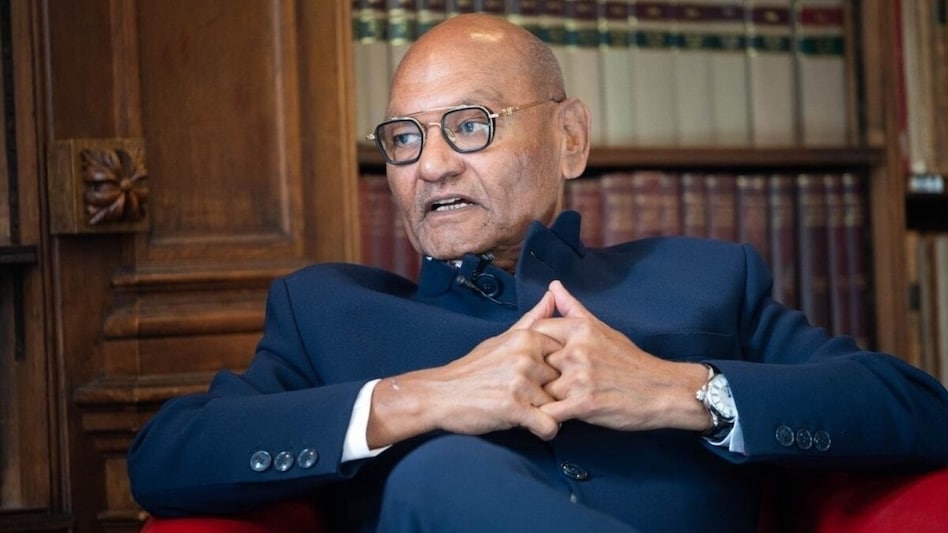
 Vedanta Group Chairman Anil Agarwal
“Dear founders, certainty is a myth. Most of you know about my 9 failed businesses before Vedanta. But what you don’t know is that at the time, I truly believed every one of those would succeed,” a timeless quote by Anil Agarwal, Founder and Chairman of Vedanta Resources Limited.
Agarwal detailed how his early investments in a paper mill, a multiplex venture, and an aluminium foil plant all resulted in painful financial mistakes before he eventually established Vedanta.

 'US took 100 years, India needs just one decade to develop': Nara Lokesh at Pan-IIT AP Summit 2026
 Beyond chatbots: Tavus's Griffin model passes video Turing test with 48% human success rate
 35 years after liberalisation, India’s global integration remains a work in progress, says Shankar Sharma
 RBI Governor: Today's resilience may not imply tomorrow's immunity
  Trump promises $100 checks & $5,000 midterm dividend to rebound from record-low approval rating
 Market Correction: Which Sectors Could Hold Up as Global Risks Pressure Indian Stocks?
 5-10 Year Wealth Creation: How Should Investors Build Their Long-Term Portfolio?
 How Much Should You Invest In Bonds At Different Stages Of Life? 20/60 Investing Rule Explained
 Bond Investing For Beginners: How To Choose, Check Ratings, Returns & Manage Risk
 Flexi-Cap Funds: How Much Does the Fund Manager’s Strategy Really Matter?
 Stock market sell-off: Nifty, Sensex log 8th straight weekly loss; key levels & top triggers now
 IPO boom: 69 Indian companies raise Rs 90,500 crore in Q3 despite stock market sell-off; what's next
 TCS, Infosys, HCL Tech, TechM, Wipro, LTM, Coforge, HEXT: Fresh target, Q2 previews for IT stocks
 Carlsberg India IPO: SEBI approves confidential filing; beer maker moves closer to listing
 Suzlon, KPIT Tech, RIL, IRFC, HDFC Bank, Infy: 56% Nifty500 stocks in bear grip amid market sell-off
 Jefferies puts 25% of sovereign bond portfolio in Indian 15-year debt at 7.38% yield
 SEBI chief Tuhin Kanta Pandey signals faster FPI onboarding with RBI: Report
 El Niño to dominate India’s post-monsoon season; neutral IOD raises rainfall concerns
 Asian Games 2026: India beats Pakistan by 19 runs, clinches gold in men’s cricket final'US took 100 years, India needs just one decade to develop': Nara Lokesh at Pan-IIT AP Summit 2026












