


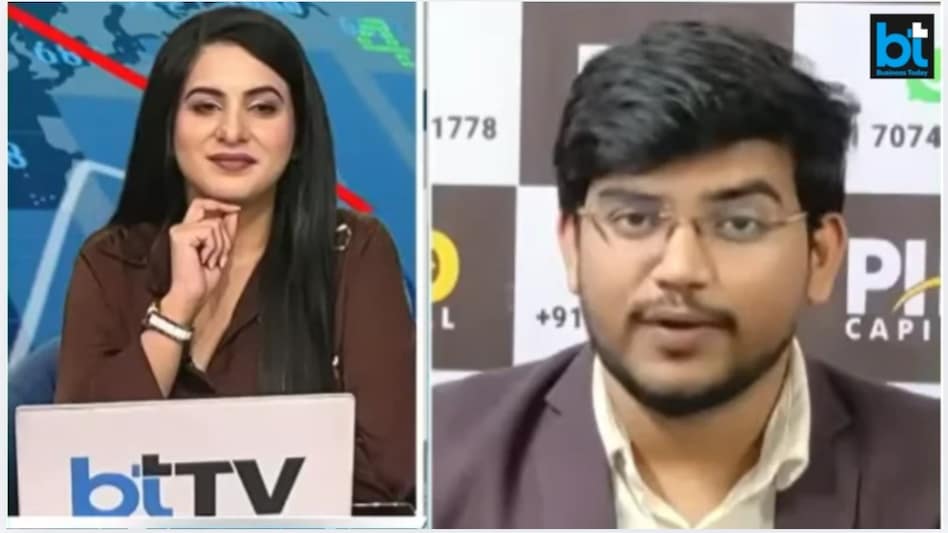
 Pradip Halder (SEBI Registration number INH00006126), Founder and CEO of PHD CAPITAL, in conversation with Sakshi Batra of Business Today TV during Daily Calls show.
How to choose best stocks for multibagger returns: Pradip Halder (SEBI Registration number INH00006126), Founder and CEO of PHD CAPITAL, in a exclusive conversation with Business Today Television in the Daily Calls show, advised stock market investors on how to choose best stocks.
Yes Bank, R Power, others
FAQs
How can investors choose the best stocks for multibagger returns according to Pradip Halder?
Pradip Halder says investors should treat stocks like businesses and first understand both the business and the management, which he calls the Dhanda-Banda rule. He advises checking whether revenue and profit after tax have grown by around 12% to 15% on average over the last five years before considering investment.
What is the STF formula shared by stock market expert Pradip Halder?
STF stands for Sentimental, Technical and Fundamental. According to Halder, investors should combine market psychology, technical analysis and fundamental analysis to improve their chances of making money and to identify stocks showing real strength.
Why does Pradip Halder advise investors to avoid penny stocks?
He warns that many penny stocks trading at very low prices may have weak fundamentals, poor visibility and compliance-related risks. He specifically cautions against chasing low-priced stocks only because they look cheap, as price alone does not make a stock a good investment.
What is Pradip Halder’s recommended fund allocation strategy for investors?
He suggests keeping 60% to 70% of funds in safe assets for wealth preservation and stability, while using 30% for swing trades to capture active growth and market momentum. He clearly recommends zero allocation to penny stocks due to higher risk.
What does the Knowledge Before Lakshmi rule mean in stock market investing?
This rule means learning must come before wealth creation. Halder says investors should first build knowledge, understand trading styles like swing or breakout trading, and then invest using a mix of technicals, fundamentals and psychology instead of blindly following tips.

 HDFC Bank Chairman: ‘No governance related concerns at the systemic level’
 US pays out $100 billion in tariff refunds after Supreme Court struck down Trump's IEEPA duties
 Google DeepMind announces major leadership changes; Demis Hassabis steps down as CEO; All details
 Sensex, Nifty open higher; HCL Tech, Tech Mahindra, Infosys, RIL shares lead gains
  Why did IT major Infosys choose Ashiss Kumar Dash to lead?
 RBI Governor Explains Why India Expects Strong FDI, Stable Rupee & Healthy Capital Flows
 Siemens India MD & CEO Sunil Mathur On AI, Smart Factories & India's Infrastructure Revolution
 LIC OFS Fully Subscribed! Should Retail Investors Buy Now Or Wait Before Investing?
 This Sector Could Lead The Next Rally! Vaibhav Sanghavi Reveals 3 Biggest Market Bets
 Oil Prices May Fall To $60? Expert Explains How Middle East Tensions And OPEC Could Impact Crude
 HAL, BEL, BDL, MIDHANI, Azad, Solar Industries shares: Two top defence picks
 Ion Exchange stock tanks 8% as Q1 net profit sinks 92%
  Navin Fluorine rises 8%; Ambit most bullish at Rs 9,600, Equirus most bearish at Rs 4,700
 Juniper Green, MV Electro make a strong Dalal Street debut; deliver up to 22% listing pop
 Shiprocket IPO opens on August 12; check price band, lot size, & other key issue details
 Google Assistant to be replaced by Gemini starting September on Android and WearOS
 'Bharat Taxi to not kill Ola, Uber': Amit Shah on India's first cooperative-led taxi app, details expansion planHAL, BEL, BDL, MIDHANI, Azad, Solar Industries shares: Two top defence picksIon Exchange stock tanks 8% as Q1 net profit sinks 92%
  From ₹15,000 to ₹53,350 per month: Ankur Warikoo reveals driver's salary, calls it his 'best investment'










