The Ukraine war taught Europe what energy dependency really costs. India must learn that lesson without needing to live it. Six structural bets must be placed, at scale, concurrently, immediately.
One: Drill Every Drop Beneath Indian Land and Sea
India has conducted seismic surveys on less than 25% of its 3.4 million square kilometre sedimentary basin. The US has explored most of its offshore potential. Brazil discovered its pre-salt deepwater fields in 2006 and is on track to become a top-five global crude exporter within 20 years. India, with comparable potential, has moved hesitantly—encumbered by regulatory complexity and PSU risk-aversion.
ONGC estimates undiscovered offshore potential at 20–25 billion barrels. The Krishna Godavari (KG) deepwater basin holds over 1.5 trillion cubic feet of gas reserves, yet KG-D6 production collapsed from 60 MMSCMD in 2010 to under 15 MMSCMD today. The Mahanadi and Bengal offshore basins remain almost entirely unexplored. The Andaman and Nicobar region, geologically analogous to hydrocarbon-rich Myanmar and Indonesia, has seen minimal exploration despite compelling structural analogues.
The dependency extends beyond fuel. India imports approximately 20% of its urea, 50% of its DAP, and virtually 100% of its potash—the inputs that feed 1.4 billion people. Most of this flows from Oman, Russia, Saudi Arabia, and Morocco. India’s fertiliser subsidy bill alone runs to Rs 1.75 lakh crore annually, directly linked to the global prices of natural gas, which comprises 80% of urea’s raw material cost. Every domestic gas field India develops directly reduces fertiliser import dependency and strengthens food security.
India’s undiscovered offshore reserves, if even partially recovered, could produce for decades and materially reduce the $160 billion annual import bill. Unlocking them requires a National Hydrocarbon Exploration Programme—simplified licensing, PSU-private co-ventures, sovereign-backed financing—treated as a national security imperative.
Two: Convert India’s Waste Mountains Into Fuel
About 160 million tonnes (MT) of agricultural residue is burned across Punjab, Haryana, and UP annually. Cities generate 62 MT of municipal solid waste per year. Distilleries, sugar mills, paper plants, and textile units add over 150 MT of industrial organic waste. The Ministry of New & Renewable Energy (MNRE) estimates industrial waste alone holds 4–5 billion cubic metres of biogas potential annually.
The Energy and Resources Institute puts India’s total biogas potential at 48–60 MT per year—one-third of current national gas consumption. The SATAT has already commissioned nearly 1,000 compressed biogas plants with a clear mandate to scale to 5,000. Building all 5,000 costs Rs 2 lakh crore—a rounding error against the import bill—and delivers 500,000 rural jobs as a byproduct.
Three: Electrify Everything That Moves and Burns
India’s petroleum bill is a mobility and cooking bill. Ten million trucks consume 40% of all diesel; 1.5 million diesel buses run on overdue technology; 330 million LPG households cost $9 billion in annual imports. The passenger car and two-wheeler market is already moving—1.14 million electric two-wheelers sold in FY25, growing at 21% year-on-year, driven by economics. Policy energy must concentrate where volumes and import substitution are largest.
Electric buses: The PM e-Bus Sewa scheme has sanctioned 10,000 electric buses — a strong start on a journey that demands 500,000 over the next decade. Upfront capital is the only barrier, addressable through viability gap funding and green transport bonds.
Electric trucks on freight corridors: building a dedicated charging network along national highway freight corridors will make short-haul and intra-city commercial EVs commercially viable and create the demand signal for domestic manufacturing investment. Alongside this, a mandatory transition timeline for all new intra-city commercial vehicles to electric by 2030 will accelerate the shift at scale.
Induction cooking: redirecting even a portion of the existing LPG subsidy toward affordable induction devices and reliable electricity access would cut LPG import dependency by 30–40% within a decade. ICRIER and World Bank data show reliable electrification raises rural enterprise productivity 25–35% within five years.
Four: Nuclear Is Non-Negotiable — India Must Build It at Scale
India operates 8.8 GW of nuclear power, which is approximately 2% of electricity generation. The 9.6 GW Jaitapur project, is ready to be unlocked — civil nuclear agreements with the US, France, South Korea, and Canada are in place, and operationalising them would commission what would be the world's largest nuclear plant". Solar and wind while necessary, cannot provide round the clock firm power. Nuclear provides it.
India’s decisive advantage is the thorium reserves of 6.5 lakh tonnes—25% of global deposits. The global small modular reactors (SMR) market is projected at $300 billion by 2040. The US, Canada, France, and South Korea are racing to set standards. India has the engineering base at BARC and BHAVINI, the manufacturing scale, and the resource foundation to build and export SMRs across Southeast Asia and Africa—a $50 billion industry waiting to be claimed.
China has added over 34 GW of nuclear capacity in a decade. India's entire nuclear fleet stands at 8.8 GW. The 100 GW target must be pulled forward—30 GW by 2035, 60 GW by 2040—with pre-approved sites, standardised reactor designs, and a dedicated financing vehicle outside the annual budget cycle.
Five: 1 TW of Renewables Demands the Full Stack
India’s renewable resource endowment is extraordinary—3 TW of potential, more than China and Europe combined. Rajasthan alone holds 142 GW of exploitable solar. Offshore wind along 7,500 km of coastline adds 127 GW more. India added a record 45 GW of capacity in 2025. The sun is not the problem, the supply chain, the grid, and the storage behind it are. Until those are fixed, India is not building energy sovereignty.
Manufacturing: India still imports the majority of solar cells from China and has zero domestic polysilicon refining capacity. Building the full stack—from polysilicon to wafers to cells to modules to batteries—requires $15–20 billion over five years and creates an export base for a Global South actively seeking alternatives to Chinese supply.
Grid and markets: T&D losses of 15% negate a significant share of every gigawatt added, more than twice the global average. Moving 1,000 GW across the grid requires Rs 15–18 lakh crore by 2032. State utilities carrying Rs 6.5 lakh crore in accumulated losses and Rs 7.26 lakh crore in debt cannot anchor that investment. Direct benefit transfer of electricity subsidy, cost-reflective tariffs, and genuine open access are preconditions.
Smart meters: Over 1.1 billion Indians use prepaid mobile, but telecom billing losses are near zero. Electricity billing losses cost DISCOMs Rs 1 lakh crore annually. Prepaid smart meters solve this. India has deployed 25 million prepaid smart meters with a 250 million rollout underway.
Battery storage is the critical infrastructure India must build this decade. The economics have moved faster than anyone predicted. Global battery pack prices fell to $70 per kWh in 2025, making stationary storage the lowest-priced lithium-ion category for the first time. All-in project capex stands at $125 per kWh; levelised cost of storage at $65 per MWh is cheaper than coal peaking power in most Indian states.
As per CEA India needs 411 GWh of storage by 2031-32 just to absorb 500 GW of renewables. India has commissioned under 1 GWh. To achieve this, we must have a sovereign-backed financing facility that treats battery infrastructure on par with highways. Mandate storage co-location on all new utility scale renewable projects above 100 MW. Require behind-the-meter storage for all industrial consumers above 1 MW. The PM Surya Ghar rooftop solar mission must mandate battery co-location from the outset.
Six: Seize the Minerals Race. Mine It, Refine It, Own the Supply Chain
The energy transition runs on minerals—lithium for batteries, cobalt for cells, nickel for anodes, rare earths for turbines and motors. China controls 60–90% of processing capacity for every one of them. India holds 6.9 MT of rare earth reserves — third largest globally — yet contributes less than 1 percent of global production. Its 2023 discovery of 5.9 MT of lithium in J&K is among the world’s largest. India produces rare earth concentrates domestically but lacks refining capacity entirely, importing 93% of its rare earth magnets from China.
KABIL, India's overseas mineral acquisition vehicle, is the right platform — with Rs 500 crore ($53 million) of authorised capital, it needs to scale very aggressively. In comparison, China has invested over $120 billion in overseas mining and mineral processing projects since 2023 alone. We must fast-track the J&K lithium project, build mineral processing zones in Odisha, Jharkhand, and Rajasthan, and multiply KABIL's mandate tenfold
India's Strategic Imperative
India has every structural advantage: the sunlight, the reserves, the minerals, the thorium, the engineering talent, and a domestic market that justifies industrial investment at scale. What India now must do is treat energy as sovereignty rather than a sector.
India must treat energy exactly as it treated defence. From importing nearly 70 percent of its requirements a decade ago, India is today targeting $25 billion in defence exports — achieved through manufacturing investment, dedicated defence corridors, and sustained industrial policy. The transformation from net importer to net exporter did not happen by accident. It happened because India decided it would. Energy sovereignty demands the same conviction and the same industrial architecture.
India's energy transformation is not a cost — it is the highest-return investment this country can make. At the current rate of $160 billion a year, India will spend approximately $2 trillion on energy imports over the next decade. Redirecting even a quarter of that — $500 billion — into domestic energy infrastructure would be transformational.
The geopolitical window will not remain open indefinitely. Every year of delay is a year the US and China consolidate and India’s options narrow. A seat at the G3 table in 10 years requires decisions made today.
India landed a spacecraft on the moon’s south pole for $75 million, which was less than the budget of a Hollywood film. The engineering ambition was never the question, neither is the energy ambition. What Chandrayaan proved is that when India commits fully, it executes at a level that surprises the world. Solving its energy crisis is harder, but the instinct is the same. It is time to bring that same conviction to the one mission that matters the most for the future of India.
(Views are personal; the author is Global Business Advisor, former Country Head SoftBank Group and CEO & MD Bharti Airtel)


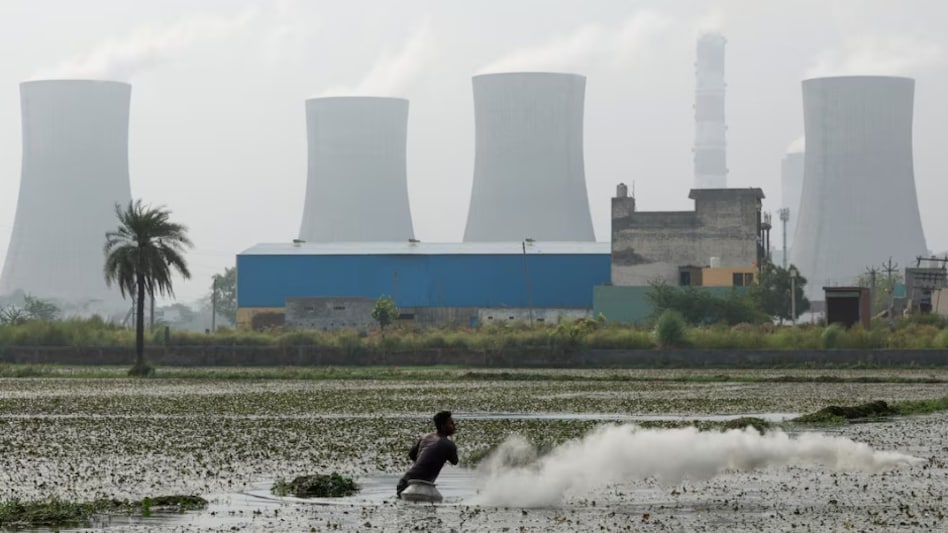 India now must treat energy as sovereignty rather than a sector
 NSE IPO: Institutional interest strong; business highly profitable, says Ashishkumar Chauhan
 Paytm says new UPI MDR will generate additional revenue from merchant business
 ‘Inevitable but doesn’t make sense in some cases’: Zerodha’s Nithin Kamath on MDR on UPI transactions over ₹2000
 Oracle layoffs not about ‘doing more with less,’ says CFO Hilary Maxson
 ‘The additional revenue will help’: MobiKwik, PhonePe founders back MDR charge on UPI transactions over ₹2000
 UPI Charges From October 15? What The New MDR Rules Mean For You
 UPI Payments Above ₹2,000 Face MDR: Who Pays The New Fee?
 Indian Markets Face More Sell-Off? Crude, U.S. Yields & Fed In Focus | Stock Market News
 NSE IPO Vs BSE: Valuation, Listing Impact & What Investors Should Watch
 FMCG Stocks Rally: Why Inflation Could Hit Margins And Pricing Power
 Solar Industries stock plunges 17% in two days; here's what DAM Capital says
  Welspun Living's arm gets credit rating upgrade, check stock reaction
  YES Bank, BOB, PNB, IndusInd Bank, HDFC Bank shares: Key beneficiaries of MDR charges
 Tata Chemicals shares zoom 29% in two days on Tata Sons listing hopes
  ‘Turnover looks big but margins are small, expenses are real’: Entrepreneur writes to PM Modi asking for fairer MDR
  IIM Bangalore MBA stays No. 1 in India for fifth year, moves up to No. 2 in Asia-Pacific
 UPI vs debit card vs credit card MDR: How much does each payment method cost merchants?












