


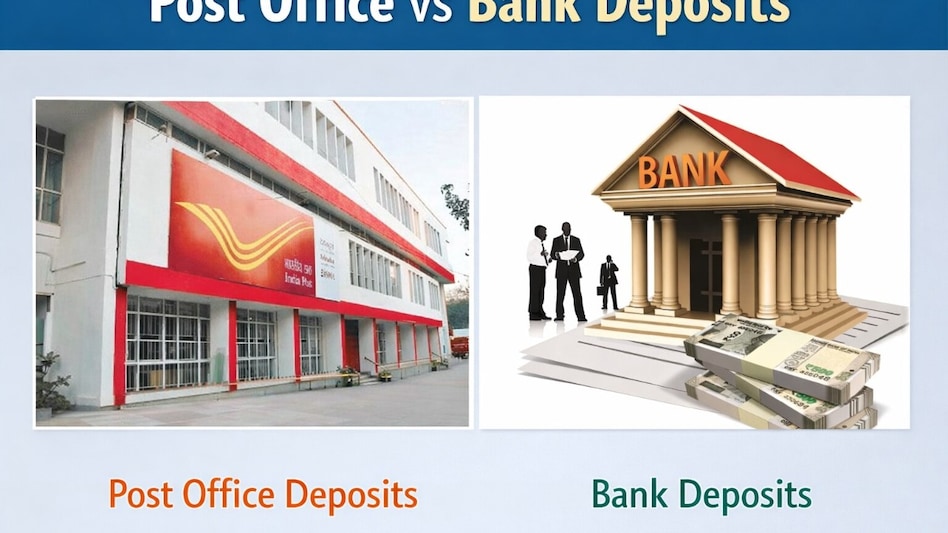
 Post Office Time Deposits are backed by the Government of India, meaning both the principal amount and interest carry a sovereign guarantee. Bank FDs are covered under the DICGC scheme.
For conservative investors seeking guaranteed returns, both Post Office Time Deposits (POTDs) and Bank Fixed Deposits (FDs) remain among the most popular savings options. While both offer fixed returns and capital protection, they differ significantly in terms of safety, interest rates, liquidity, flexibility and tax benefits.
The choice between the two largely depends on an investor's priorities. Those looking for maximum safety may prefer the government-backed Post Office Time Deposit, while investors seeking higher returns and greater flexibility may find bank FDs more suitable.

 'RBI letter does not mention listing': Noel Tata seeks full briefing on Tata Sons-RBI talks
 Tata Trusts asks Tata Sons to explore options other than listing, says ‘Tata Model has to be saved’
 Tata Trusts proposes ₹25,000 crore plan for SP Group, says Tata Sons listing is not an option
 Chandrasekaran had assured all necessary steps were being taken to remain private: Noel Tata
 'We cannot put the cart before...': Noel Tata's argument against N Chandrasekaran's reappointment
 Corporate Health Insurance Vs Retail Policy: Why You Need Personal Health Cover Too
 How India Changed In 12 Years: PM Modi’s Journey From Economic Reforms To Viksit Bharat
 Modi @76: From Twitter To Instagram, How His Digital Outreach Has Evolved
 Stock Picks To Watch: Shibani Kurian Reveals Kotak AMC’s Market Bets
 Gold ETF vs Physical Gold: Know the Tax Rules, Charges and Key Differences
 Hero Motors IPO subscribed 3.37 times on Day 2; retail portion subscribed over 5 times
 NSE IPO: India's largest exchange gets 43% subscription on Day 1; NIIs, retail see strong demand
 Rentomojo shares settle maiden trade nearly 32% above IPO price; what should investors do now?
 Sensex slips, Nifty settles higher; Tata stocks gain after N Chandrasekaran reappointment
 Cochin Shipyard, KRBL, RITES, Ramky Infrastructure among stocks to turn ex-dividend on September 18
 Not clay, but pani puri: Pune's 13-foot Ganpati is made from 21,000 shells
 Fireballs after dark: 5 autumn sky events you won't want to sleep through
 12.5 trillion tonnes gone: Greenland and Antarctica reveal a frightening shift
 MrBeast's biggest video arrives Saturday: $10 Million budget is public, but the actual concept is still under wraps
 iPhone 18 Pro, Pro Max sale starts today in India: Check store timings, features and direct-buy benefits












