















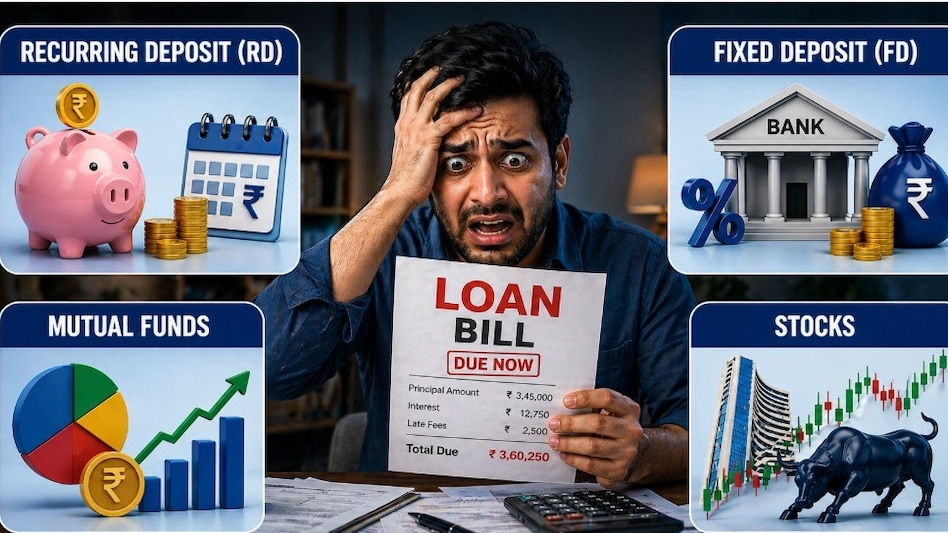
 Experts also emphasise building a dedicated emergency fund covering 6–12 months of expenses, reducing the need to liquidate investments under pressure.
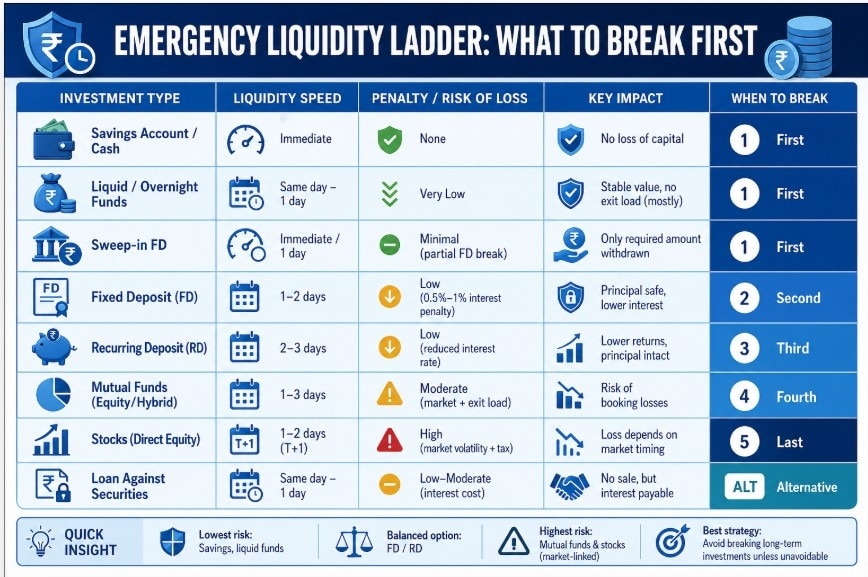
In a financial emergency, the priority is clear: access funds quickly while minimising losses. Not all investments are equal in this regard. The order in which you liquidate assets — ranging from fixed deposits to equities —can significantly impact your long-term wealth. Financial planners recommend a structured “liquidity ladder,” where investors first tap the most liquid and least risky instruments, and avoid disturbing long-term, market-linked assets unless absolutely necessary.
Start with the safest and quickest options

 BRICS Summit 2026: PM Modi warns against turning critical supply chains into geopolitical tools
  'Need to reflect 2026, and no longer 1945': UN endorses PM Modi’s push for UNSC overhaul in BRICS 2026
 'India to overtake US within 25 years...': US economist sees Asian century taking shape
 AI safety warning: Sam Altman, Elon Musk back Anthropic CEO’s call to slow down frontier AI. Why?
 Will the Tata companies with interest in Tata Sons be impacted on Tuesday and how?
 “BRICS’ Relevance Is Growing”: PM Modi As 18th BRICS Summit Draws To Close
 “BRICS Must Involve Citizens”: PM Modi On Expanding Friendship, Partnership And Cooperation
 Gen Z Wealth Creation: Why Patience, Long-Term Investing & Compounding Matter For Young Investors
 Mastercard’s Vision For India’s Digital Economy
 BRICS Summit 2026 LIVE | PM Modi Announces Integrated Early Warning System For Global Crises
 Avoid jewellery; stick to ETFs, bars and coins for investment this festive season: Navneet Damani
 SEBI’s CAS proposals: Expert weighs in on new expiry-day settlement price methodology
 Large caps stocks under pressure as rising US bond yields, crude prices weigh on foreign flows
  SEBI proposes bringing unexecuted Iceberg orders into closing auction
 SEBI proposes new expiry-day settlement formula for derivatives after CAS concerns“BRICS’ Relevance Is Growing”: PM Modi As 18th BRICS Summit Draws To Close
 PM Modi Meets Philippines President Marcos On Sidelines Of BRICS Summit 2026
 Russian President Vladimir Putin Departs Delhi After Participating In BRICS Summit 2026
 Indian-origin CEO spent ₹3.5 crore on girlfriend, then sued her to get it back after break-up
 PM Modi Meets Kazakhstan President Tokayev | India-Kazakhstan Partnership Gets Big Boost


