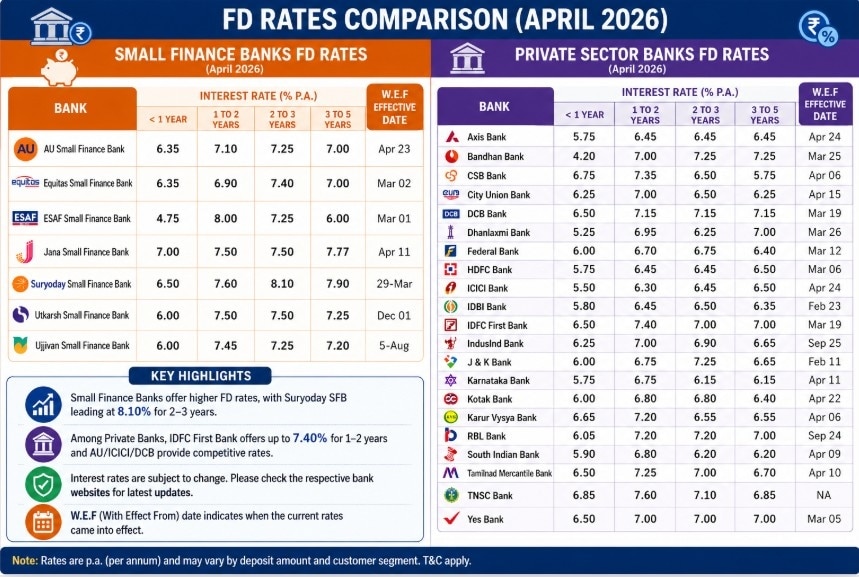



 Among public sector banks (PSBs), State Bank of India (SBI), Bank of Baroda (BoB), and Punjab National Bank (PNB) remain the top choices for conservative investors.
Fixed deposits (FDs) are increasingly being viewed as a tactical allocation tool rather than just a safety net, especially in a stabilising interest rate environment. With the Reserve Bank of India (RBI) holding the repo rate steady at 5.25% for the second consecutive meeting, FD rates across banks appear to have plateaued — making this a crucial window for investors to lock in yields.
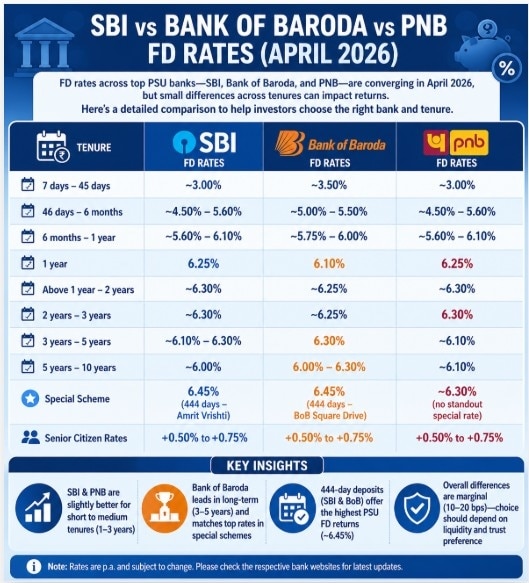
Among public sector banks (PSBs), State Bank of India (SBI), Bank of Baroda (BoB), and Punjab National Bank (PNB) remain the top choices for conservative investors. While all three offer relatively similar returns in the 6%–6.6% range, a closer comparison reveals meaningful differences across tenures.

 From selling gold to spending ₹3.5 lakh: iPhone 18 Pro fever hits India as fans queue up on sale day
 Jefferies' Christopher Wood sees gold at $10,000 'sooner or later'; likes India's small, midcaps
 NSE IPO fully subscribed on Day 2; QIB, NII quotas booked 1.3 times each
 Warren Buffett steps down as Chairman after 60 years: What changes at Berkshire Hathaway now
 How AI collapse could benefit Indian equity market; Jefferies' Christopher Wood explains
  “Unacceptable And Unprofessional”: MEA Rejects Pakistan’s Claims Over INS Kolkata Collision
  Commodity Trading For Beginners: How MCX & NCDEX Work | Trading Basics | Money Today
 US Fed Rate Hikes A Headwind For Foreign Flows? | Jibi Jacob | Jefferies
 ₹25 Billion FII Outflow: What Could Bring Foreign Investors Back? | Jefferies' Jibi Jacob
 India’s Private CapEx Picks Up: Christopher Wood On The Market Outlook
 Jindal Supreme, SS Retail, Hero Motors IPOs subscribed up to 181 times on final day; details here
 Sensex, Nifty post sixth weekly loss; TCS, Titan among top laggards, slip up to 4%How AI collapse could benefit Indian equity market; Jefferies' Christopher Wood explains
  Banks are no more secular growth story, prefer NBFCs: Chris WoodJefferies' Christopher Wood sees gold at $10,000 'sooner or later'; likes India's small, midcaps
 Spending ₹36,999 or ₹49,999 on a Redmi phone? Compare the Note 17 Pro and Pro Max before buying in India“Unacceptable And Unprofessional”: MEA Rejects Pakistan’s Claims Over INS Kolkata Collision
  Earning between ₹15,000 and ₹25,000? The new EPF rule could change your payslip and retirement savingsCommodity Trading For Beginners: How MCX & NCDEX Work | Trading Basics | Money Today
 Will RBI raise interest rates in October? Here’s what experts have to say