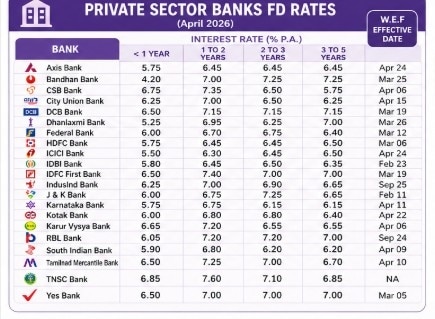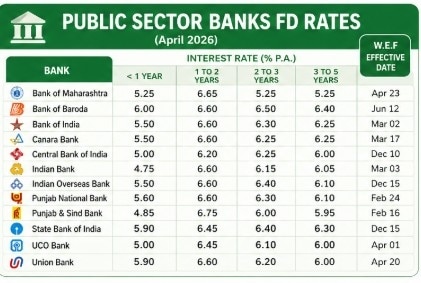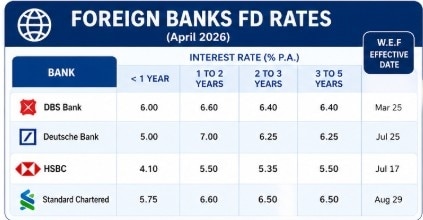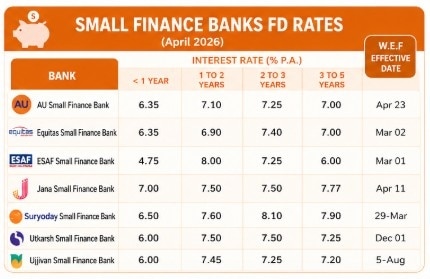



 Fixed deposits (FDs) continue to be a dependable investment choice for conservative investors, providing assured returns over a predetermined tenure.
Fixed deposits (FDs) continue to remain a preferred investment avenue for conservative savers in April 2026, offering stable and predictable returns amid a steady interest rate environment. With the Reserve Bank of India (RBI) maintaining the repo rate at 5.25% for the second consecutive policy meeting, FD rates have largely stabilised across banks, although significant variations persist across categories.
FDs, which allow investors to park a lump sum for tenures ranging from a few days to up to 10 years, typically offer higher returns than savings accounts while ensuring capital protection. However, the rate differential across banks—particularly between public sector lenders and small finance banks—has made rate comparison critical for optimising returns.

 BT Explainer: What is VRRR auction and why is it key to RBI’s liquidity management post FCNR (B) boost?
 NCLT approves Shree Naman's ₹1,800-cr offer for Gstaad & Neo Hotels in rare full-recovery bankruptcy deal
 Tewolde Gebremariam takes charge as Air India CEO; security clearance still pending: Report
 PVR Inox shares tumble 8%: What is weighing on the stock
 Manappuram Finance, Muthoot Finance shares: Antique sees up to 21% upside on two gold loan stocks
  Equity, FDs, Gold & More: How Couples Should Plan Their Investments Together
 How Couples Can Balance Shared Goals With Individual Dreams And Financial Needs
 FSSAI CEO On Misleading Food Ads, Brand Crackdowns And Pressure From Industry Lobby
 Couples & Tax Planning: How Smart Expense Planning Can Help Reduce Family Tax Outgo
 Mutual Fund Allocation: How Much Should Investors Allocate To Large, Mid & Small Cap Funds?
 Supreme Industries shares jump 4%; ICICI Securities raises target price
  JSW Infra shares: Jefferies trims target after FY26 annual report, says this
  Brightcom Group shares jump 9% after FTSE re-inclusion; key details
 Adani Power, Samman, IMFA, UBL, Emcure among stocks with fresh brokerage interest for upto 140% rise
 CAS: Will derivatives expiry see return of old model?Supreme Industries shares jump 4%; ICICI Securities raises target price
  ‘No one is prepared for the consequences’: OpenAI chief scientist calls for ‘extreme caution’ over AI’s rapid progress
 He gave up a ₹90 lakh corporate career & started with ₹30,000. Now this entrepreneur’s microgreens business makes ₹1.44 crore
 John Ternus may hit 1 million followers on X ahead of September 9 Apple eventJSW Infra shares: Jefferies trims target after FY26 annual report, says this