


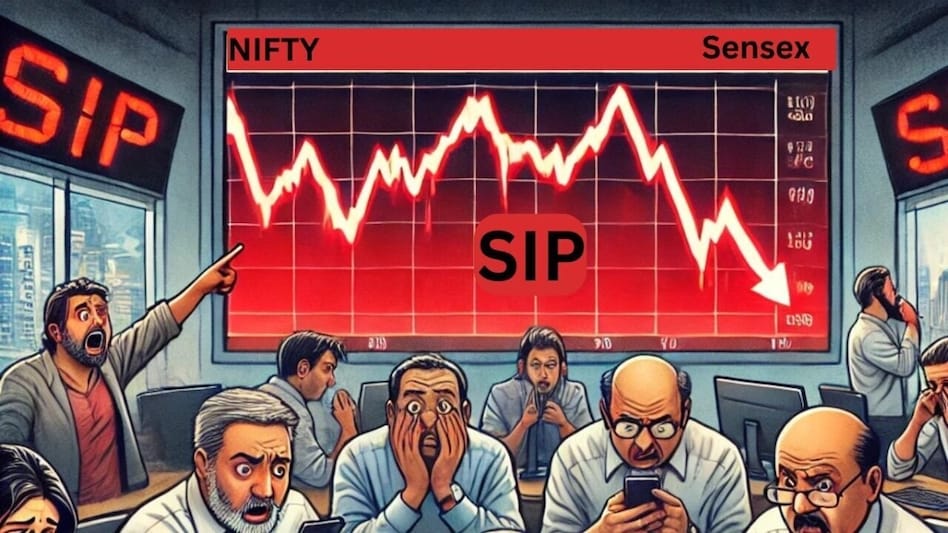
 Selling your investments during a market crash can turn potential gains into real losses, as you're liquidating at the lowest point.
The market landscape has undergone significant changes within a short span of time. Up until September 2024, the Indian stock market was achieving new milestones on a daily basis. However, the situation has since taken a turn. The Nifty 50 has decreased by approximately 14% from its peak, while the Nifty Midcap 100 has experienced a decline of more than 18% over the past 6 months. Additionally, the Nifty Smallcap 250 index has plummeted by over 22% from its peak recorded on December 11 of last year.
The turbulent period in the stock market has had a profound impact on the portfolios of mutual fund investors. Many SIP investors have reported a reduction of 20–30% in their portfolios. Those who had invested in mutual funds of smaller and medium-sized companies (smallcap and midcap) have been particularly affected by this downturn. The value of my SIP portfolio is down 20-30% in the current market crash. I have put my money in NFOs too. What's your prediction for the next few months? Should I withdraw my money?

 'FOMO, fixed return': SEBI proposes revamped ad code for bond portals from misleading investors
 Bangladesh-Pakistan ties: What Dhaka’s interest in Saudi-Türkiye defence pact means for India
 AI jobs rise 51% in India, but 75% of job skills could change by 2030: LinkedIn India head
 From small loans to big businesses : How rural women are changing India’s microfinance story
 RBI forex swap facility draws $72.85 billion inflows, FCNR(B) deposits account for bulk
  Rental Income Tax: 3 Key Deductions Every Senior Citizen and Property Owner Should Know
 Meta’s $200 Billion Trial: Did Instagram & Facebook Keep Kids Hooked?
 Motor Insurance Explained: Is Third-Party Car Insurance Enough? Know Before You Buy
 Retirement Tax Planning: 5 Ways Senior Citizens Can Reduce Their Tax Liability
 #IndiaAt100 : Adipen Bose Nandhiji On Conscious Capitalism- Can Profit & Purpose Coexist?
 India stocks lag global markets in 2026: BofA data shows 9.1% decline in USD terms'FOMO, fixed return': SEBI proposes revamped ad code for bond portals from misleading investors
 Crompton Greaves says no plan to sell stake, expects revenue to double by FY31
 Gaja Alternative Assets IPO: 3 ways to check application status; allotment odds, GMP, listing date
 FII sentiment shows early signs of turnaround after months of selling: ReportIndia stocks lag global markets in 2026: BofA data shows 9.1% decline in USD terms
 'Trust key asset for modern corporate governance,' SEBI Chairman Tuhin Kanta Pandey
 Beyond major urban hubs: SEBI plans distributor model to boost retail reach in corporate bonds'FOMO, fixed return': SEBI proposes revamped ad code for bond portals from misleading investors
 Numero Uno Gujarat: How Gujarat, the growth giant, is attracting massive investments in manufacturing












