


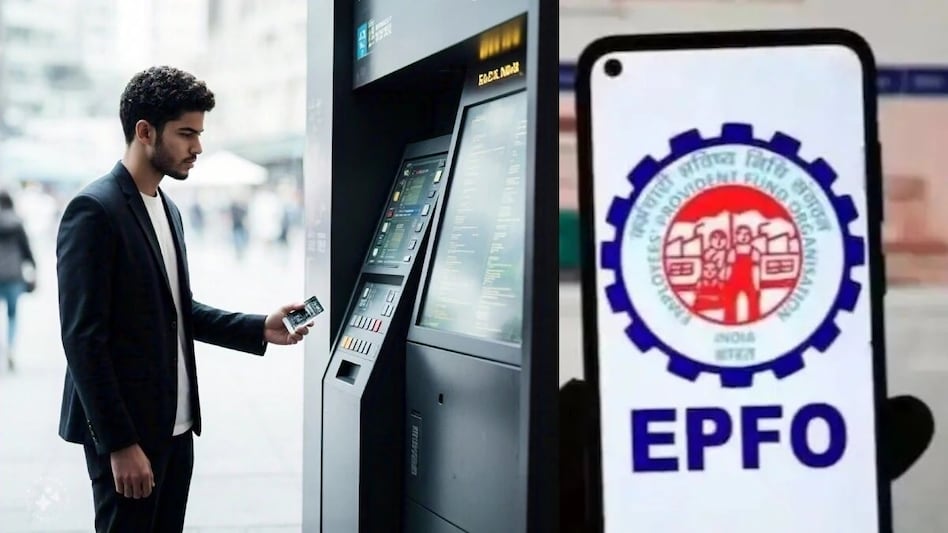
 Another key feature under EPFO 3.0 is the automatic transfer of PF balances when changing jobs for KYC-verified members, largely eliminating the need for employer approval.
Is EPFO 3.0 expected to make PF accounts more accessible? There has been buzz around ATM withdrawals, UPI access, faster claim settlements, and real-time services. Is this for all employees or only retirees? How will it impact withdrawals, savings and long-term retirement savings?
Answer by Anita Basrur, Partner – Direct & International Tax at Sudit K Parekh & Co. LLP

 Nestle faces FSSAI crackdown over baby food formula claims. What the regulator found
  ‘Welcome the decision wholeheartedly’: Shapoorji Pallonji on RBI’s decision on Tata Sons listing; full text
 NSE IPO: India's largest exchange gets 96% subscription on Day 2 so far; employee, NII, QIB portions fully booked
 Buying prescription medicines? You’ll soon be under CCTV surveillance
 Noel Tata at the centre of Tata Sons board tussle: A look at his 40-yr career, educational qualification and more
 LIVE What’s Hot: Stocks, Gold & Big Money Moves | Daily Markets Show | September 17 | Business Today
 From NPAs To Infrastructure: CEA On How India’s Economy Has Changed Under PM Modi
  “PM Modi Is Architect Of Economic Policy”: CEA V. Anantha Nageswaran On India’s Growth Journey
 iPhone Sale Sparks Overnight Rush As Buyers Queue Across Delhi, Mumbai, Bengaluru
  Shapoorji Pallonji Welcomes RBI Nod On Tata Sons Listing | SP Group
 Supreme Court allows NSE-Sebi co-location case settlement, disposes of pleas: Report
 Tata Chemicals, TCPL, Uno Minda, Welspun Living, Bandhan Bank, E2E Networks: Expert shares outlook
 Nestle India shares tank 3% as FSSAI initiates legal action over infant products
 Coforge share price: Brokerages bullish on its enterprise autonomy and AI strategy; check targets
 Soach Global set for nearly 25x gains in partial exit from NSE; to sell 20% stake in IPO
 Planning a movie in Karnataka? Your ticket may cost more as state plans 2% additional cessLIVE What’s Hot: Stocks, Gold & Big Money Moves | Daily Markets Show | September 17 | Business Today
 Nithari killings 2006: Surendra Koli dies by suicide in Haridwar, police begin probeFrom NPAs To Infrastructure: CEA On How India’s Economy Has Changed Under PM Modi Buying prescription medicines? You’ll soon be under CCTV surveillance












