


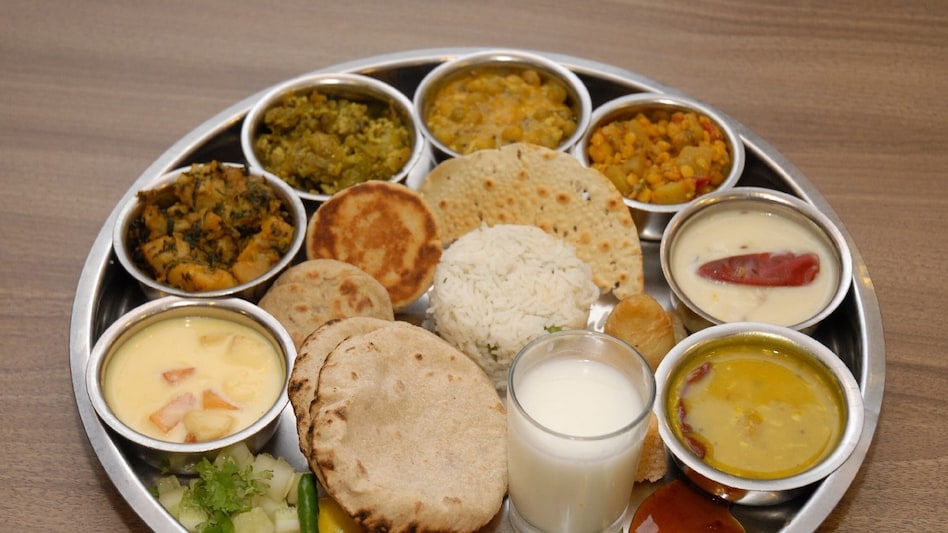
 The revised framework makes one thing clear: meal vouchers up to ₹200 per meal are now non-taxable perquisites under both the old and new tax regimes.
Tax rule change 2026: If you receive food or meal vouchers, such as Sodexo, Pluxee or Zaggle as part of your salary, a key tax change effective April 1, 2026, could directly improve your take-home income. The Income-Tax Rules, 2026 have increased the tax-free limit on employer-provided meals from ₹50 to ₹200 per meal, offering a significant boost to salaried taxpayers.
But the bigger development lies in how this benefit is treated under the new tax regime. Until now, there was confusion—and even denial—of this benefit for those opting for the new regime. The updated rules appear to have resolved this.
O.P. Yadav, Tax Evangelist at Propsper.io, explained in a column in the Economic Times, that the earlier restriction, introduced in 2023 to disallow meal voucher benefits under the new tax regime, has not been carried forward in the new rules. This omission is not accidental but a clear legislative shift.
According to Yadav, the revised framework makes one thing clear: meal vouchers up to ₹200 per meal are now non-taxable perquisites under both the old and new tax regimes, provided certain conditions are met. This marks a return to the position that existed before June 2023, when the benefit was temporarily withdrawn for new regime taxpayers.
ALSO READ: TCS reduced to 2% on travel, education remittances: What changes for students, travellers
What this means for you
Higher tax-free limit: You can now claim up to ₹200 per meal as a non-taxable benefit, compared to just ₹50 earlier.
Available in new tax regime: The benefit is no longer restricted, making it accessible even if you opt for the new regime.
Improved take-home salary: Proper structuring of meal vouchers can increase your net income without raising your tax liability.
Not a deduction or exemption: Meal vouchers are treated under perquisite valuation rules, so they don’t fall under deductions restricted in the new regime.
Conditions apply: Vouchers must be non-transferable and usable only at specified food outlets during working hours.
Clarity in tax treatment: The removal of the earlier restriction eliminates ambiguity and conflicting interpretations.
ALSO READ: March vs April salary 2026: Which Income Tax law applies to your paycheck this month?
Why this change is important
This change is more than just a higher allowance—it reflects a structural clarification in tax rules. Under the Income-Tax framework, perquisites are valued before income is computed. If a benefit is excluded at this stage, it never becomes part of taxable income.
Yadav highlights that earlier, a specific clause had to be inserted in the rules to deny this benefit under the new tax regime. Now that the clause has been removed, there is no legal basis to disallow it. In tax interpretation, such omissions are considered deliberate and decisive, leaving little room for alternative views.
This also aligns with the broader objective of simplifying the tax regime. While the new tax regime removes many deductions, it does not override how perquisites are valued. As a result, benefits like meal vouchers continue to offer tax efficiency without complicating compliance.
ALSO READ: BT Explainer: Set to retire? How ₹25 lakh leave encashment can be tax-free
What you should do now
For you as a taxpayer, this is a practical opportunity. Review your salary structure and check whether your employer provides meal vouchers. If not, you may consider requesting a restructuring, especially if you are in the new tax regime and have fewer tax-saving options.
Employers, too, may increasingly use such components to optimise compensation packages without increasing overall costs.

 Dharmendra Pradhan resigns, says decision taken to protect students' future amid NEET row
 All about Dharmendra Pradhan's educational qualification, wealth, assets and more
 UK Cabinet: 3 Indian-origin MPs join UK PM Andy Burnham's front bench; Kanishka Narayan gets AI portfolio
 Adani's airline push: Letter shows group wants to launch carrier, says report
 Should you buy every IPO? Research suggests patience may be the smarter strategy
 Why Term Insurance Is Essential for Every Earning Member | Sum Assured & Coverage Explained
 Pakistan's Alleged Terror-Politics Nexus: Lashkar Links Spark Questions Over Fazlur Rehman
 Think Life Insurance Is Optional? Here's Why Every Indian Family Needs It Today
 FD Vs Arbitrage Fund: Which Is Better For High Taxpayers?
 Manipal Health Enterprises Sets Price Band For Rs 9,275 Crore IPO, Opens July 29
 Adani Power: 45 GW target, Rs 2 lakh crore capex plan among conference call highlights
  ITC Hotels, Chalet, Ventive, IHCL, SAMHI: Hotel stocks to buy despite travel disruptions
 ITC shares: Rs 307 a key short-term level to watch; here's target price
 Mphasis shares: FY27 guidance maintained; brokerages keep 'Buy' after Q1; check target priceShould you buy every IPO? Research suggests patience may be the smarter strategyAdani Power: 45 GW target, Rs 2 lakh crore capex plan among conference call highlights Why Term Insurance Is Essential for Every Earning Member | Sum Assured & Coverage ExplainedDharmendra Pradhan resigns, says decision taken to protect students' future amid NEET rowUK Cabinet: 3 Indian-origin MPs join UK PM Andy Burnham's front bench; Kanishka Narayan gets AI portfolio
 India's first REIT mutual fund is here. Can it change how Indians invest in real estate?









