


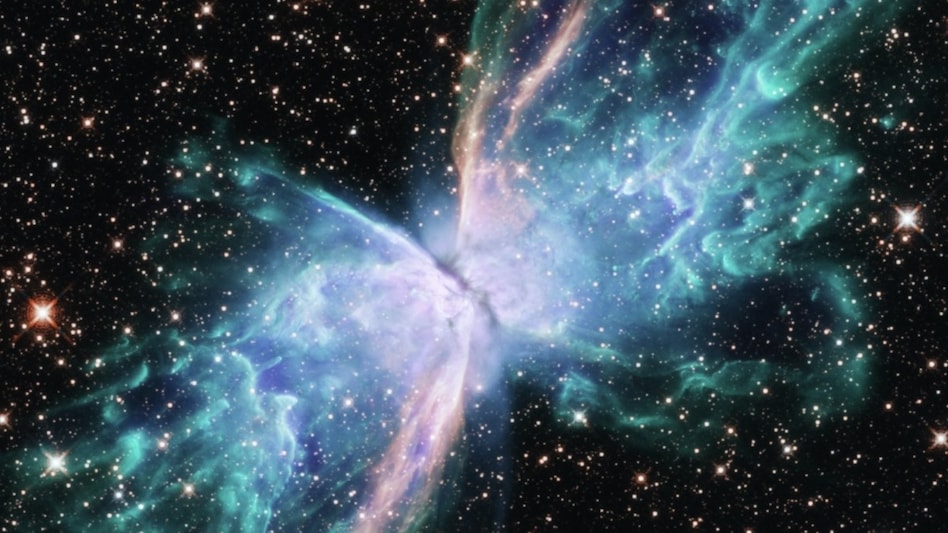
 Today, Hubble has recorded nearly 1.7 million observations and contributed to over 22,000 scientific papers — data that’s been cited more than 1.3 million times. (Photo: Nasa)
After 35 years in orbit, the Hubble Space Telescope is marking its anniversary not with speeches, but with a fresh gift to the cosmos: a new suite of breathtaking images. Launched aboard the space shuttle Discovery on April 24, 1990, Hubble has become one of the most iconic scientific instruments in history — a machine that turned a fuzzy mystery into a clear-eyed exploration of the universe.
"Hubble opened a new window to the universe when it launched 35 years ago," said Shawn Domagal-Goldman, acting director of the Astrophysics Division at NASA Headquarters. "Its stunning imagery inspired people across the globe, and the data behind those images revealed surprises about everything from early galaxies to planets in our own solar system."

 Nifty IT stocks rebound in July as semiconductor shares falter; reverse AI trade at play?
 Will the July 31 ITR deadline be extended? Everything salaried taxpayers need to know
 Can't stop doomscrolling on Instagram? Meta’s AI algorithm might be the reason; Know how
 Over 1 lakh Zomato, Blinkit delivery partners file ITRs; Rs 18 crore in tax refunds facilitated
 'How can I ever forget his sacrifice?': Abhijeet Dipke dismisses CJP-Sonam Wangchuk divide rumours
 PROMO | BT Infra Summit 2026: Policymakers & Leaders To Outline 'Infra India 2047' Vision In Delhi
 M&M CEO Rajesh Jejurikar On SUVs, EVs, Margins, Capacity Expansion, Festive Demand Outlook
 Why Karnataka Still Doesn't Have A Full Cabinet 58 Days After DKS Took Oath
 Parliament Erupts Over Delhi Protest Pellet Gun Allegations | SC Steps In
 Parliament Security Scare: Exclusive CCTV Reveals How Protesters Reached The Perimeter
 Nifty IT stocks rebound in July as semiconductor shares falter; reverse AI trade at play?
 Dixon Technologies Q1 earnings: Net profit at Rs 718 crore, revenue rises 21%
 Federal Bank shares at record high, analyst shares views post sharp rally
  Bajaj Finance share price: Expert sees Rs 1,500 target after breakout; says hold the stock
 Sun Pharma Q1 results: Profit rises 27% to Rs 2,895 crore; revenue climbs 10%
 BT Infra Summit 2026: India's energy security needs a new playbook as clean power, storage and grid modernisation take centre stage
 BT Infra Summit 2026: Storage, green hydrogen key to India’s next renewable leap, says ReNew’s chief
 Multibagger Stock Gokul Agro Inches Close To Record High After Q1FY27 Results
 Tamil Nadu Schools May Get Weekly Chicken Biryani- Here’s The Full Story
 Why Red Bull, Sting & Monster Could Disappear From Shelves | FSSAI's Crackdown Explained










