


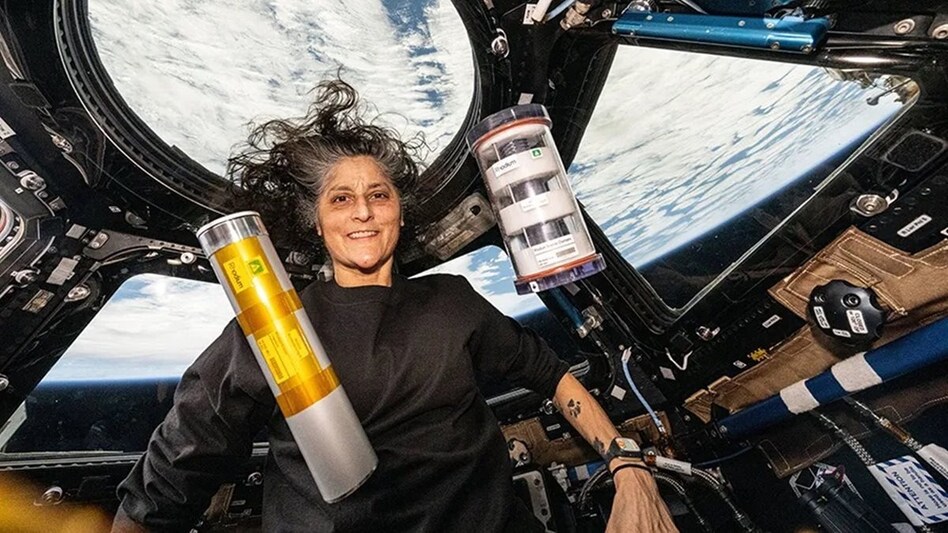
 Beyond her scientific duties, Sunita Williams recently connected with students from Sunita Williams Elementary School in Needham, Massachusetts, via a virtual session.
International Space Station (ISS) Commander Sunita Williams is gearing up for her return to Earth, scheduled for February 2025. As part of her preparations, Williams is training in the SpaceX Dragon spacecraft and performing critical maintenance tasks, including checks on a US spacesuit ahead of an upcoming spacewalk.
After completing the suit inspections, Williams joined NASA Flight Engineer Butch Wilmore to conduct eye exams using the Ultrasound 2 device. The astronauts alternated scanning each other’s eyes, while ground-based doctors monitored their corneas, lenses, and optic nerves in real time. Wilmore also worked on cargo transfers between the Kibo and Columbus laboratory modules and installed air quality sensors in the Quest module.

 India to divert 3.5 lakh tonnes of export sugar to local market as prices surge
 AI boom is helping offset oil shock, but global economy still faces risks, warns IMF
 Apple may manufacture iPads, MacBooks in India, but local components take priority
  Vedanta denies reports of stake sale in Vedanta Ltd, Vedanta Aluminium Metal or group companies
 Expired food, pests, foul smell: Posh Delhi hotels booked for BRICS summit under FSSAI lens
 YouTube, Insta Earnings Are Not Tax-Free: What Freelancers & Content Creators Must Know About Tax
 What’s Hot: Stocks, Gold & Big Money Moves | Daily Markets Show | August 26 | Business Today TV
 Nifty Rally Gets A Boost From Falling Oil: Vaishali Parekh On What Comes Next
 IIT Delhi Protests Over Student Death As Students Demand Accountability And Independent Probe
 How This Fund Manager Turned ₹1 Cr Into ₹7.6 Cr | Abhay Agarwal On Beating The Market by 8.8% A Year
 Tata Capital shares: Nuvama ups target price; says Tata Motors Finance drag largely behind
 ICICI Prudential AMC: Promoter Prudential to sell 2% stake; stock slips
 Adani-backed Cemindia Projects may raise up to Rs 5,000 crore through QIP: Report
 Why did Sensex, Nifty erase gains to settle lower today?
 Piper Serica exits CDSL, CAMS shares; adds Gland Pharma, Astra Microwave
 ₹60 lakh for 2 months: HFT firms hike intern pay to attract India’s top engineering talent
 ‘Responsibility of the endorser’: Tukaram Mundhe on FDA notice to Shah Rukh Khan, Ajay DevgnIndia to divert 3.5 lakh tonnes of export sugar to local market as prices surgeTata Capital shares: Nuvama ups target price; says Tata Motors Finance drag largely behind
 ADB chief economist somewhat optimistic of Indian growth drivers












