


 Midjourney’s expansion beyond generative AI into healthcare technology
Midjourney, the artificial intelligence company best known for its image-generation platform, is entering healthcare with an ambitious plan to build what it describes as a low-cost, full-body imaging system capable of scanning the human body in about a minute.
The company this week unveiled “Midjourney Medical”, a new initiative centred on a water-based scanner that uses ultrasound technology, artificial intelligence and large-scale computing to create three-dimensional images of the body. It also announced plans to open a network of wellness centres, branded as Midjourney Spas, where users could undergo regular scans alongside traditional spa treatments.
However, the ambitious vision of making full-body AI-powered imaging accessible at scale faces several clinical, technical and regulatory questions, particularly around diagnostic accuracy, approvals and real-world healthcare applications.
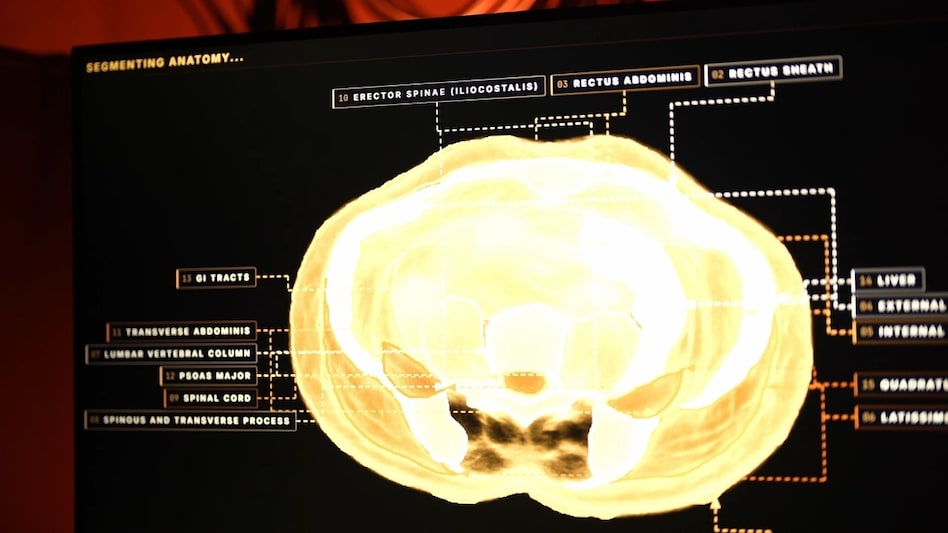
The announcement marks Midjourney’s expansion beyond generative AI into healthcare technology. According to the company, users would stand on a platform and descend through a ring of underwater ultrasound sensors that emit sound waves from multiple angles. The system is designed to reconstruct detailed images of tissues and organs throughout the body in less than 60 seconds.
Midjourney said the technology relies on about half a million sensor elements that act as both transmitters and receivers of ultrasonic waves. The resulting data is processed by large computing clusters to generate images that the company says resemble MRI scans while using ultrasound rather than radiation.
Scaling the Ambition
The healthcare venture is being developed in partnership with Butterfly Network, a US-based ultrasound technology company. Butterfly disclosed that Midjourney’s current prototype incorporates 40 of its Ultrasound-on-Chip imaging modules under a co-development agreement between the two companies.
“After nearly 35 years working in healthcare, it’s clear to me that our U.S. healthcare system is still primarily designed to treat illness, not prevent it. The future of health starts with awareness: understanding your body earlier and tracking how it responds to factors like diet, exercise, and behavior,” said Joseph DeVivo, President, Chief Executive Officer and Chairman of Butterfly Network.
DON'T MISS | Meta tightens teen safety rules with AI age checks, parent alerts
DeVivo described the scanner as “an extraordinary whole-body scanner, no radiation, no magnetic risk, low cost, and accessible, with about half a million sensors scanning simultaneously and over two petaflops of processing power.”
“Designed for weekly use, this is the next generation of AI on device. A continuous window into your health because the earlier you can see what’s changing, the sooner you can do something about it,” he added. Butterfly previously disclosed that its agreement with Midjourney could generate up to $74 million in payments over five years.
Midjourney plans to spend the next year refining its hardware and algorithms while conducting research trials and building its first research-focused facility. The company expects its first public spa location to open in San Francisco in 2027 before expanding to additional cities.
The company has set a target of deploying more than 50,000 scanners worldwide by 2031, with enough capacity to perform up to one billion scans a month. Midjourney said such a network could eventually provide regular imaging for a large share of the global population.
Clinical and Regulatory Hurdles Ahead
The announcement, however, comes with significant technical and regulatory challenges. While ultrasound is widely used in medicine, building a system capable of whole-body imaging at the scale envisioned by Midjourney remains unproven. Any diagnostic applications would also require regulatory approvals, including clearance from the US Food and Drug Administration.
MUST READ | ChatGPT’s dominance is fading: New data shows below 50% drops in market share
Midjourney said it would initially focus on providing body composition maps and other non-diagnostic information while seeking regulatory approvals for broader medical uses. Medical Experts said the technology could face additional regulatory and clinical scrutiny if it is eventually introduced in markets such as India.
“While the concept is certainly intriguing, it will be important to assess whether the images generated are of sufficient diagnostic quality for clinical use. Ultrasound technology also has inherent limitations, particularly when it comes to imaging air-filled organs such as the lungs and dense structures like bones. It remains to be seen how much incremental clinical value such a system can deliver in practice,” said Dr. Abhishek Bansal, Senior Consultant and Chief, Interventional Radiology, Aakash Healthcare Super Speciality Hospital, New Delhi.
Dr. Bansal said regulatory considerations could also arise in India. “The use of ultrasound is subject to stringent regulations under the Pre-Conception and Pre-Natal Diagnostic Techniques (PCPNDT) Act because of concerns related to sex determination and female foeticide.”
However, he said the technology merits close attention. “Given the rapid advances in artificial intelligence, imaging technologies and computing power, it will be interesting to see how the technology evolves and whether it can eventually find meaningful applications in healthcare.”
DON'T MISS | Could AI make money irrelevant? Elon Musk says the answer may lie in the Sun
For Unparalleled coverage of India's Businesses and Economy – Subscribe to Business Today Magazine

 West Asia war: Oil could have become cripplingly expensive but three factors contained the disruption
 ITR filing: 8 costly mistakes salaried employees should avoid to prevent tax notices and refund delays
 Raghuram Rajan picked for US Fed review panel: Here's the role he'll play
 Before Elon Musk's takeover changed everything, Parag Agrawal had a leadership role model in mind for Twitter — here's who inspired him
 CAFE-III norms propose tighter fuel-efficiency targets; EVs, hybrids, flex-fuel vehicles get major compliance edge
 BHEL Q1 Results: Reports Profit At ₹382 Crore, Stock Jumps 5%; Analyst Bets On Long-Term Growth
 ITC Hotels Q1 Results: Why Have ITC Hotel Shares Fallen Despite Strong Earnings? | ITC Share Price
 Why Abakkus Is Betting On Large & Mid Caps Now?
 ‘Strong Infrastructure Builds A Strong Future’: Rajnath Singh On India’s Transformation
 Himadri CMD Anurag Choudhary On Record Q1, ₹170 Crore Expansion & Speciality Chemicals Bet
 Adani Power, Bharat Dynamics, Astra Microwave: Expert strategy for trading these stocks
  BDL share price: Should you buy, sell or hold? Key resistance and support levels
 Tech Mahindra Q1 results: PAT jumps 28%, revenue rises; deal wins cross $1 billion
 Wipro Q1 earnings: Net profit at Rs 3,352 crore, board clears interim dividend
  Sensex, Nifty close flat; IndiGo, HCL Tech, Bajaj Finance top gainers









