

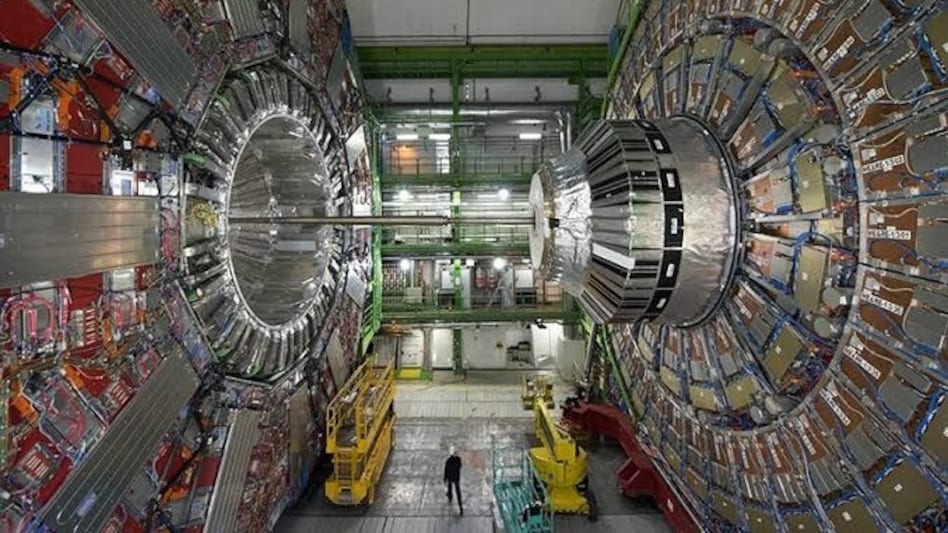
 CERN currently houses approximately one exabyte of experimental data generated by the LHC.
 European scientific powerhouse CERN and leading artificial intelligence developer Mistral have forged a strategic alliance to pioneer foundation models designed to decode the mysteries of particle physics.
The partnership unites CERN’s monumental repository of fundamental physics data with Mistral's expertise in large-scale AI modeling. At the core of this initiative is the ambition to build the world's first pretrained Large Physics Model for collider physics.
 AI revenue is surging at Indian IT firms, but how much is adding to growth?
 Festive spending in urban India to drop 6% to ₹1.97 lakh crore amid inflation: Survey
 India to overtake Japan as world’s fourth-largest economy in 2027: IMF projections
 BT Explainer: What the SC verdict on Yes Bank’s AT-1 bonds means for the lender and will it alter AT1 bonds as such?
 Stock market: India back on investors’ radar as they warm to ‘non-AI stories’, says HSBC
 Jio IPO: Mukesh Ambani's Big ₹30,213 Crore Bet, Reliance Employees Asked To Invest?
 Flying Cars Are Here? Elon Musk Shows Tesla Roadster Flying Through Air In Stunning Demo
 Ramakrishna P, CEO, India Mobile Congress Talks To Us About India’s Next Digital Frontier
 Market Recovery: Gaurang Shah Picks Banking, Defence, Power And Cement Stocks For Fresh Bets
 Will IDBI Employees Lose Jobs? DIPAM Secretary Arunish Chawla Clears The Air On Pension & Benefit
 CCL Products shares fall 9% on Q2 results; brokerages see up to 30% upside
 PNB Q2 earnings: Net profit rises 13%, asset quality improves
  BT Explainer: What changes for investors post revision of new Closing Auction System
  PC Jeweller shares hit 52-week high; stock jumps 75% YTD; what analysts say
 Federal Bank Q2 earnings: Net profit at record high, asset quality improves
  India invested just $15 billion in AI against $757 billion in US: Why private capital matters
 BMW reveals F 450 RR sports bike: Check features, specifications, expected price in India
 iPhone Duo pre-orders: Delivery dates shift to January 2027 within minutes
 E20 fuel and older petrol cars: Could engine damage lead to an insurance claim rejection?
 'Inspired by Bangladesh...': Harsh Goenka’s post sparks attention












