


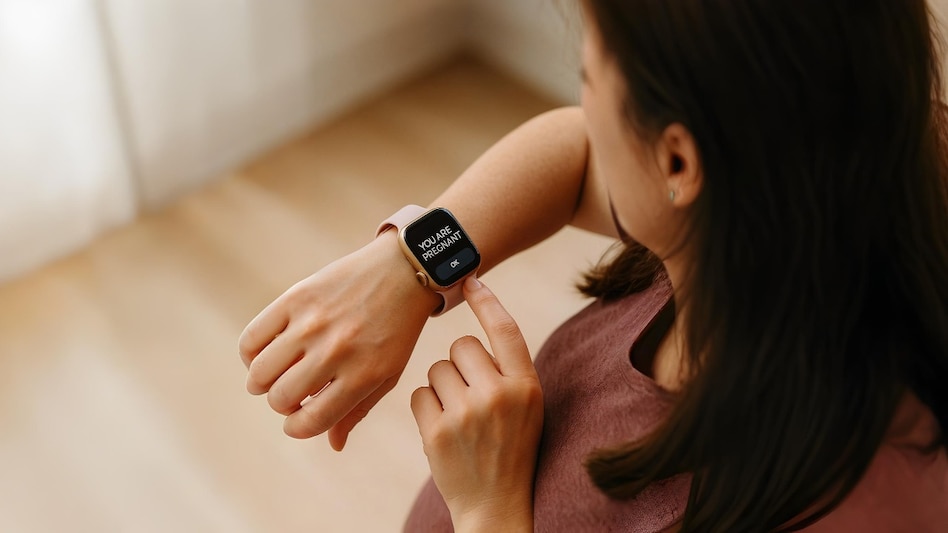
 Image generated using AI
 A new study supported by Apple has revealed that artificial intelligence can now detect early signs of pregnancy with up to 92% accuracy, using behavioural data from iPhones and Apple Watches. The breakthrough, achieved through a machine learning model called the Wearable Behaviour Model (WBM), marks a major step forward in turning everyday health data into powerful predictive tools.
The study, titled Beyond Sensor Data: Foundation Models of Behavioural Data from Wearables Improve Health Predictions, moves beyond traditional health tracking methods, which often rely on raw sensor inputs like heart rate or oxygen levels. Instead, it uses long-term behavioural patterns, such as sleep quality, mobility, heart rate variability, and activity levels, already processed by Apple’s algorithms.

 Aadhaar authentication mandatory for subsidised LPG refills from October 1: Check rules
 Japan’s semiconductor push in India: Why Japanese companies are betting on materials, equipment and technology
  Tata Steel seeks fresh UK government funding as Port Talbot project faces delays
 How big is Apple Pay? US payment giant to enter India as UPI dominates digital payments
 Delhi airport gets its third runway operational; optimise aircraft movement
 CEA On India’s 7.8% Growth, Rural Incomes And Government’s Job Creation Push
  Gold Price Outlook: Why Dollar Weakness Could Keep Gold And Silver Prices Attractive Ahead
 Gold vs Silver Investment Strategy: Is This The Right Time To Buy For Long-Term Returns?
 Corporate Vs Personal Health Insurance: Which Is Better On A Budget?
 Gold Price Outlook: Why Gold Could Rise Despite Global Interest Rate Hikes | Silver Market Update
 Jindal Supreme, SS Retail, Hero Motors IPOs subscribed up to 181 times on final day; details here
 Sensex, Nifty post sixth weekly loss; TCS, Titan among top laggards, slip up to 4%
 How AI collapse could benefit Indian equity market; Jefferies' Christopher Wood explains
  Banks are no more secular growth story, prefer NBFCs: Chris Wood
 Jefferies' Christopher Wood sees gold at $10,000 'sooner or later'; likes India's small, midcaps
 Air India AI171 crash: Pilots seek detailed probe into Boeing 787 electrical systems
 Aastha Spintex advances 1.35 MW solar project at Falcon Yarns facility
 Riyadh airport smoke: Explosions reported after Saudi Arabia issues aerial threat alert
 Who is Deepanshu Shokeen? Meet the independent candidate who won DUSU Vice-President postAadhaar authentication mandatory for subsidised LPG refills from October 1: Check rules












