


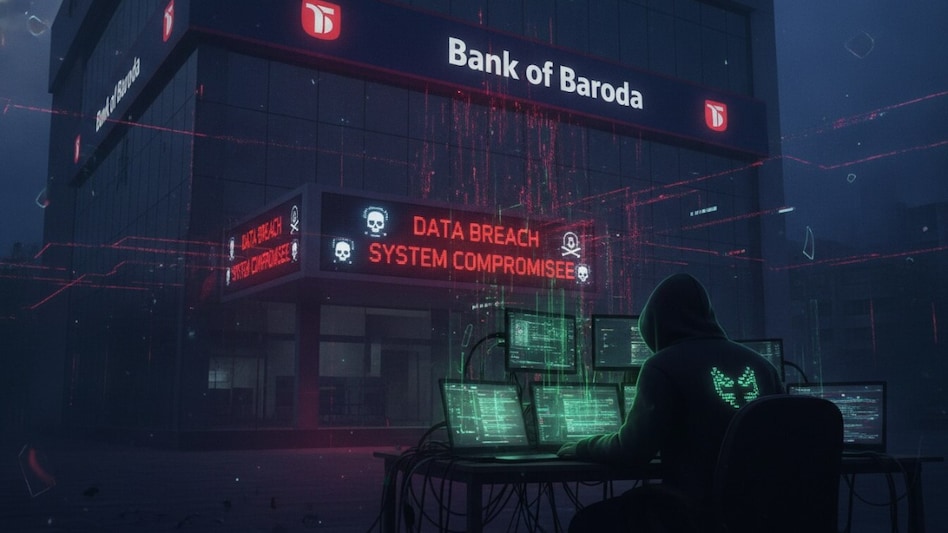
 As of now, no cybercriminal group has officially claimed responsibility, and the claims remain under investigation.
Bank of Baroda is reportedly facing an alleged data breach, and a hacker claimed to have accessed its systems and has leaked 1TB of sensitive data on the dark web. Reports also suggest that the leaked data is available for free to download.
According to an India Today report, the leaked data consists of customer names, Aadhaar numbers, banking information, corporate banking records, loan-related data, and information from multiple Bank of Baroda branches across India.

 Jaishankar-Rubio meet today: Trade deal, defence, West Asia crisis, energy cooperation on agenda
 Market holiday: Are BSE, NSE closed or open on account of Dussehra 2026 today?
 OnePlus 16 vs iQOO 16: Compared on display, cameras, battery and flagship features
 100% duty-free exports, 5,000 work visas & ₹35,000 crore investment: India-New Zealand FTA takes effect today. Here’s what changes
 'AI models cannot be trusted': Microsoft warns of insider threats, expands Project Perception
 Retirement Planning: How a ₹10,000 Monthly SIP Can Grow to ₹1 Crore in 20 Years
 Volkswagen On CNG Cars, JSW Partnership And India's Auto Market Outlook
 5 Mutual Fund SIP Mistakes That Can Hurt Your Long-Term Wealth
 Xiaomi Mijia Air Purifier 6 Review: Worth ₹19,999 Before Winter? | Tech Today
 SIP to SWP: How to Withdraw Money From Mutual Funds After Building a Corpus
 Market holiday: Are BSE, NSE closed or open on account of Dussehra 2026 today?
 Jio IPO draws 30 times anchor demand, brokerages see more upside in digital business
 Indian stock market outlook: Nikunj Saraf prefers large-caps, cautions against small-caps
 Hindustan Zinc Q2 earnings: Net profit zooms 149%, revenue at Rs 15,093 crore
  Muhurat Trading 2026: NSE, BSE announce Diwali timings; check full schedule
 LPG, CNG, PNG prices today (October 20): Check latest rates in Delhi, Mumbai, Kolkata, other cities
 Smart glasses without a camera: How Even G2 uses lens displays for translations, prepared text and AI prompts
 Quote of the Day by Gautam Adani: 'Either you sit on the pile of cash, or you continue to grow'Jaishankar-Rubio meet today: Trade deal, defence, West Asia crisis, energy cooperation on agendaMarket holiday: Are BSE, NSE closed or open on account of Dussehra 2026 today?












