


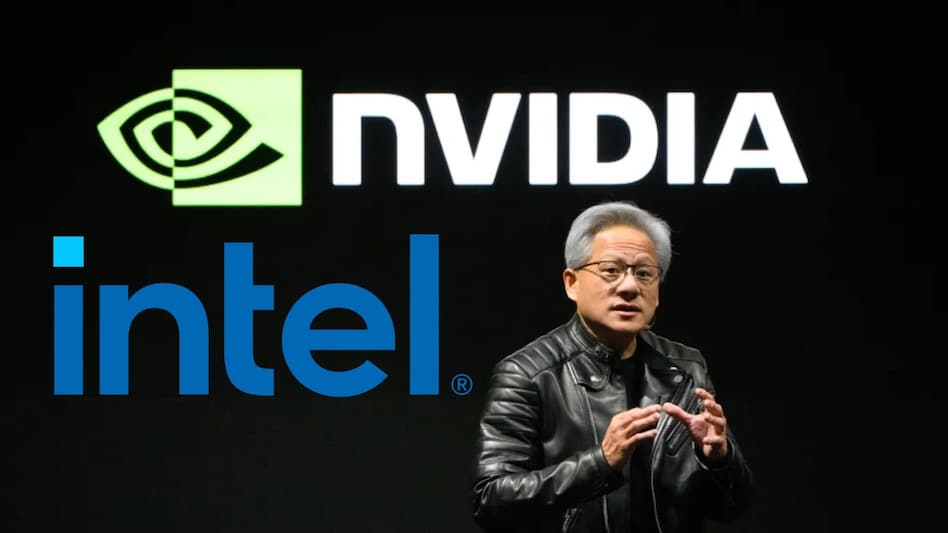
 Nvidia x Intel
Nvidia announced on Thursday that it will invest $5 billion in Intel, a move that positions the AI giant as one of Intel’s largest shareholders and gives fresh momentum to the struggling U.S. chipmaker.
The investment will give Nvidia a 4% stake in Intel following the issue of new shares, sending Intel’s stock up by 23% on Wall Street. It follows the U.S. government’s unprecedented decision weeks earlier to take a 10% stake in Intel as part of an emergency stabilisation plan.

 SEBI settles proceedings against five Adani Group entities; ₹1.50 crore settlement amount paid
 LIC emerges as biggest bidder in NSE IPO, applies for shares worth Rs 4,500 crore: Report
 NSE IPO listing on September 24: How 5 largest IPOs fared on market debuts
 UPI MDR GST: NPCI says small merchants and 96% of transactions remain unaffected from October 15
 BT Big Story: How the FCNR(B) deluge has created two new problems for the RBI
  Family Disputes Can Hold Businesses Back: Nirmala Sitharaman’s Message To Family Firms
 TRAI New Rules: Voice-SMS Only Plans Mandatory | What It Means For 20 Crore Non-Data Users
 Oil & Gas Capex Boom: Anshul Saigal Names Energy Stock He Owns | Saigal Capital Advisors
 Small Caps Too Expensive? Anshul Saigal On Valuations, Earnings & Upside
 Markets Going Nowhere? Anshul Saigal On The Opportunity For Stock Pickers
 Sansera Engineering shares rise 7%; Goldman Sachs raises target; sees further upside
 US-Iran talks today? Oil slips to $98 a barrel; will Sensex, Nifty rebound?
  Borosil Renewables shares rise 3% as board approves revised Rs 1,100 crore expansion cost
 L&T, DRL, Vijaya Diagnostic, M&M Financial: Buy, Hold or Sell? Here are target prices
 HAL, BEL, BDL, BEML: Defence stocks to buy for 13-24% upside
 'No positive response on 5-day banking': Bank unions to go ahead with 3-day strikeSEBI settles proceedings against five Adani Group entities; ₹1.50 crore settlement amount paidFamily Disputes Can Hold Businesses Back: Nirmala Sitharaman’s Message To Family Firms
 Nitin Gadkari Backs Ethanol: Toyota To Launch 100% Flex-Fuel Innova
 “Still Under Investigation”: IAF Vice Chief Ashutosh Dixit On Tejas Dubai Airshow Crash Probe












