


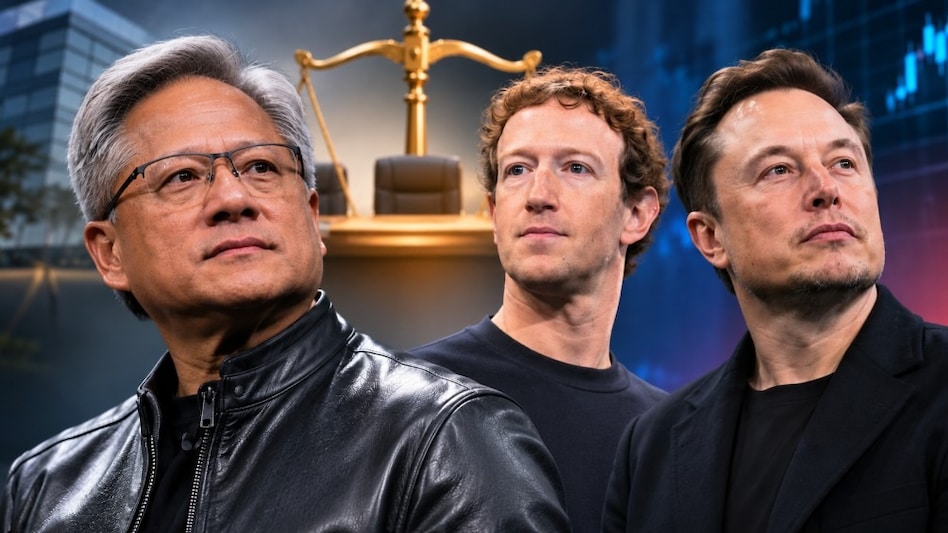
 Jensen Huang, Mark Zuckerberg and Elon Musk highlight the contrasting powers of corporate boards and founder control in America's tech industry.
First Global's Devina Mehra says Nvidia's board faced serious governance and legal risks over alleged undisclosed relationships and preferential chip allocations. She explains how dual-class share structures protect founders such as Mark Zuckerberg and Elon Musk from losing control of their companies.
The reported resignation of Nvidia co-founder Jensen Huang has triggered a wider debate over corporate governance, board accountability and the extraordinary voting powers enjoyed by technology founders. Devina Mehra, founder, chairperson and managing director of First Global, has explained why Nvidia's board could remove Huang while founders such as Meta's Mark Zuckerberg and Tesla's Elon Musk enjoy significantly greater protection.

 Nvidia, the chipmaking giant's China concerns: What did short seller Culper Research flag in its May report?
 Who will lead Nvidia after Jensen Huang? Colette Kress, Ian Buck and 5 others in focus
 BT EXCLUSIVE: IBBI can’t say how many big personal insolvency plans ended in deep haircuts & says it won’t compile the data
 ‘Must compliment Elon Musk…’: Sunil Bharti Mittal on pushing the boundaries of satcom connectivity
 SpaceX and Tesla merger: Elon Musk's trillion-dollar mega-deal could come as soon as December 2026
 Not America, Not China. Tomorrow Is Only For India': Chandrababu Naidu's Big Tech Push
 Jensen Huang Faces Fresh Personal Allegations; Nvidia’s Boardroom Under Spotlight
 Cauvery Water War: Karnataka Stands Firm On Mekedatu, Tamil Nadu Pushes Back
 Samvat 2083: How Should Women Invest? Mrin Agarwal Decodes The Wealth Creation Strategy
 AI-Generated Books, Fake Authors? Periyar Arivulagam Row Escalates In Tamil Nadu

 Bharti Airtel share buyback soon? How Sunil Bharti Mittal's telecom giant is rewarding investors
 Friday the 13th: Sensex, Nifty fall; key factors weighing on markets, outlook
 Amber Enterprises shares jump 11%; UBS flags weak margins
 Black Box Q2 earnings: Net profit at Rs 73 crore, revenue hits record high; stock reaction and more
 Bitcoin crashes below $70,000 for first time since August, hits $68,297 as inflation fears trigger sell-off
 Auto industry posts record October sales as passenger vehicles cross 5-lakh mark; 2-wheelers grow 16% Not America, Not China. Tomorrow Is Only For India': Chandrababu Naidu's Big Tech PushBharti Airtel share buyback soon? How Sunil Bharti Mittal's telecom giant is rewarding investorsJensen Huang Faces Fresh Personal Allegations; Nvidia’s Boardroom Under Spotlight
 Samsung brings Gemini AI powered smart glasses: What they can do, launch date and price












