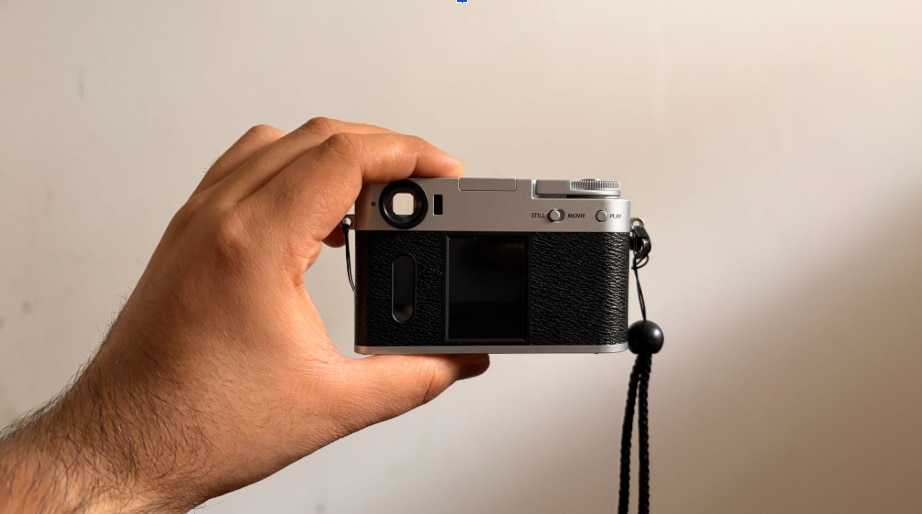
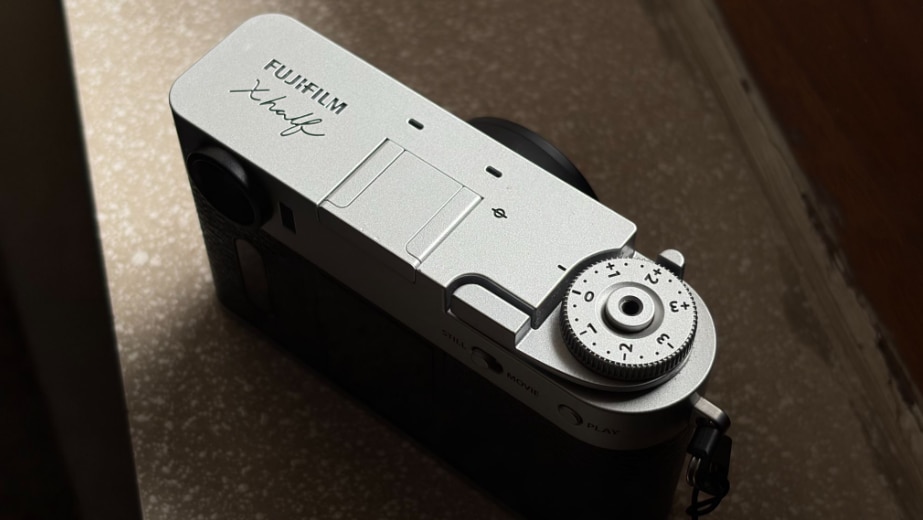
So, is this camera actually worth approximately 50,000 rupees? This is Business Today's review of the Fujifilm X Half, where we look at the good, the bad, and whether you should actually buy it.
Tiny camera, big nostalgia
The first thing you notice is just how compact the X Half is. At around 240g with the battery and memory card, it comfortably fits into a pocket, the front pocket of a bag or even a fanny pack. For travel, that is a huge advantage. It is light enough that carrying it around never feels like a chore, which is important for a camera whose biggest purpose is arguably to make you want to photograph more.
There is also an unmistakable nostalgia factor here. For Gen Z, the current obsession with old digital cameras has made grainy, imperfect photographs fashionable again. But buying a 15-year-old compact camera also means accepting ageing batteries, dated sensors, unreliable storage and questionable image quality.
The X Half feels like Fujifilm's answer to that trend: retro without actually being old.
The build feels solid, the controls have character, and the vertical-oriented display makes photographs look almost Instagram-ready straight out of the camera.
Lens limitation?
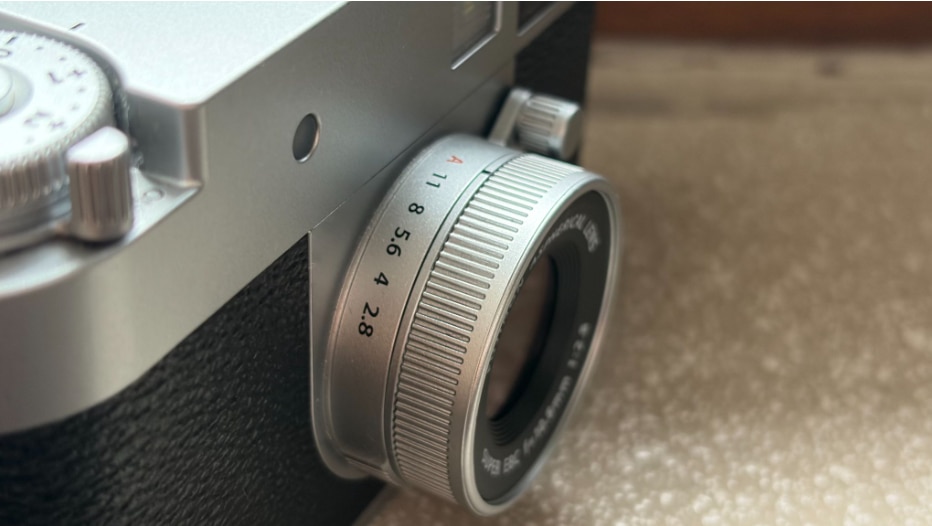
The X Half uses a 17.74-megapixel, 1-inch sensor paired with a fixed FUJINON 10.8mm F2.8 lens, equivalent to 32mm in full-frame terms. The lens has a six-element, five-group optical construction, including three aspherical elements, and can stop down from F2.8 to F11.
The lens is excellent, producing sharp, detailed photographs that are more than good enough for social media and everyday travel photography.
It is, obviously, a fixed lens. Normally, I'd mention that as a limitation. Here, however, I don't think it is one. In fact, I think calling it a restriction misses the point.
The fixed lens is a creative choice. It encourages you to work with what you have rather than constantly thinking about which lens to use. If you want a camera that lets you build a collection of lenses and experiment with different focal lengths, this isn't it. But if you want something simple, compact and ready to shoot, the 32mm-equivalent focal length makes a lot of sense.
I also found myself using the manual aperture control quite frequently. It is one of those features that makes the camera feel like a proper photographic instrument rather than an expensive digital toy. There is, however, a small usability issue: the aperture lever isn't quite as firm as I would have liked. Simply holding the camera with both hands, trying to get a steadier shot, can result in your fingers accidentally touching the lever and unintentionally changing the aperture.
The fun but not essential modes
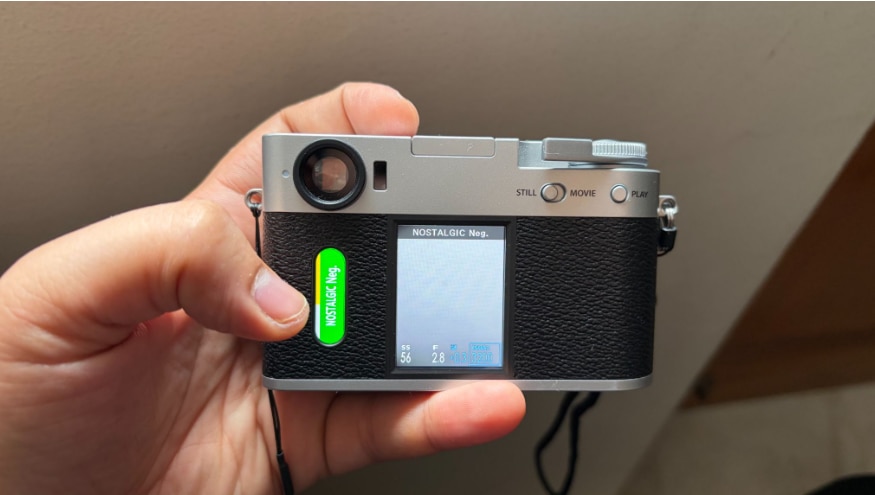
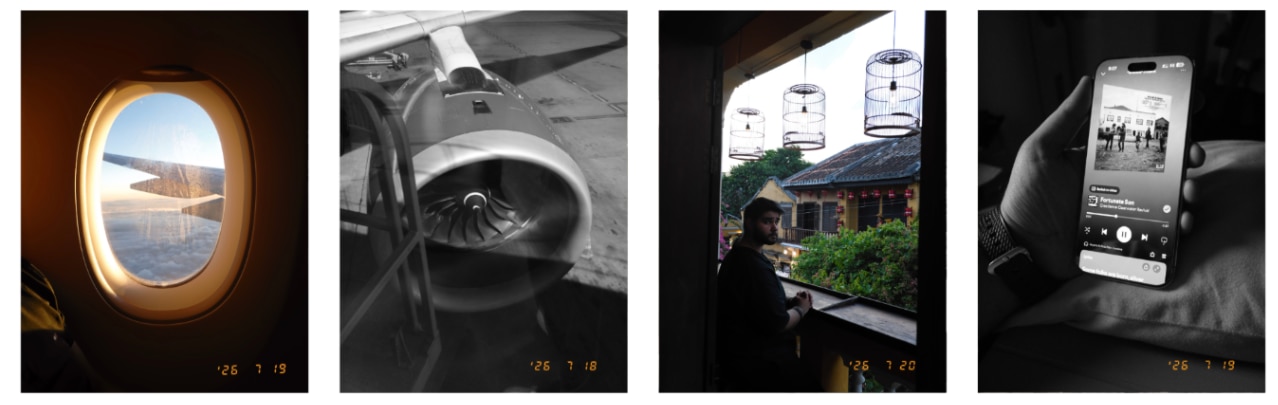
Fujifilm's Film Simulation modes are probably the biggest reason to buy this camera. I spent most of my time with Classic Negative, Sepia, ACROS and Nostalgic Negative, depending on what I was photographing. The X Half offers 13 Film Simulation modes alongside 26 creative filters.
The grain effects and additional filters are fun, but I rarely used them. The same goes for the camera's 2-in-1 feature. It is a neat idea, and I used it twice during my trip, but it never became a core part of how I photographed.
The touch controls were generally smooth, with only minor hiccups.Unfortunately, there was one problem I couldn't ignore.
During my 15-day trip, the X Half hung up three times. On two occasions, it resulted in me missing the moment I wanted to photograph.
The most bizarre part was that manually switching the camera off didn't always solve the problem. The screen would remain switched on even when the physical switch was firmly in the 'OFF' position.
These weren't constant problems, but with a camera designed around capturing spontaneous moments, even occasional freezes are frustrating.
Modern conveniences
Thankfully, Fujifilm gets the connectivity right. The dedicated X Half App connects the camera to your smartphone, allowing photographs to be transferred wirelessly without the tedious routine of removing an SD card and transferring files manually. The app is available for both iOS and Android.
The transfers aren't particularly quick, but the convenience outweighs the wait, especially when you're travelling and want to get a photograph onto Instagram without turning the process into a project.
And that is where the X Half makes a lot of sense in 2026. The vertical 3:4 format feels naturally suited to social media, while the camera itself still gives you the tactile experience of using a dedicated photographic device rather than a phone.
Should you buy the Fujifilm X Half?
The X Half isn't going to appeal to everyone. At an MRP of Rs 76,999 and an average selling price of around Rs 45,999 in India, it is expensive for a fixed-lens compact camera, and I do think Fujifilm could have priced it slightly more aggressively instead of selling it at a 40% discount almost constantly. If you're interested, waiting for a sale could make the proposition considerably easier.
But if you're someone who wants to get onto the retro point-and-shoot bandwagon without compromising on modern image quality, this is a compelling alternative to hunting for an old second-hand digital camera.
You get sharp photographs, excellent Film Simulation modes, a genuinely pocketable body, modern smartphone connectivity and, perhaps most importantly, the feeling of using something different.
Pros:
- Pocketability,
- Film Simulations,
- Retro aesthetic.
Cons:
- System freezes
- Sensitive aperture ring

















 Fujifilm X Half review
 100% tariffs immediately? What Trump’s new Russia sanctions law means for India
 Russian oil & gas purchase: Trump signs Bill into Act targeting 100% tariffs on India, China
 'Tatas today are the face of India...': Former Solicitor General Harish Salve backs Tata Sons public listing
  Trump’s announces Greenland deal with Denmark: What it means for US military presence
 Panic button: California governor issues order for mandatory kill switch on advanced rogue AI
 Health Insurance: Why Claim Settlement Ratio Is Not Enough When Choosing The Right Insurer
 “Unacceptable And Unprofessional”: MEA Rejects Pakistan’s Claims Over INS Kolkata Collision
  Commodity Trading For Beginners: How MCX & NCDEX Work | Trading Basics | Money Today
 US Fed Rate Hikes A Headwind For Foreign Flows? | Jibi Jacob | Jefferies
 ₹25 Billion FII Outflow: What Could Bring Foreign Investors Back? | Jefferies' Jibi Jacob
 Jindal Supreme, SS Retail, Hero Motors IPOs subscribed up to 181 times on final day; details here
 Sensex, Nifty post sixth weekly loss; TCS, Titan among top laggards, slip up to 4%
 How AI collapse could benefit Indian equity market; Jefferies' Christopher Wood explains
  Banks are no more secular growth story, prefer NBFCs: Chris Wood
 Jefferies' Christopher Wood sees gold at $10,000 'sooner or later'; likes India's small, midcaps
 LPG, CNG, PNG prices today (September 19): Check latest rates in Delhi, Mumbai, Kolkata, other cities
 Gold, silver prices on September 19: Check latest rates in Delhi, Mumbai, Kolkata, other cities
 Box office clash: 'Hanuman Ansh' nears ₹250 crore in India, 'Mirzapur: The Movie' eyes key milestone as new releases fail to impress
 'Fake news': Trump bans CNN, Politico, MS NOW from White House; press groups vow legal action