


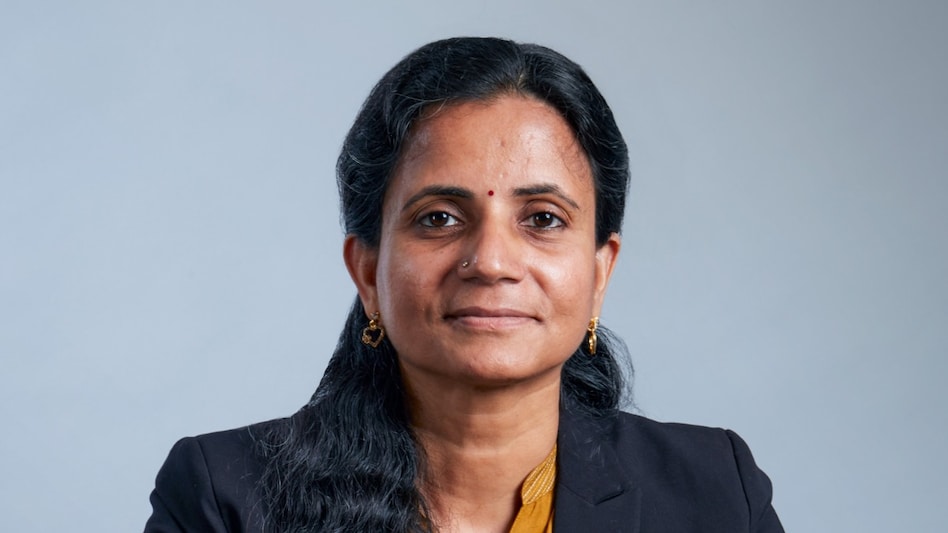
 Subhathra Srinivasaraghavan, Vice President at IBM ISDL
As enterprises double down on artificial intelligence (AI) infrastructure, a quieter but equally critical shift is underway, preparing systems for a post-quantum world. While quantum computing may still seem distant, industry leaders warn that the transition to quantum-safe security cannot be delayed.
In an interview with Business Today, Subhathra Srinivasaraghavan, Vice President at IBM ISDL, says enterprises need to rethink security as a long-term architectural decision rather than a reactive upgrade.
“Making systems quantum safe is a long-term journey. Enterprises cannot wait until quantum computing becomes mainstream,” she told Business Today.
The looming quantum threat
At the heart of the urgency is the risk that current encryption standards, considered secure today, may not hold up against future quantum computers.
“One of the fundamentals of security today is encryption, which protects data from unauthorised access. Current encryption algorithms are secure because classical computers cannot break them easily,” Srinivasaraghavan said.
However, that assumption breaks down in a quantum future.
“Quantum computers will be able to try multiple combinations simultaneously, making it much easier to break these algorithms,” she explained.
This creates what security experts call a “harvest now, decrypt later” scenario.
“Malicious actors can store encrypted data today and decrypt it later when quantum capabilities become available,” she warned, adding that sectors like finance are especially exposed due to the long-term value of their data.
Why the shift must start now
Unlike typical technology upgrades, quantum-safe readiness cannot be implemented overnight. It requires changes across infrastructure, applications and encryption strategies.
“Enterprises need to evaluate their infrastructure first, whether it is quantum safe, and then assess their applications,” Srinivasaraghavan told Business Today. “This is a long-term journey that spans the entire stack.”
IBM has already begun embedding quantum-safe capabilities into its systems. “In our latest systems like Z17, Power11 and LinuxONE5, we have replaced traditional encryption algorithms with quantum-safe ones,” she said.
The company is also working with global standards bodies such as the National Institute of Standards and Technology (NIST) to develop encryption algorithms that can withstand quantum attacks.
AI and security are now inseparable
As companies pour billions into AI, Srinivasaraghavan argues that security, and specifically quantum-safe security, must be built into those investments from day one.
“AI and quantum-safe security should not be treated as separate investments. AI depends on data and that data must be secure,” she told Business Today.
This becomes particularly important as enterprises increasingly rely on proprietary datasets to differentiate their AI capabilities.
“Enterprises differentiate their AI value through proprietary data, so protecting that data is critical,” she added.
Architectural decisions will define future costs
One of the biggest risks for enterprises is deferring these decisions and facing costly retrofits later.
“Enterprises need to make intentional architectural decisions. Some data must remain on-premises for control, while other workloads can move to the cloud,” she said.
Beyond location, the question of data sovereignty, how data is accessed and used, is becoming central to infrastructure planning.
“From hardware to software to applications, enterprises must evaluate encryption strategies and ensure they are future-proof,” she said.
India’s readiness
In India, awareness around quantum-safe security is growing, particularly in regulated sectors such as banking and financial services.
“Indian enterprises, especially in regulated sectors, have always focused strongly on security,” Srinivasaraghavan told Business Today.
Regulatory developments such as the Digital Personal Data Protection (DPDP) Act and guidance from the Reserve Bank of India are pushing organisations to take a more proactive approach.
At the same time, government initiatives like the National Quantum Mission are helping build a broader ecosystem.
Despite rising awareness, widespread adoption may still depend on external triggers.
“There are multiple triggers, advances in quantum computing, stricter regulations and geopolitical concerns,” Srinivasaraghavan said. “Different enterprises may respond to different triggers, but all of these factors are already in play.”
For Unparalleled coverage of India's Businesses and Economy – Subscribe to Business Today Magazine

 CBDT issues new crypto reporting guidance: No new tax, but exchanges must track and report all transactions
 Did Cockroach Janta Party's 'Chalo Sansad' 2.0 threat trigger Dharmendra Pradhan's resignation? What we know so far
 'Will discharge my responsibilities with complete humility': Pralhad Joshi after being appointed Education Minister
 Curious about Pralhad Joshi's wealth? A closer look at his assets, investments and liabilities
 On Cockroach Janta Party's lines, now E20 Janta Party demands choice of 100% petrol
 Best Healthcare Stocks: Gaurang Shah's Outlook On Apollo Hospitals, Fortis & The Manipal Health IPO
 Is Indo-MIM's IPO Valuation Justified? Here's Why The Company Sees Strong Growth Ahead
 Treasury Bills Explained: Why T-Bills Are One Of The Safest Short-Term Investment Options
 FDs vs Markets: Where Should You Keep Your Short-Term Money?
 Why Term Insurance Is Essential for Every Earning Member | Sum Assured & Coverage Explained
 Gland Pharma stock: Price target of Rs 3,250 likely in medium term, says analyst
  Metal recycling stocks to buy: Gravita, Pondy Oxides, Jain Resource among top picks
 TRIL shares: Should you average the falling stock? Here's 'fixed and final' stop loss
 Adani Power: 45 GW target, Rs 2 lakh crore capex plan among conference call highlights
  ITC Hotels, Chalet, Ventive, IHCL, SAMHI: Hotel stocks to buy despite travel disruptions
 'You can do whatever you want?': Delhi HC questions EC over mandatory election duty for school teachers
 Mayor Zohran Mamdani taps tech-slayer Lina Khan to reshape New York City’s economy
 Planning a Nepal trip? You can now carry up to ₹25,000 in Indian cash. Here's what changedGland Pharma stock: Price target of Rs 3,250 likely in medium term, says analyst
  UP saw the largest 34 routes discontinued under the Udan scheme









