












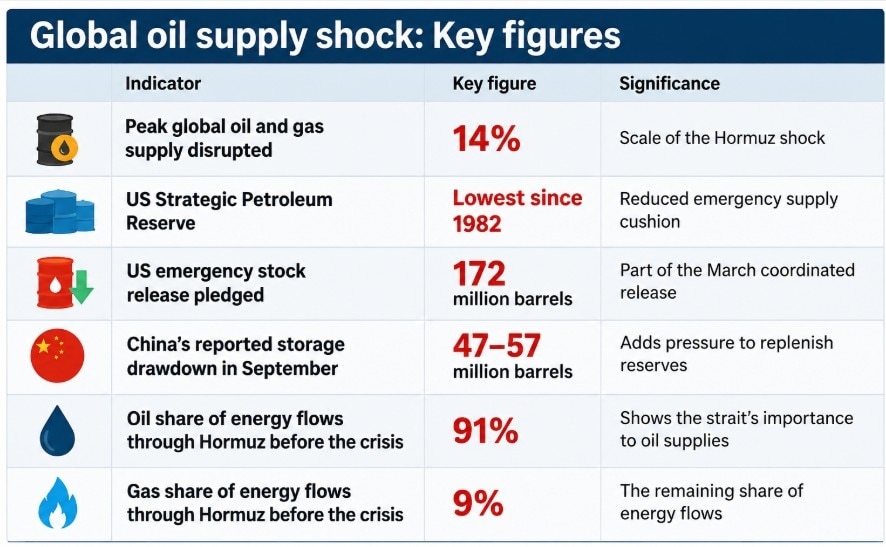



 At its peak, the Hormuz disruption took 14% of global oil and gas supply off the market.
 Global oil reserves are under pressure following the disruption at the Strait of Hormuz, raising concerns about the world’s ability to cope with another supply shock. The US Strategic Petroleum Reserve is at its lowest level since 1982, while China reportedly drew 47–57 million barrels from storage in September, according to the material citing McKinsey Global Institute.
At its peak, the Hormuz disruption took 14% of global oil and gas supply off the market. The scale of the shock has increased the importance of emergency stockpiles, alternative pipelines and flexible oil trade in keeping supplies moving.

 Nifty’s festive comeback: Can the bulls keep the party going?
 Jio IPO listing to make it India’s 4th most-valued firm after RIL, Airtel, HDFC Bank
 Jio has filed 7,220 patents: Akash Ambani pitches technology as competitive edge ahead of mega IPO
 SIR row: Supreme Court issues notice to EC; seeks response from Gyanesh Kumar, 2 other ECs
 Jio IPO: Meta, Google, ADIA, 7 others eye Rs 3.2 lakh crore stake value, gains on investment
 Canara Bank Q2 Results: Profit Rises 8.4% To ₹5,175 Crore | MD & CEO Speaks
 Netanyahu, MBS And The Houthis: Is A New Middle East War Brewing?
 Jantar Mantar Protest Ban: Are Delhi’s Alternative Sites Fit For Protests? | Ground Report
 K Annamalai’s Political Test: Can We The Leaders Make An Electoral Mark?
 LIVE What’s Hot: Stocks, Gold & Big Money Moves | Daily Markets Show | October 15 | Business Today
 Jio Platforms IPO: How HFCL promoter Mahendra Nahata's investment could rise over 110 times
 South Indian Bank shares hit 52-week high on Q2 earnings, close higher
  From Rs 228 per GB to mass-market 5G: How Jio transformed India's data economy
 TCS launches Industrial Intelligence Foundry for industrial AI; completes BBY Services India acquisition
 Bharat Dynamics wins order worth Rs 1,307 crore from Indian NavyCanara Bank Q2 Results: Profit Rises 8.4% To ₹5,175 Crore | MD & CEO SpeaksJio Platforms IPO: How HFCL promoter Mahendra Nahata's investment could rise over 110 times
 Delhi Police tells HC of legal measures ahead of CJP protest as Palika Bazar vendor flags business loss
 Imran Khan challenges 'leave India' notice over participation in Mumbai protest against CECSouth Indian Bank shares hit 52-week high on Q2 earnings, close higher


