

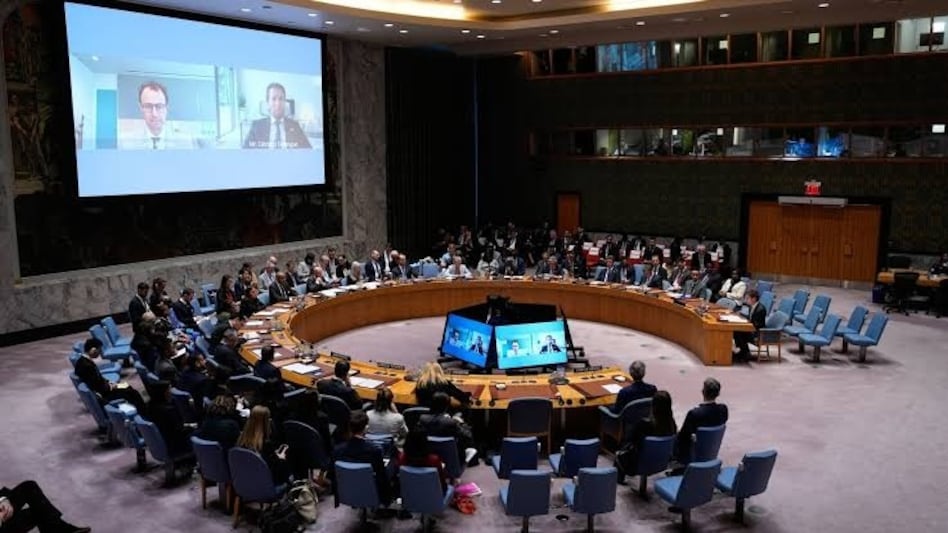
 The summit follows escalating warnings from global diplomats over autonomous weaponry.
 Silicon Valley’s top architects stepped before the United Nations Security Council with a grim warning: without global safeguards, artificial intelligence could slip out of human control and imperil the planet.
Leaders of several major tech companies — OpenAI, Anthropic, Hugging Face — addressed the Security Council on September 23 regarding recent developments surrounding AI and spotlighted both the potential and the problems inherent in the emerging technology.
 BT Big Story: Is 66% = zero? The Tata Sons question on everyone’s minds
  From Gulf to US: How the Iran war is redrawing India’s LPG import map
 100-foot red carpet welcome: Trump gives Xi rare tarmac reception; trade talks, AI on agenda
  Graphite, not lithium, may be the battery industry's biggest choke point: Report
 Hormuz shock accelerates the shift to electricity: Why countries are turning to electrification for energy security
 India Growth Outlook Gets Major Boost: S&P, Fitch, ADB Raise FY27 Forecasts; OECD Upgrades 2026 View
 A-One Steels IPO Explained: Key Details, Growth Strategy & Future Outlook | Management Live
 Market Commentary: Nifty Outlook, Stocks & Market Strategy | Deven Choksey
 Ignore Large Caps? Why Investors Are Chasing High P/E Mid Cap Stocks Now
 30 IPOs In A Month: Deven Choksey On IPO Flipping And Secondary Market Liquidity
 NSE share price: Expect Rs 50-80 listing premium, says Apurva Sheth; here's his strategy
 NSE IPO listing today: GMP signals 4-5% gains; exchange may enter India’s top 10 by market cap
 GIFT Nifty down 190 pts; NSE, Sedemac, Nephrocare, Ola Electric, telcos among top stocks in focus
 Sebi may ease margin requirements for longer-tenure F&O products
 RBI to conduct OMO sale of Rs 25,000 crore in government bonds on September 28NSE share price: Expect Rs 50-80 listing premium, says Apurva Sheth; here's his strategyNSE IPO listing today: GMP signals 4-5% gains; exchange may enter India’s top 10 by market cap
 In talks with Marco Rubio, Jaishankar raises India's concerns as Trump’s Russia sanctions put energy security at risk
 Quote of the Day by Kunal Bahl: 'Entrepreneurship is a state of mind. You don’t need a big idea; you just need to start solving a problem'
  1980s AI photo trend: One photo upload could expose you to fake profiles and blackmail, Delhi Police warns












