


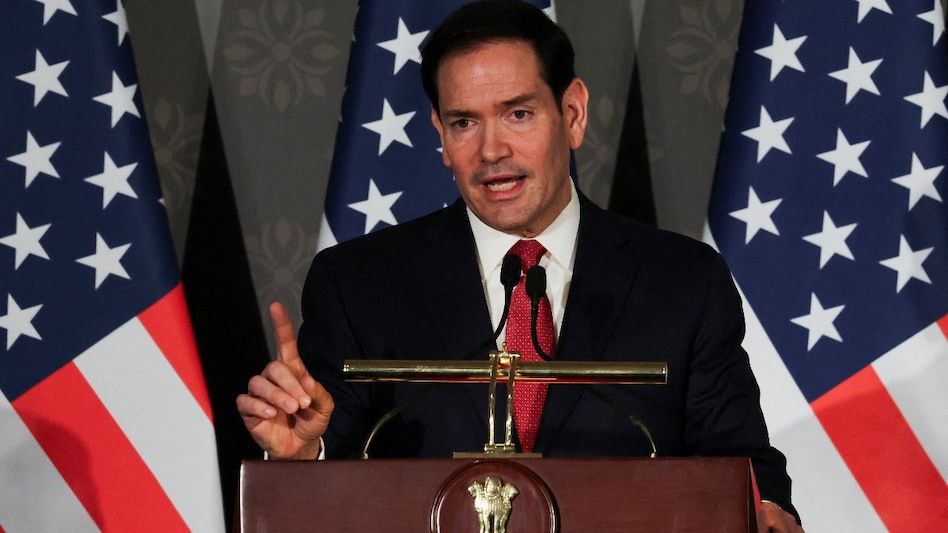
 ASEAN meet in Manila: Rubio flags Hormuz threat, reaffirms Quad and pushes India trade deal
US Secretary of State Marco Rubio used a high-stakes diplomatic gathering in Manila on Wednesday to issue a pointed warning about Iran's ambitions in the Strait of Hormuz, telling Asian foreign ministers that any attempt by Tehran to control and charge tolls on the waterway would set a dangerous global precedent.
Speaking at the start of the annual meeting with foreign ministers from the Association of Southeast Asian Nations, Rubio also moved to address concerns within the bloc about Washington's bandwidth given the ongoing war in West Asia. "We're with ASEAN 100 per cent," he said.

 Highway builders flag risks in revised BOT model, seek changes
 Google to shift Pixel production to India by 2027 to reduce China dependency: All details
  'India was number one': Sergio Gor applauds Indian companies for $20 bn US investment
 Income Tax Dept identifies suspicious entities sending money abroad; 394 entities under scanner
 RBI’s surprise FCNR (B) move leaves banks scrambling as communication concerns grow: Report
 Google Pixel 11 Series First Look: Tensor G6, Gemini Integration & AI Camera Upgrades | Tech Today
 BJP’s New Digital Gameplan: Deepak Mhaskey On Winning The Social Media Battle
 Govt May Cut 100% Sugar Import Duty: Impact On Prices And Sugar Stocks
 Global Bond Yields Surge: Why Rising U.S. Treasury Yields Could Pressure Stock Markets
 Defence Stocks Rally As India Adds 405 Items To Sixth Indigenisation List Worth ₹3,000 Crore
 Maruti, Hyundai shares emerge as top auto picks as four-wheelers eye catch-up rally
 Despite low valuations, HDFC Bank stock still not a buy: Coheron Wealth's Aditya Agarwal
  Nifty falls for fifth session as brent crude price crosses $91 per barrel mark
  From Class 5 dropout to Lalithaa Jewellery IPO: Kiran Kumar builds Rs 11,000 cr empire with 4 gold bangles
 BTTV Exclusive| Gaja IPO: CEO explains valuation, AIF growth, business model and plans after listing
 'No talks or conversations going on with Iran...': Trump denies talks contradicting earlier claimGoogle Pixel 11 Series First Look: Tensor G6, Gemini Integration & AI Camera Upgrades | Tech Today
 NTA overhauls exam team, removes 600 experts and adds four-tier paper checking
 India’s senior living market could Hit ₹1 lakh crore by 2030: What is driving the boom?
 UP-Japan investment meet 2026: ₹3,191 crore projects, 500-acre Japan City, 10,000 jobs in focus












