


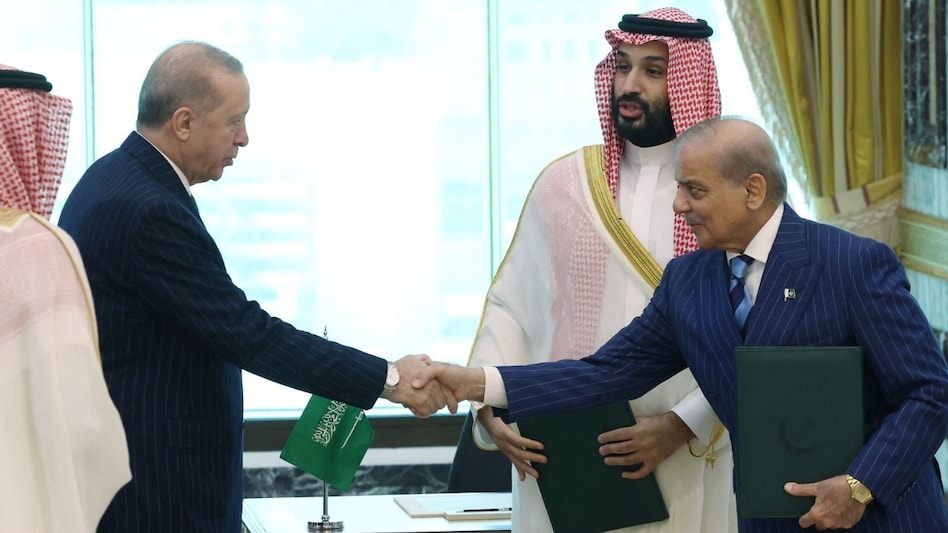
 Saudi Arabia, Turkey and Pakistan signed a NATO-like defence agreement in Mecca on August 7
Saudi Arabia's disappointment with the United States and its concerns over Iranian and Houthi threats are pushing it to look beyond Washington for security support, according to Israeli intelligence expert Danny Citrinowicz.
Citrinowicz said the recent war with Iran had exposed divisions within the Gulf Cooperation Council (GCC). "This (Iran) war has exposed that there is no GCC. There are Gulf countries, but they're not united," said Citrinowicz, a senior researcher at the Institute for National Security Studies, during Fareed Zakaria's weekly program on CNN.

 NITI Aayog launches new platforms to scale up electric truck adoption
 India goes big on defence: Rs 1.10 lakh crore acquisition plan cleared. What Army, Navy, IAF will get
 GDP is not enough: UN expert group proposes 31 indicators to measure a nation's progress
 Russia ready to supply as much oil as India needs: Kremlin envoy blasts 'pressure tactics' on New Delhi
 RPG Life Sciences to launch GLP-1 drug in October after ₹215 crore API acquisitions
 Non-Local Electric Bus Software Is A National Security Risk, Warns Eka Mobility Chairman Sudhir Mehta
 Mounjaro Sales Surge 502%: Why GLP-1 Drugs Are Taking Over India’s Pharma Market
 Auto Stocks Outlook: Why Investors Should Be Cautious Despite New Model Launches And Strong Demand
 U.S.-Iran War, Elevated Crude Hit Indian Stocks: Can Nifty Reverse Its Downward Trajectory Now?
 Crude Oil, Gold & Silver: What’s The Next Big Move? | Kunal Shah
 Tata Steel, Hindustan Copper, Lloyds Engineering shares: Expert weighs in; names top pharma, broking bets
 Adani Power secures LoI to acquire GVK Energy; details here
 Two upper circuits for Sterlite Technologies shares as firm discloses FY29 targets
 Sensex falls 383 points, Nifty settles at 23,779; IT, metals among top drags
 APL Apollo Tubes, KDDL, Globus Spirits among 11 stocks to turn ex-dividend tomorrow
 “India Wants Tariff Advantage”: Piyush Goyal Says U.S. Trade Deal Awaits Better Terms
 “Hormuz Shut Down, India Wasn’t Affected”: ONGC Chairman Arun Kumar Singh On Energy Resilience
 “Why Leave It To The Government?”: Piyush Goyal Flags Auto-Lock Safety Risks In Cars
 Saurabh Garg Defends India’s GDP Data: ‘Extremely Unfortunate’ To Call Methodology Incorrect
 Your AI Could Soon Shop & Pay Through UPI | What You Need To Know












