


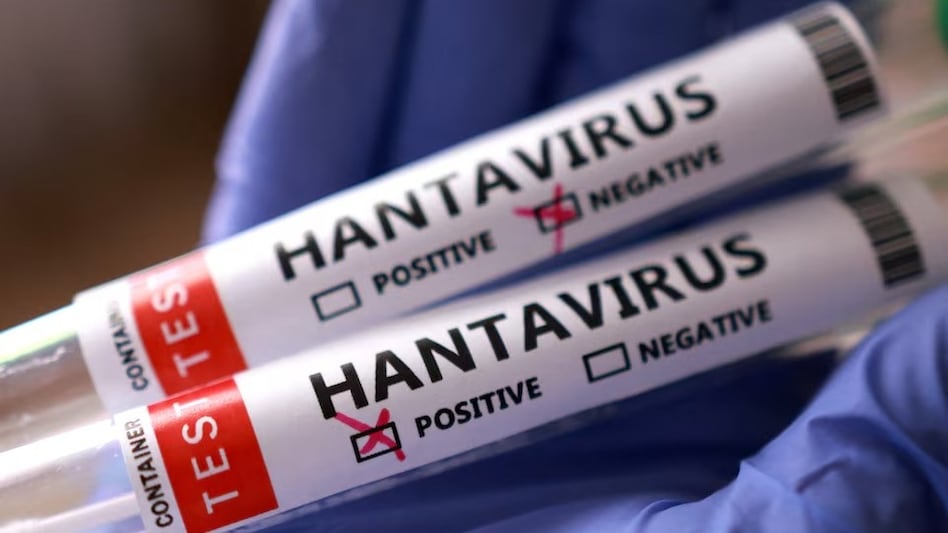
 WHO chief calms Tenerife fears as hantavirus cruise ship nears island
World Health Organisation (WHO) Director-General Tedros Adhanom Ghebreyesus issued a rare open letter to residents of the Spanish island Tenerife on Saturday, seeking to calm fears over the arrival of a cruise ship linked to a hantavirus outbreak and insisting: "this is not another COVID-19."
The Dutch-flagged MV Hondius, carrying more than 140 passengers and crew, is expected to arrive at the Spanish island in the Canary Islands early Sunday after an outbreak of the Andes strain of hantavirus onboard left three people dead.

 ₹8,862 crore in tolls! This state emerged as India's biggest highway toll revenue generator
 Could India witness a Korea-style market meltdown? Nithin Kamath explains the biggest risk
 How Indian investment overseas is gathering momentum
 Semicon 2.0, space, hydrogen trains: How manufacturing push is gaining pace, shows July's economic review
 To stay ahead, Indian manufacturers are embracing AI
 LIVE Daily Calls: Ask Your STOCK MARKET TODAY QUERIES | Market Update LIVE | Share Market News Today
 Why Are Markets Rallying? Ajay Bagga Explains | Fed, Oil Prices & FII Flows
 Strong Q1 Helps Paradeep Phos Clock 17.3 Cr Shares In Trade
 Mumbai Elite Clubs Face FDA Action | Food Licences Suspended Over Hygiene Violations
 10 Tax Jargons Every First-Time Taxpayer Must Know | Tax Guide | Personal Finance | Money Today
 Could India witness a Korea-style market meltdown? Nithin Kamath explains the biggest risk
 Dabur India Q1 results: Profit up 15% at Rs 591 crore YoY; revenue climbs 11%
 FIIs could return to market in six months, says Ajay Bagga
  Sensex, Nifty climb over 1% each; investors add Rs 4 lakh crore in wealth
 Banks, IT, defence, power stocks likely to lead FY27 earnings upgrades, says Ajay Bagga
 US restricts humanoid robot imports from China over national security concerns
 ISRO invites applications for 410 apprentice posts at Bengaluru's URSC; apply till August 28
 Texmaco led JV to invest Rs 1800 crore in rail car leasing in India
 Commodity exchange NCDEX launches Mutual Fund transaction platform. Here are the details
 'A Marxist teacher made me an atheist': Zoho's Sridhar Vembu on why children turn Left










