









 Iran war: Brahma Chellaney says not Tehran but Pakistan was the more obvious choice for attack

 Iran war: Brahma Chellaney says not Tehran but Pakistan was the more obvious choice for attack
The attack on Iran is hardly about nuclear or state-sponsored terrorism, said geostrategist Brahma Chellaney. It is about geopolitical dynamics, he said, and an attempt to redraw the balance of power.
“The war on Iran has little to do with nuclear or missile proliferation or state-sponsored terrorism. If those were the real concerns, the more obvious US target would be Pakistan: a declared nuclear-armed state with an estimated 170+ warheads; a country that US intelligence assesses is developing intercontinental-range ballistic missile capabilities that could reach the United States; and one whose state-backed terror networks have been linked to major transnational terrorist attacks, including in the West. The principal architects of 9/11 were ultimately found in Pakistan, among them Osama bin Laden and Khalid Sheikh Mohammed,” said Chellaney.
He drew comparisons with Iran which is a signatory to the Nuclear Non-Proliferation Treaty. Despite it enriching uranium up to 60 per cent, it is far away from building a functional nuclear weapon. “Yet Washington has chosen to wage war on Tehran while effectively mollycoddling Pakistan,” said Chellaney.
“The logic of this war is therefore geopolitical, not defensive. It is about reshaping the regional balance of power, installing a pliable regime in Tehran, and weakening Iran’s network of regional influence,” he said, adding that the US wants to control the Strait of Hormuz, through which roughly a fifth of the world’s traded oil passes.
REGIME CHANGE IN IRAN
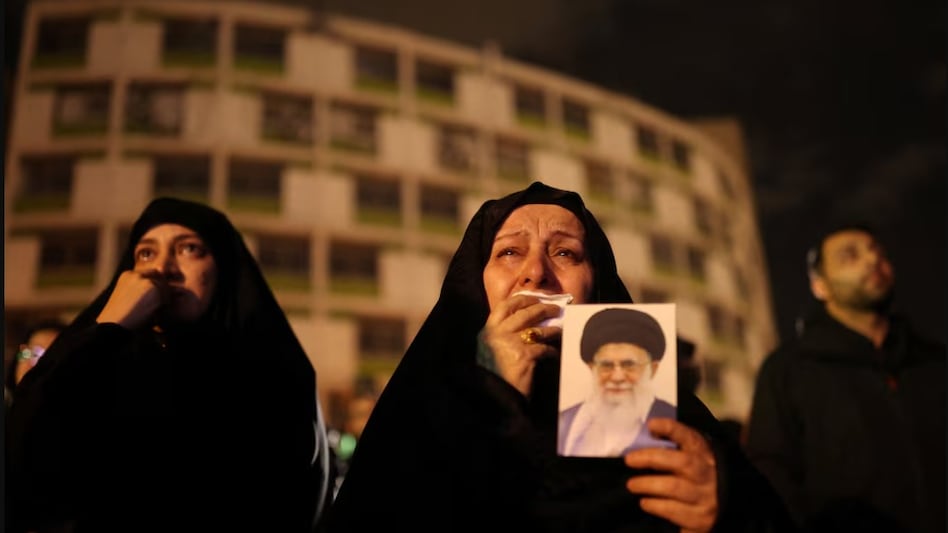
Meanwhile, senior US officials have now expressed significant skepticism regarding the possibility of a regime change in Iran following the killing of Supreme Leader Ayatollah Ali Khamenei on Saturday. Despite the escalation of US and Israeli military actions against the Islamic Republic, sources indicate that a transition of power is unlikely in the near future, with Iran’s government structure appearing resilient to both external pressure and internal dissent.
Before and during the recent operation, US leadership, including President Donald Trump, stated that dismantling Iran’s governing system was among several objectives, alongside targeting Iran’s missile and nuclear capabilities. "I call upon all Iranian patriots who yearn for freedom to seize this moment ... and take back your country," Trump said on Sunday in a video posted on Truth Social.
However, US officials familiar with intelligence assessments remain doubtful that Iran's battered opposition can topple the theocratic, authoritarian system that has been in place since 1979.
Officials contacted by Reuters have not entirely dismissed the chance of Iran’s government falling, considering personnel losses and public discontent after recent violent crackdowns. But it is far from likely or even probable in the near term, they said.
CIA assessments presented to the White House before the attack concluded that if Khamenei was killed, he could be replaced by hard-line figures from the Islamic Revolutionary Guard Corps or equally hard-line clerics. One US official with knowledge of White House deliberations said IRGC officials are unlikely to capitulate, as they have benefited from a patronage network designed to maintain internal loyalty.
The consensus among US officials and intelligence agencies is that the Iranian opposition currently lacks the capacity to bring about political change, even amid ongoing international pressure and leadership transitions.
 India's monsoon runs on a double engine: The hidden weather tag team deciding where the rain falls
 Same 43°C temperature, different reality: Why Europe's heatwave is more deadly than India's
 'Think of yourselves like stocks': WhatsApp chief Kunal Shah's advice for youth - what he means
 Dixon Technologies shares: Four factors why JM Financial upgraded the EMS stock
  From engineers to product managers: Here's how much Anthropic pays, with salaries up to ₹13.02 crore
 HP EliteBook X G2a Review: An AI PC in 2026 With 64 GB RAM And A Price To Match
 China’s Modern Inequality System | Akshita Nandgopal Unpacks The Brutal Reality Of The Hukou System
 India Food Label Scam Explained By Sneha Mordani | FSSAI Issues Strict Action
 Should You Get Your Heart Check Before Gym? Sneha Mordani & Dr Devi Shetty Explain
 Biggest Water Dispute In Asia | India-Pakistan Indus Crisis Update
 Dixon Technologies shares: Four factors why JM Financial upgraded the EMS stock
  Coforge, KPIT Tech, Cyient among top IT stocks to buy for upto 44% upside amid AI recovery
 Infosys, Hindalco, Redington: How FPI-heavy stocks fared in June as outflows hit ₹53K crore
 Last chance next week to buy four Bajaj Group stocks for dividend; check payout, record dates
 Coforge, Mphasis, Persistent, LTIMindtree: Share price targets as IT stocks under pressure