


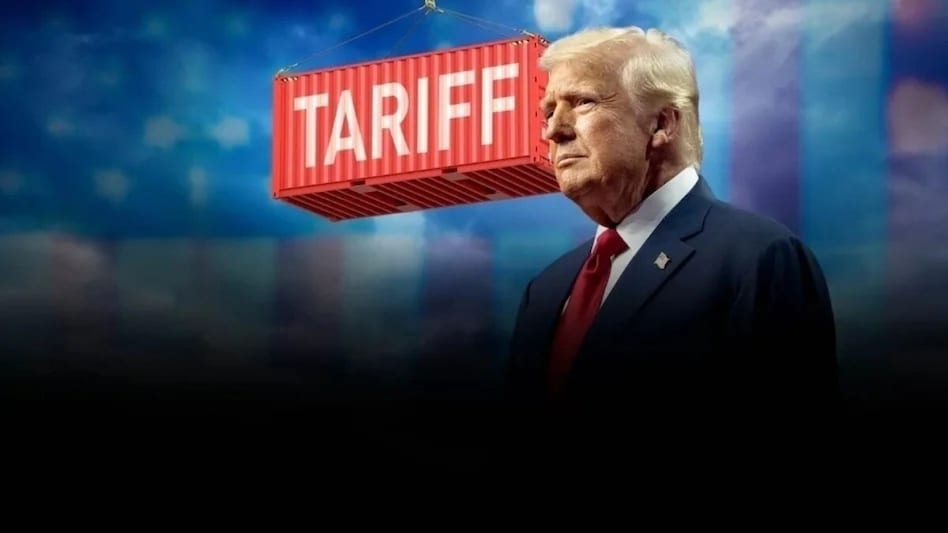
 Mexican exports are already subject to steep duties—25% on automobiles and 50% on metal commodities like steel, copper, and aluminum.
US President Donald Trump announced Thursday that he would delay increasing U.S. tariffs on Mexican imports for 90 days, providing both nations time to negotiate a new trade agreement.
Trump recently warned of raising the blanket tariff rate on Mexican goods to 30%, up from the current 25%, in response to concerns over cross-border crime and drug trafficking. Mexican exports are already subject to steep duties -- 25% on automobiles and 50% on metal commodities like steel, copper, and aluminum.

 'I'll be here for 2.5 years': Trump warns Iran against waiting for midterms for a deal
 India could raise ₹2 lakh crore through IPOs; 55% of FY27 proceeds already fresh capital: SEBI Chairman
 No prescription, no pills: Govt cracks whip on misuse of painkillers, antibiotics
 SEBI settles proceedings linked to Hindenburg report against 5 Adani firms for ₹1.51 crore
 'No positive response on 5-day banking': Bank unions to go ahead with 3-day strike
 IT Stocks Under Pressure: What Next For Indian Markets? | Chakri Lokapriya
 Karnataka’s Welfare Schemes Under Pressure As Finance Department Flags New Challenges
 Family Disputes Can Hold Businesses Back: Nirmala Sitharaman’s Message To Family Firms
 TRAI New Rules: Voice-SMS Only Plans Mandatory | What It Means For 20 Crore Non-Data Users
 Oil & Gas Capex Boom: Anshul Saigal Names Energy Stock He Owns | Saigal Capital Advisors
 Peshwa Wheat to raise ₹53.52 crore through IPO; funds to go towards expansionIndia could raise ₹2 lakh crore through IPOs; 55% of FY27 proceeds already fresh capital: SEBI Chairman
 Balmer Lawrie to demerge Travel & Vacations unit into wholly-owned subsidiary: Report
 Sansera Engineering shares rise 7%; Goldman Sachs raises target; sees further upside
 US-Iran talks today? Oil slips to $98 a barrel; will Sensex, Nifty rebound?
  Nagaland's 'Angh' wins Toronto International Film Festival award, Becomes eligible for 2027 Oscars
 RBI revises InvIT, REIT valuation norms for all-India financial institutions; check new rules'I'll be here for 2.5 years': Trump warns Iran against waiting for midterms for a deal
 Trump Calls Iran ‘The Number One Sponsor Of Terror’ In UNGA Address
 Tata Trusts vs Tata Sons: Abhishek Singhvi says shareholder rights cannot be ‘nullified’












