


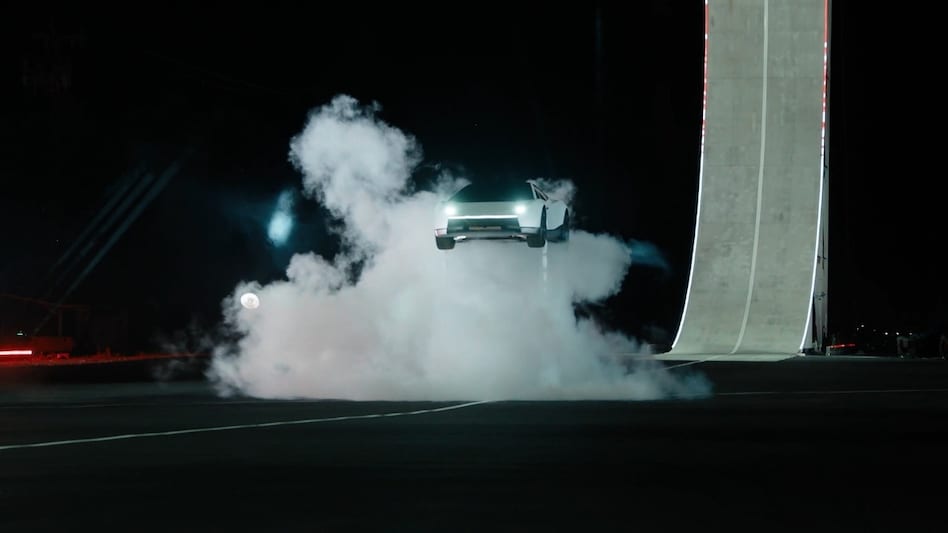
 Specifically, the redesigned Roadster features SpaceX-developed cold-gas thrusters mounted to the bottom of the vehicle.
 Are flying cars going to be a reality soon? Tesla seems to have an answer to that. The Elon Musk-owned company brought flying-car concepts a step closer to reality during a high-stakes demonstration at a SpaceX facility in McGregor, Texas, on October 15.
In a scene resembling The Jetsons' Flying Car from the 1962 animated series The Jetsons, a Tesla Roadster flips and lands flawlessly on its feet (tires in this case). Nearly nine years after the next-generation Tesla Roadster was first unveiled, the vehicle performed an extraordinary stunt: driving up a massive curved ramp, continuing along the track completely upside down, launching into the air, and executing a controlled flip before landing safely on the ground.

 BT BIG STORY: 'Ratan Tata never wanted to list Tata Sons'
 'Jio's own satellites await clearances': RIL issues rebuttal to Musk's Starlink India claims
 Additional 4% public float in IDBI Bank to be available for retail investors once LIC pares stake
 'Could cripple US tech for over a generation': Microsoft president on Green Card restrictions
 ‘Whole thing is a shame’: Trump says he is talking to China, Russia about denuclearisation
  Sennheiser Momentum 5 Review: Best Premium Headphones Under ₹40,000?
 Jio Platforms IPO: ₹30,000 Crore Issue Opens October 21, Valuation At ₹10.3 Lakh Crore
 Weekend OTT Releases: The Diplomat 4, Aasha, Sacrifice And More
 How Jio Transformed India From Data Scarce to Data Abundant! | Akash Ambani | Jio Platforms IPO
 Akash Ambani Decodes Jio's Financial Muscle | Reveals The 5 Key Business Drivers | Jio Platforms IPO
 Jio Platforms IPO enters crypto markets as Bitget launches pre-IPO futures for valuation bets
 YES Bank shares fall 3% as CET1 ratio may fall 250 bps; Morgan Stanley, Citi targets
 Wipro shares in focus as IT major announces stake buy in AI firm a day after Q2 earnings
  Vedanta Aluminium, Nalco, Hindalco shares: Aluminium price falls but Emkay sees up to 53% upside
 Axis Bank, Persistent Systems, Angel One: Stocks to trade — Key levels, target prices & stop loss
 Is Tesla bringing flying cars? Elon Musk's teaser video clip triggers buzz. Watch
 OTT releases this week (October 12-18): 'DC', 'Koffee With Karan S-9', 'The Diplomat S-4', other releases to watch this weekendJio Platforms IPO enters crypto markets as Bitget launches pre-IPO futures for valuation betsYES Bank shares fall 3% as CET1 ratio may fall 250 bps; Morgan Stanley, Citi targets
 'Drishyam 3: The Conclusion' box office collection week 2: Ajay Devgn's film eyes ₹350 crore in India, Rajinikanth's 'Jailer 2' dents its run












