











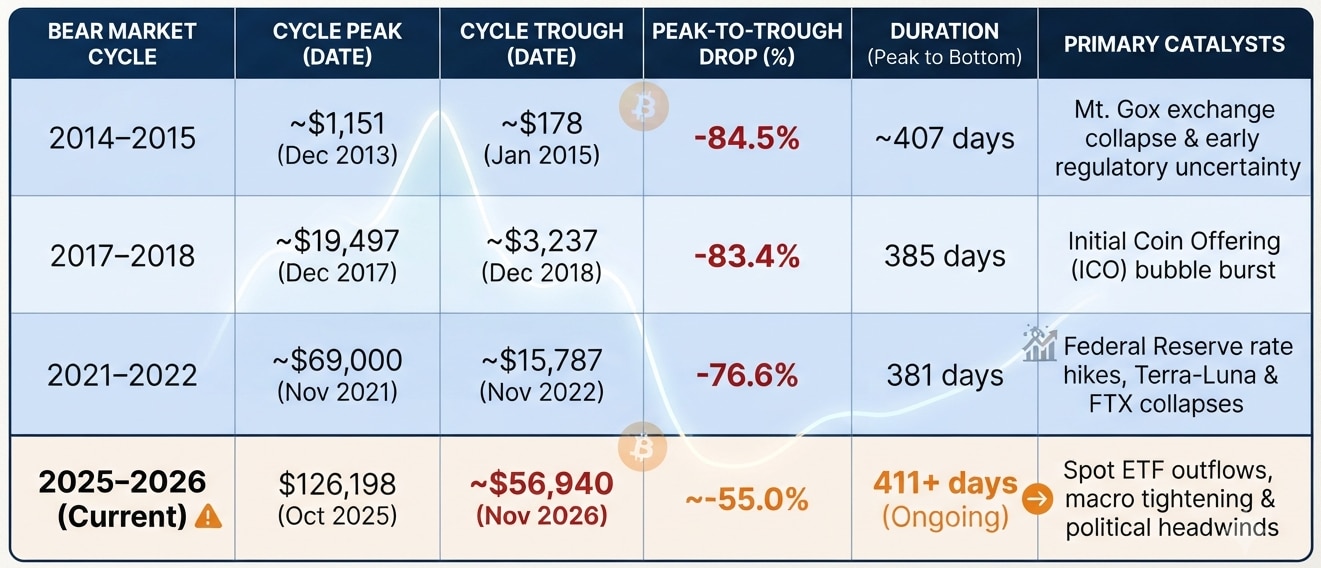




Bitcoin tumbled below the $57,000 threshold on November 20, sliding to its lowest price since September 2024 and officially erasing every dollar of the historic rally sparked by President Donald Trump’s 2024 election victory.
Trading near $56,940 after a steep 24-hour drop of more than 8%, the world’s largest cryptocurrency has now shed roughly 55% of its value since hitting an all-time record high of $126,198 on October 6, 2025. The latest leg down extends a nearly 29% drop over the past 30 days and has wiped out roughly $1 trillion in total cryptocurrency market capitalisation since mid-October.

 'Look at India': Trump says US could hit 20% GDP growth if Fed cuts interest rates
 Nifty's sharp comeback after market correction: What should investors do next as valuations turn attractive?
 US SEC launches probe into potential accounting issues at Nvidia, scrutiny over China ties widen
 ‘Tremendous tax’: Trump threatens penalties to block US firms from building data centers abroad
 India–Italy trade could cross €50 billion by 2035: Which sectors stand to gain the most?
 Gold & Silver Crash: What Triggered The Massive Sell-Off?
 FIIs Set To Extend India Buying; Nifty Likely To Hit Record High By December, Says Amit Goel
 Weekend OTT Releases: Dhindora 2, The Vvaan, Campus Diaries 2 & The Odyssey
 TVS Succession Battle: Kapil Sibal Vs Manu Singhvi On Lakshmi Venu's Claim To Family Wealth
 TVS Family Dispute: Abhishek Manu Singhvi Responds to Claims of an Unequal Wealth Division
 Nifty's sharp comeback after market correction: What should investors do next as valuations turn attractive?
 SEBI proposes FPI rule relaxation after ₹5.61 lakh crore outflows: Will foreign investors return?
 Anthropic shares plunge after record IPO: Is the global AI investment boom losing momentum?
 Anthropic shares tumble after record $107 billion IPO as AI valuation concerns rattle global markets: Report
 Capital markets must serve real economy, not the other way around: CEA
 Gold, silver prices on November 21: Check latest rates in Delhi, Mumbai, Kolkata, other cities
 Vedanta's Anil Agarwal outlines 3-point growth plan after PM Modi flags industry job lag. What he saidGold & Silver Crash: What Triggered The Massive Sell-Off?
 Nikhil Gupta sentenced to over 19 years in US prison over Gurpatwant Pannun murder plot'Look at India': Trump says US could hit 20% GDP growth if Fed cuts interest rates


